

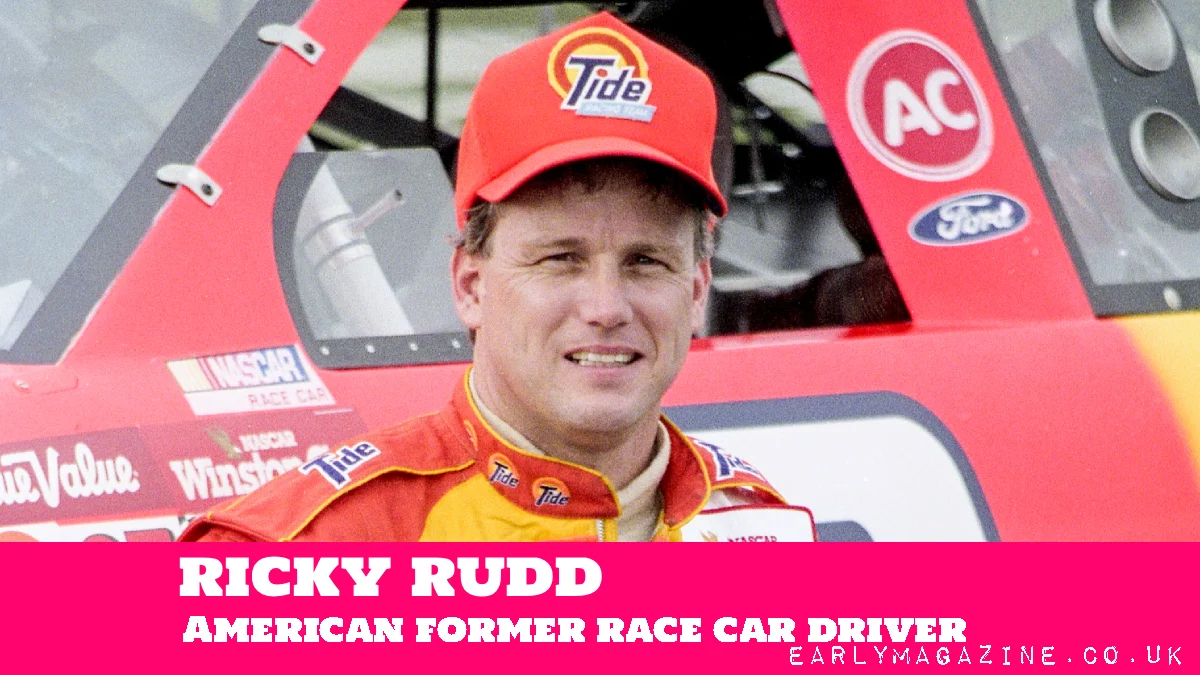
Ricky Rudd net worth is estimated between $25 million and $35 million as of 2025. He earned this through 906 NASCAR Cup Series races, 23 victories, and sponsorships with brands like Tide, Texaco, and Havoline. His team ownership and real estate investments contributed significantly to his wealth.
Ricky Rudd spent three decades proving himself as one of NASCAR’s most consistent competitors. The Virginia-born driver earned his place among racing’s elite through sheer determination and skill. During his career, Ricky Rudd net worth grew substantially through race winnings, sponsorships, and smart business decisions that extended beyond the track.
Understanding how professional drivers build wealth offers insight into NASCAR’s economic structure. Rudd’s financial journey reflects both the opportunities and challenges faced by athletes in motorsports.
Current Net Worth Estimates
Financial sources vary in their assessment of Ricky Rudd net worth, with estimates ranging from $25 million to $35 million. Most credible sources place his wealth at approximately $30 million as of 2025.
This range reflects the challenge of calculating retired athletes’ finances. Unlike active drivers who report annual earnings, Rudd’s wealth now comes from investments, real estate holdings, and residual income from his racing career.
The variation in estimates also stems from different valuation methods. Some sources focus solely on liquid assets while others include property values and business interests.
Career Earnings Breakdown
Rudd’s financial foundation came from his 32-year NASCAR Cup Series career. He competed in 906 races, securing 23 victories and 374 top-10 finishes. Prize money from these races formed the core of his early wealth accumulation.
Racing Income
During his peak years, Rudd earned substantial prize money. His 1997 Brickyard 400 victory at Indianapolis Motor Speedway represented one of his highest-paying wins. Crown jewel races like this provided significant financial boosts.
Sources indicate Rudd earned over $40 million in combined prize money and endorsements throughout his career. This figure doesn’t account for inflation adjustments, meaning his earnings would be worth considerably more in today’s dollars.
His record of 788 consecutive starts earned him the nickname “Ironman.” This consistency translated into steady income year after year, providing financial stability that many part-time drivers lacked.
Team Ownership Revenue
From 1994 to 1999, Rudd operated his own team called Rudd Performance Motorsports. As owner-driver of the No. 10 Ford, he won six races while managing all business operations.
Team ownership brought both risks and rewards. Rudd handled everything from securing sponsorships to managing employees and equipment. While this venture provided additional revenue streams, it also created financial pressures that eventually led him to return to driving for established teams.
The experience taught Rudd valuable business lessons that would serve him well in post-retirement investments.
Major Sponsorship Deals
Sponsorships represented a critical component of Ricky Rudd net worth accumulation. His long-term partnerships with major brands provided income beyond race winnings.
Tide Partnership
Rudd’s relationship with Tide began in 1991 when he joined Hendrick Motorsports. The iconic orange and yellow “Tide Ride” became one of NASCAR’s most recognizable paint schemes.
When Rudd left Hendrick to form his own team in 1994, Tide followed him. This loyalty demonstrated the value sponsors placed on his marketability and performance. The partnership lasted through 1999, spanning nearly a decade of consistent branding.
Tide’s commitment provided Rudd with financial security during his team ownership years. The sponsorship covered operational costs and guaranteed income regardless of race performance.
Texaco Havoline Era
After closing his team, Rudd joined Robert Yates Racing in 2000 to drive the No. 28 Texaco Havoline Ford. This move reunited him with a major sponsor and provided relief from ownership responsibilities.
The three-year deal (2000-2002) allowed Rudd to focus purely on driving. During this period, he scored three wins and numerous top-five finishes, proving he still had competitive speed.
Havoline’s sponsorship extended Rudd’s earning years at a time when many drivers his age had retired. The financial stability let him race on his own terms.
Real Estate Investments
Smart property investments have protected and grown Rudd’s wealth post-retirement. He owns multiple properties in North Carolina, reflecting a diversified real estate portfolio.
His primary residence is in Cornelius, North Carolina, with an additional property in Banner Elk. These locations offer both personal enjoyment and potential appreciation value.
North Carolina’s real estate market, particularly in areas near Charlotte, has experienced significant growth over the past two decades. Rudd’s early investments in this region likely increased substantially in value.
Real estate provides tax advantages and passive income opportunities through rentals or appreciation. For retired athletes, property investments offer stability compared to more volatile investment options.
Business Ventures
Beyond racing and real estate, Rudd has diversified his income through various business interests. His family background in the auto parts industry provided knowledge for these ventures.
Automotive Industry Connections
Rudd’s father, Alvin R. Rudd Sr., owned Al Rudd Auto Parts, giving Ricky early exposure to the automotive business world. This background influenced his post-racing business decisions.
Reports suggest Rudd invested in automotive-related businesses, though specific details remain private. His racing expertise and industry connections created opportunities unavailable to typical investors.
Media Appearances
Following retirement, Rudd worked as a racing analyst for Speed Channel. These media roles provided income while keeping him connected to NASCAR.
Television appearances, speaking engagements, and racing-related consulting offer ongoing revenue streams. His Hall of Fame status and respected reputation make him a sought-after voice in motorsports.
Comparison to Other NASCAR Drivers
To understand Rudd’s financial success, comparing him to contemporaries provides context.
| Driver | Est. Net Worth | Career Wins | Years Active |
|---|---|---|---|
| Ricky Rudd | $25-35M | 23 | 1975-2007 |
| Rusty Wallace | $65M | 55 | 1980-2005 |
| Mark Martin | $70M | 40 | 1981-2013 |
| Dale Jarrett | $50M | 32 | 1984-2008 |
Rudd’s net worth falls below some peers with more victories. However, his team ownership years diverted earnings into operational costs rather than personal wealth. Drivers who stayed with major teams often accumulated more personal assets.
His consistent performance and longevity created financial stability many drivers never achieved. The 16-year streak of winning at least one race per season demonstrated remarkable consistency.
Hall of Fame Recognition
Rudd was inducted into the NASCAR Hall of Fame as part of the Class of 2025, joining fellow inductee Carl Edwards. This recognition validates his career achievements and enhances his legacy value.
Hall of Fame status increases appearance fees and merchandise sales. Collectors seek memorabilia from inducted drivers, creating ongoing revenue opportunities.
The honor also opens doors for speaking engagements, book deals, and other income-producing activities. Rudd’s induction ensures his name remains relevant to new generations of racing fans.
Career Highlights That Built His Wealth
Several signature moments defined Rudd’s career and enhanced his earning potential:
1997 Brickyard 400 Victory: His win at Indianapolis Motor Speedway in the Brickyard 400 represented one of NASCAR’s most prestigious victories. This Crown Jewel race provided substantial prize money and elevated his profile.
1984 Daytona 500 Heroics: After a severe crash in the Busch Clash, Rudd famously taped his eyes open to compete in the Daytona 500. This display of toughness created legendary status and sponsor appeal.
Rookie of the Year (1977): His early success established marketability and opened doors to better rides and sponsorships throughout his career.
Consecutive Wins Record: Rudd won at least one race for 16 consecutive seasons (1983-1998), demonstrating consistency that sponsors valued highly.
Financial Management Strategies
Rudd’s long-term financial health reflects sound money management principles:
Diversification: Rather than relying solely on racing income, he invested in real estate, businesses, and other assets. This approach protected his wealth when racing income ended.
Avoiding Excess: Unlike some athletes who faced financial troubles, Rudd maintained a relatively modest lifestyle focused on long-term security over short-term luxury.
Strategic Timing: His decision to close his racing team in 1999 and join Robert Yates Racing demonstrated willingness to adapt when circumstances changed. This flexibility preserved capital and extended his earning years.
Family Involvement: Married to Linda Burchuk since 1979, with son Landon Lee Rudd, family stability likely contributed to sound financial decisions and spending discipline.
Post-Retirement Income Sources
Since retiring in 2007, Rudd has maintained income through various channels:
Licensing and Merchandising: His name and likeness appear on collectibles, generating royalty income. NASCAR Hall of Fame merchandise creates new revenue streams.
Investments: Real estate appreciation and business returns provide passive income without active work requirements.
Consulting: His expertise in racing and business makes him valuable for consulting roles with teams, manufacturers, or sponsors.
Public Appearances: Racing events, autograph sessions, and fan conventions offer appearance fees.
Challenges That Impacted His Net Worth
Not all financial decisions enhanced Rudd’s wealth. Several factors limited his net worth compared to peers:
Team Ownership Costs: Operating Rudd Performance Motorsports from 1994-1999 required significant capital investment. While the venture achieved moderate success, it diverted potential personal earnings into operational expenses.
Late Career Struggles: His final years saw diminished results. Racing without wins from 1999 onward likely reduced sponsorship values and prize money compared to earlier peak years.
Economic Timing: Rudd’s career overlapped with NASCAR’s growth period, but he retired before the sport’s peak television deals and purse increases of the 2010s.
Lessons From Rudd’s Financial Journey
Rudd’s path to financial security offers insights for athletes and professionals:
Consistency Matters: His 788 consecutive starts created stable income and sponsor appeal. Reliability often outweighs occasional brilliance in building long-term wealth.
Know When to Adapt: Closing his team and returning to driving showed willingness to change strategies when initial plans didn’t work.
Leverage Your Platform: Rudd maximized earning potential during his competitive years, then transitioned to media and consulting roles.
Invest for the Future: His real estate and business investments created income streams that continue decades after retirement.
Frequently Asked Questions
How much money did Ricky Rudd make racing?
Rudd earned over $40 million in combined prize money and endorsements throughout his 32-year NASCAR career.
What is Ricky Rudd doing now?
Rudd lives in North Carolina and makes occasional public appearances. He was inducted into the NASCAR Hall of Fame in 2025.
Did Ricky Rudd own his own NASCAR team?
Yes, he operated Rudd Performance Motorsports from 1994-1999, winning six races as owner-driver of the No. 10 Ford.
What was Ricky Rudd’s biggest win?
His 1997 Brickyard 400 victory at Indianapolis Motor Speedway ranks among his most prestigious and lucrative wins.
How does Ricky Rudd net worth compare to Jeff Gordon?
Jeff Gordon’s net worth exceeds $200 million, significantly higher than Rudd’s $25-35 million, reflecting Gordon’s more wins and later career timing.
Conclusion
Ricky Rudd net worth of $25-35 million reflects a successful NASCAR career built on consistency, smart sponsorships, and strategic investments. His 23 victories and 906 starts generated substantial race earnings, while partnerships with Tide and Havoline provided long-term financial security.
Beyond the track, Rudd demonstrated business acumen through real estate investments and calculated career moves. His willingness to close his racing team and join Robert Yates Racing showed pragmatism over ego, preserving capital for future investment.
His NASCAR Hall of Fame induction in 2025 ensures his legacy endures while creating new revenue opportunities. For aspiring athletes, Rudd’s financial journey demonstrates that longevity, consistency, and smart money management can build lasting wealth even without championship titles. The “Ironman” nickname reflected more than physical toughness—it described an approach to career and finances that prioritized sustainability over spectacular risks.
For more insights into how modern icons navigate fame and fortune, visit EarlyMagazine UK—where boundary-breaking careers and financial wisdom come together.
