

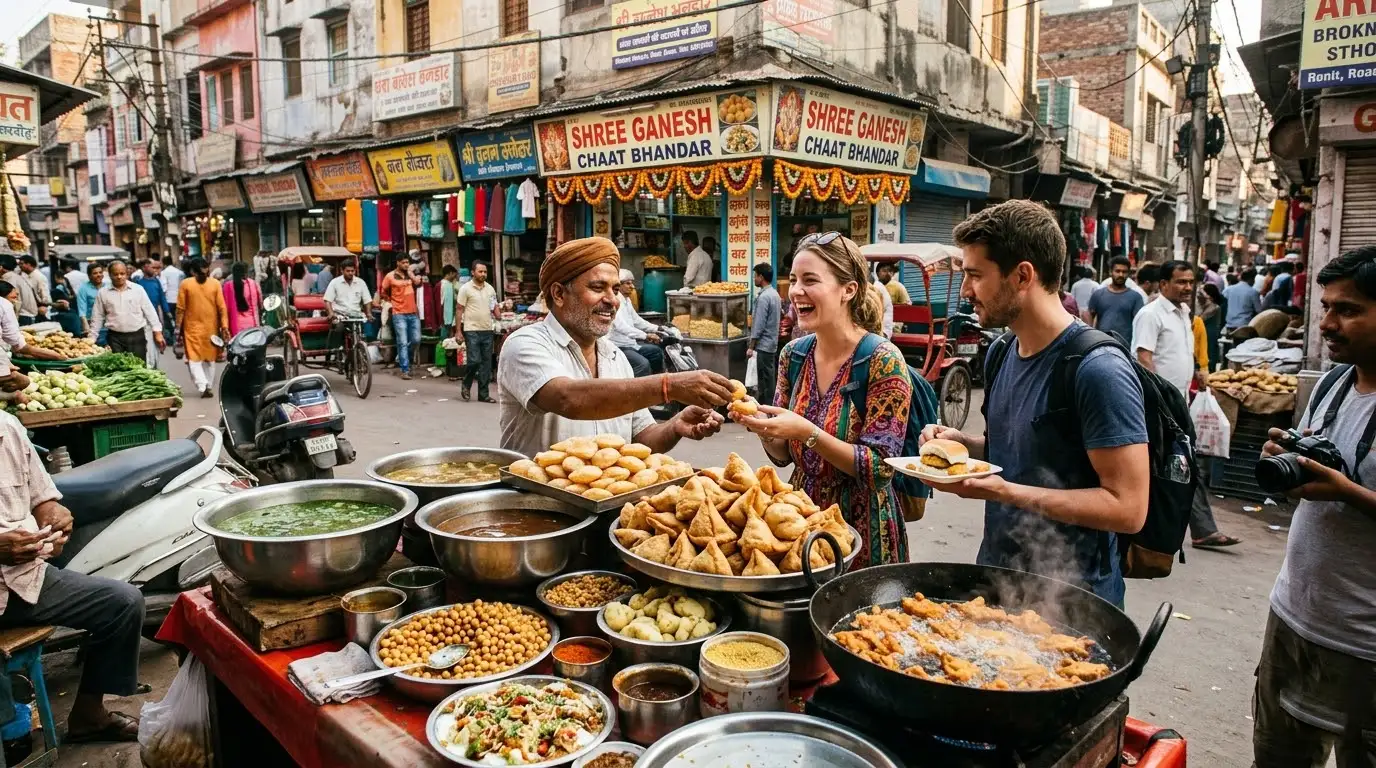
India’s street food scene is one of the country’s great travel experiences. It is fast, flavour-packed, local, and deeply tied to place. A snack bought from a cart in Mumbai can feel completely different from something served from a roadside stall in Delhi or a market lane in Kolkata. For many travellers, street food is not just about eating cheaply. It is one of the easiest ways to understand a city’s rhythm, habits and character.
That is also why many people start thinking about food long before they leave, often around the same time they are comparing routes, hotels and tickets to India. The excitement is understandable, but so is the hesitation. Street food in India is unforgettable when you choose well, yet first-time visitors often worry about hygiene, spice levels and whether they will spend half the trip regretting one bad decision. The good news is that you do not need to avoid it. You just need to approach it sensibly.
Why Street Food Matters in India
Street food in India is not a side attraction. In many places, it is part of daily life. Office workers stop for a quick chaat in the afternoon. Families share evening snacks from trusted stalls. Commuters grab something hot and filling on the way home. What makes it special is that it often feels immediate and rooted in the neighbourhood around it. The recipes are local, the pace is quick, and the best stalls usually have a clear sense of identity.
For travellers, that means street food can offer something restaurants sometimes cannot. It can show you what people actually eat casually and often. It can also introduce you to regional differences in a way that makes travel through India feel more vivid. A city’s architecture may tell you one story, but its snacks tell you another.
Chaat Is Often the Best Place to Start
If you are new to Indian street food, chaat is usually where curiosity begins. It is a broad category rather than one single dish, and it covers some of the country’s most addictive savoury snacks. Chaat often combines crunch, spice, sweetness, tang and freshness in one bite, which is why it can be so memorable.
Pani puri is one of the best known examples. Crisp hollow puris are filled and served with flavoured water, chutneys and spiced fillings. It is lively, messy and full of contrast. Bhel puri offers puffed rice, chutneys, vegetables and crunchy textures in a lighter style. Dahi puri adds yoghurt for a cooler balance. Aloo tikki chaat, built around fried potato patties with chutneys and toppings, is richer and more filling.
These dishes are worth trying, but they are also the ones where hygiene matters most because several ingredients may already be prepared and sitting out. That does not mean avoid them altogether. It means choose carefully, especially in your first few days.
Samosas, Kachoris and Pakoras Are Reliable Favourites
Travellers who want something hot and straightforward often do well with fried snacks. Samosas are the obvious starting point. They are widely available, familiar in shape, and usually filled with spiced potato, peas or other savoury mixtures. When served fresh and hot, they are satisfying and easier for cautious travellers to approach.
Kachoris are another excellent option, particularly in parts of North and West India. They are usually deep-fried, flaky and stuffed, with regional variation depending on where you are. Pakoras, whether made with onion, potato or chilli, are also common and often best enjoyed straight from the fryer.
These foods are not just popular because they taste good. They are often safer choices for travellers because high heat and fresh frying reduce some of the obvious risks. If you are building confidence, starting with food that is cooked in front of you and served piping hot is usually a sensible move.
Try Regional Specialities Instead of Eating the Same Snacks Everywhere
One of the pleasures of food in India is that the street food changes as you move. It makes sense to try the local speciality rather than sticking only to dishes you already recognise. In Mumbai, vada pav is a classic and gives you something filling, portable and full of character. In Delhi, chaat culture is hard to miss. In Kolkata, kathi rolls and local snack traditions offer a different style again. In South India, dosa and idli-based options can be excellent street or casual market choices, especially when freshly made.
This regional variation is one reason street food becomes such a memorable part of a trip. It rewards attention. Instead of asking for the most famous Indian food in general, it is often better to ask what a particular city does especially well. That is usually where the best meals begin.
Vegetarian Street Food Can Be a Great Option
India is one of the easiest places in the world to eat vegetarian food well, and that extends to street food. Many classic snacks are naturally meat-free and packed with flavour. For travellers who want to keep things simpler, vegetarian options can sometimes feel easier to assess, particularly when they are freshly cooked.
That said, vegetarian does not automatically mean low-risk. The same basic rules still apply. Freshness, turnover, water quality and handling matter more than whether a dish contains meat. Still, for many travellers, sticking mainly to hot vegetarian snacks in the beginning can be a comfortable way to explore without feeling overly cautious.
Watch Where Local People Are Eating
One of the oldest travel tips is still one of the best: go where there is steady demand. A busy stall with high turnover is often a better sign than a quiet one with food sitting out. If locals are queueing, the stall is probably trusted for a reason. That does not guarantee perfection, but it often suggests the food is fresh and regularly made.
Look for stalls where ingredients are being used quickly, where hot food is cooked continuously, and where the vendor seems organised. A clean working area, even a simple one, tells you a lot. You are not looking for luxury. You are looking for rhythm, freshness and confidence.
Choose Freshly Cooked Food Over Food Sitting Out
This is the most useful safety rule of all. Hot, freshly cooked food is generally a better bet than anything that has been standing around. A samosa lifted from hot oil is preferable to one that has been sitting for hours. A dosa made to order is often a safer choice than something assembled from multiple ingredients left exposed.
The same logic applies to accompaniments. Be more careful with raw toppings, cut fruit, yoghurt-based additions and sauces that may have been sitting at ambient temperature. Many travellers get into trouble not because the main dish was a problem, but because of the extras around it.
Be Cautious With Water, Ice and Chutneys
A lot of food worries in India are really water worries. Drinks with ice, uncooked chutneys, flavoured waters and rinsed produce can all be fine in the right place, but they deserve more caution than something that has gone through intense heat. This is especially true if you have only just arrived and your stomach is still adjusting.
That does not mean you need to avoid every chutney or all street-side drinks for the entire trip. It means be selective. If a stall is clearly trusted, busy and careful, you may feel comfortable trying more. In the early days, though, it is often wise to keep things simple and gradually branch out.
Do Not Try Everything on Day One
A common mistake is overexcitement. Travellers land in India, see five things they want to eat immediately, and spend the first day mixing rich, spicy, fried and unfamiliar foods in a way their stomach is not ready for. Even if every stall is perfectly decent, that is still a lot to ask of your system.
It is better to pace yourself. Start with one or two items, see how you feel, and build from there. Your trip will be more enjoyable if you treat street food as something to discover gradually rather than conquer in one afternoon.
Wash Hands and Carry the Basics
Simple habits make a real difference. Wash your hands where possible and carry sanitiser for moments when you cannot. Keep tissues with you. Drink sealed bottled water if that is the safer option where you are. If you know your stomach is sensitive, travelling with rehydration salts and basic medication can make you feel much more prepared.
This is not about being fearful. It is about making practical choices that let you relax once you are actually eating. The more routine your precautions become, the less they interrupt the fun of trying new food.
Learn the Difference Between Adventure and Risk
There is a difference between being open-minded and being reckless. Trying a local speciality from a crowded, well-run stall is part of the joy of travel. Eating something lukewarm from an empty cart because you feel awkward walking away is not. Trusting your instincts matters. If a place does not look right, you do not need a better reason to skip it.
Travellers sometimes feel pressure to prove they are adventurous, especially when street food is involved. In reality, the smartest travellers are usually the ones who know when to say yes and when to move on.
Street Food Is Best Enjoyed With Curiosity and Common Sense
Street food in India is one of the most rewarding parts of the journey. It can be the quickest route to local flavour, regional identity and memorable everyday moments. The key is not to avoid it out of fear, but to approach it with a little thought. Look for busy stalls, choose food that is cooked fresh, ease yourself in, and be cautious with water-sensitive extras.
Done well, street food adds depth to a trip rather than stress. You get the excitement of discovery without feeling like you are gambling with the rest of your itinerary. And once you find a stall that gets everything right, you will understand why so many travellers remember those quick roadside meals just as vividly as the big landmarks.
For more travel inspiration and practical tips on exploring local culture through food, visit EarlyMagazine UK—where smart travel advice and unforgettable experiences come together.
