

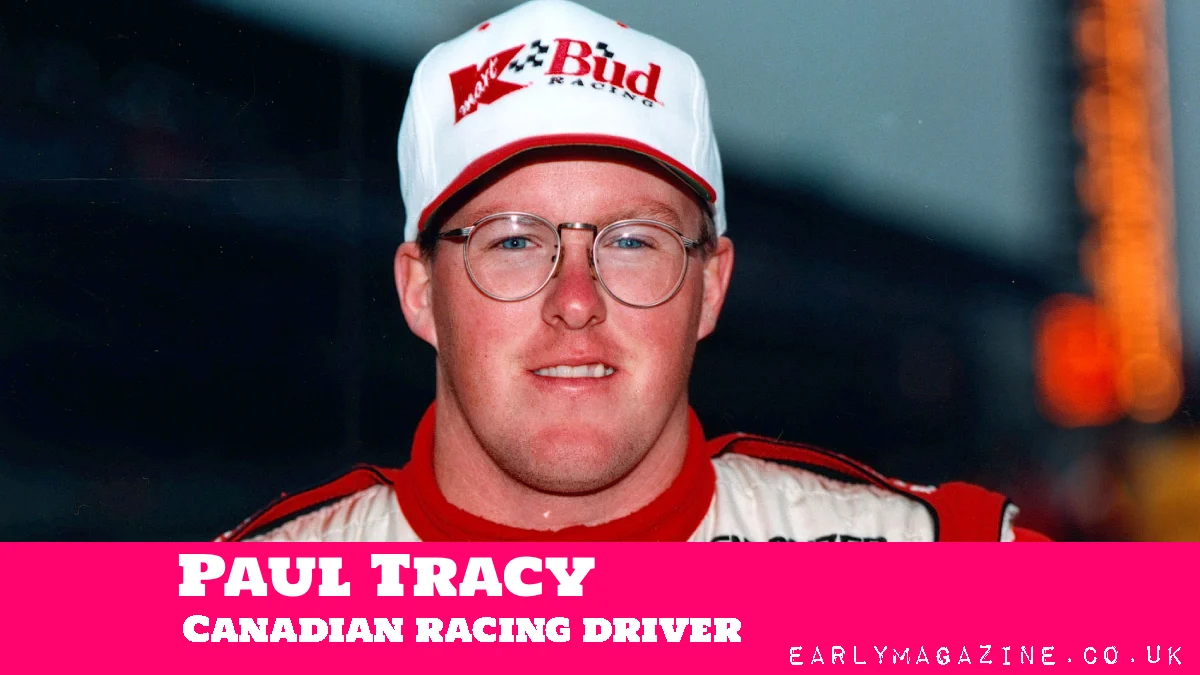
Paul Tracy, the Canadian-American racing legend nicknamed “The Thrill from West Hill,” has an estimated net worth of $20 million as of 2025. His wealth comes from over two decades of professional racing in CART, Champ Car, and IndyCar, combined with endorsements, broadcasting deals, and business ventures including a custom motorcycle parts company.
When you think of open-wheel racing legends who turned pure aggression into lasting wealth, Paul Tracy net worth conversations come up fast. The man who won 31 Champ Car races and claimed the 2003 championship did not just collect trophies. He built a financial profile that most professional athletes would respect, and he did it without ever racing in Formula 1 or playing for a billion-dollar franchise. That says a lot about how smart career decisions, multiple income streams, and brand longevity can stack up over time.
Tracy grew up in Scarborough, Ontario, racing go-karts at age five and winning the Canadian Formula Ford Championship at just 16. By the time his racing career wrapped in 2012, he had spent more than 25 years competing at the highest level of North American motorsport. What he did with that foundation — and how he kept earning after hanging up his helmet — is the real story behind the numbers.
This article breaks down where Paul Tracy’s money comes from, what his career earnings likely looked like, how his business ventures contribute to his wealth today, and how his net worth compares to other racing icons of his era.
Career Earnings: Where the Money Started
Tracy’s primary income during his active years came from race contracts and prize money. CART and Champ Car paid top-tier drivers well, and Tracy was at the front of the grid for most of the 1990s and early 2000s.
Racing Contracts and Prize Money
During his peak years with Penske Racing and later Forsythe Racing, Tracy earned competitive driver salaries. Top CART drivers in the 1990s earned between $1 million and $5 million per season in combined base salary and bonuses. Over a career spanning more than 20 seasons, even conservative estimates suggest Tracy accumulated $15 million or more from race contracts alone.
Prize money added on top. Winning seven races in a single championship season, as Tracy did in 2003, came with significant payouts. That championship year at Forsythe Racing is widely considered the peak of his on-track earning power.
Endorsements and Sponsorships
Corporate sponsorships in open-wheel racing work differently than most sports. Drivers carry brand logos on their cars and suits, but top performers also negotiate personal endorsement deals. Tracy’s aggressive, fan-friendly reputation made him a strong marketing partner throughout the late 1990s and early 2000s.
His “bad boy” persona — which earned him fines and probation from CART but also built a loyal fanbase — translated into marketing appeal. Sponsors paid for that kind of genuine personality.
Paul Tracy Net Worth: What the Numbers Show
| Source | Estimated Contribution |
|---|---|
| Racing contracts (25+ seasons) | $12M–$15M |
| Prize money and bonuses | $2M–$3M |
| Endorsements and sponsorships | $1M–$2M |
| Broadcasting (NBC, Sportsnet) | $500K–$1M |
| Business ventures | $1M–$2M |
| Real estate investments | Unknown |
| Total Estimated Net Worth | ~$20 Million |
The most widely cited figure from credible sources including Celebrity Net Worth places Tracy’s net worth at $20 million. Some outlets suggest higher figures, ranging from $30 million to $50 million, but these appear to overestimate based on limited sourcing. The $20 million figure aligns best with known career earnings and publicly documented ventures.
Life After Racing: Broadcasting and Business
From Cockpit to Commentary Booth
Tracy did not disappear after retiring from full-time racing. He joined Sportsnet as an IndyCar analyst in 2013 and moved to NBCSN’s IndyCar broadcast team in 2014. His candid, no-filter commentary style quickly became one of the network’s strongest assets. Producers reportedly let him speak freely without dumbing down his insights, and viewers responded. NBCSN saw ratings growth in their IndyCar coverage during his tenure.
He remained with the network through the 2021 season. Broadcasting deals at that level typically pay six figures annually, adding meaningful income to his post-racing financial picture.
SRX Racing: One More Lap
In 2021, Tracy competed in the inaugural season of the Camping World Superstar Racing Experience (SRX), a series that brought together legends from different racing disciplines. Participating kept his name in front of new audiences and likely came with appearance fees that supplemented his income.
Business Ventures: Black Label Baggers and Beyond
One of the more interesting elements of Paul Tracy’s wealth profile is his business activity outside motorsport. He owns Black Label Baggers, a custom motorcycle parts company. He also holds a business interest in Arma Energy SNX. These ventures show a pattern of investing in industries adjacent to his passion for speed and machinery.
Custom motorcycle parts is a solid niche market. Tracy’s personal brand, his reputation for performance, and his known love of Harley Davidson motorcycles give the business credibility that a generic entrepreneur would not have.
How Tracy’s Wealth Compares to Racing Peers
Paul Tracy operated in an era of North American racing that did not generate the global commercial machine that Formula 1 does today. For context:
- Dario Franchitti, another era peer and four-time IndyCar champion, has an estimated net worth around $40 million, boosted significantly by his marriage to actress Ashley Judd and a longer broadcasting presence.
- Helio Castroneves, who famously dueled Tracy in the 2002 Indianapolis 500, has an estimated net worth around $20 million.
- Scott Dixon, the most decorated IndyCar driver in history and still active, is estimated at $50 million or more.
Tracy sits comfortably within the upper tier of his era’s earners. He never won the Indy 500 — a race that carries the largest prize purse and exposure in North American racing — which likely represents the biggest gap between his career and a higher net worth ceiling.
Personal Life and Lifestyle
Tracy currently lives in Scottsdale, Arizona with his family. His lifestyle reflects his passion for speed and machinery in very specific ways. He owns a fleet of high-performance vehicles including Ron Simms custom Harley Davidson motorcycles and a 40-foot Skater race and pleasure boat. He maintains two Paul Tracy-branded 125cc shifter karts and regularly attends events like the Sturgis Rally and Daytona Bike Week.
These are not cheap hobbies. They also reflect a man who clearly reinvests in the lifestyle that built his identity, which is both a personal choice and a brand-maintenance strategy.
In 2013, Tracy was inducted into the Canadian Motorsport Hall of Fame, cementing his place in the sport’s history.
What Has Tracy Said About His Finances?
Tracy has not been publicly vocal about his net worth or financial strategy. He rarely discusses money in interviews and keeps his personal life largely private. His candor tends to show up in racing opinions rather than financial disclosure. That privacy makes precise estimates difficult, which is why figures in public sources vary so widely.
What we can observe is that his decisions — staying in North American racing rather than chasing Formula 1, diversifying into broadcasting quickly after retirement, and investing in businesses tied to his personal interests — reflect someone who made deliberate, grounded choices.
FAQs
What is Paul Tracy net worth in 2025?
Paul Tracy net worth is estimated at approximately $20 million in 2025, based on career earnings, endorsements, broadcasting, and business ventures.
How did Paul Tracy make most of his money?
The bulk of his wealth came from over 25 years of professional racing contracts and prize money in CART, Champ Car, and IndyCar.
Does Paul Tracy still earn money?
Yes. He holds business interests including Black Label Baggers, and has earned income from broadcasting roles with Sportsnet and NBCSN through 2021.
What businesses does Paul Tracy own?
Tracy owns Black Label Baggers, a custom motorcycle parts company, and holds a stake in Arma Energy SNX.
Did Paul Tracy win the Indianapolis 500?
No. Tracy came close in 2002, finishing second to Helio Castroneves in a controversial finish involving a late caution flag.
Conclusion
Paul Tracy built a $20 million net worth the way he drove — aggressively and without apology. He did not have the Indy 500 title or a Formula 1 contract, but he had 31 Champ Car wins, a championship, and the presence of mind to build income streams that outlasted his time on the track. From broadcasting to custom motorcycle parts, Tracy turned a racing career into a financial foundation that still holds up.
What makes his story worth paying attention to is the pattern behind it: a long career at a high level, personal brand equity that transferred to the media world, and business investments tied to genuine passion. If you follow motorsport finance, Tracy is a case study in how regional legends can build lasting wealth without the global marketing machine of Formula 1. His story is far from finished.
For more insights into how motorsport legends turn speed into lasting wealth, visit EarlyMagazine UK — where boundary-breaking careers and financial wisdom come together.
