

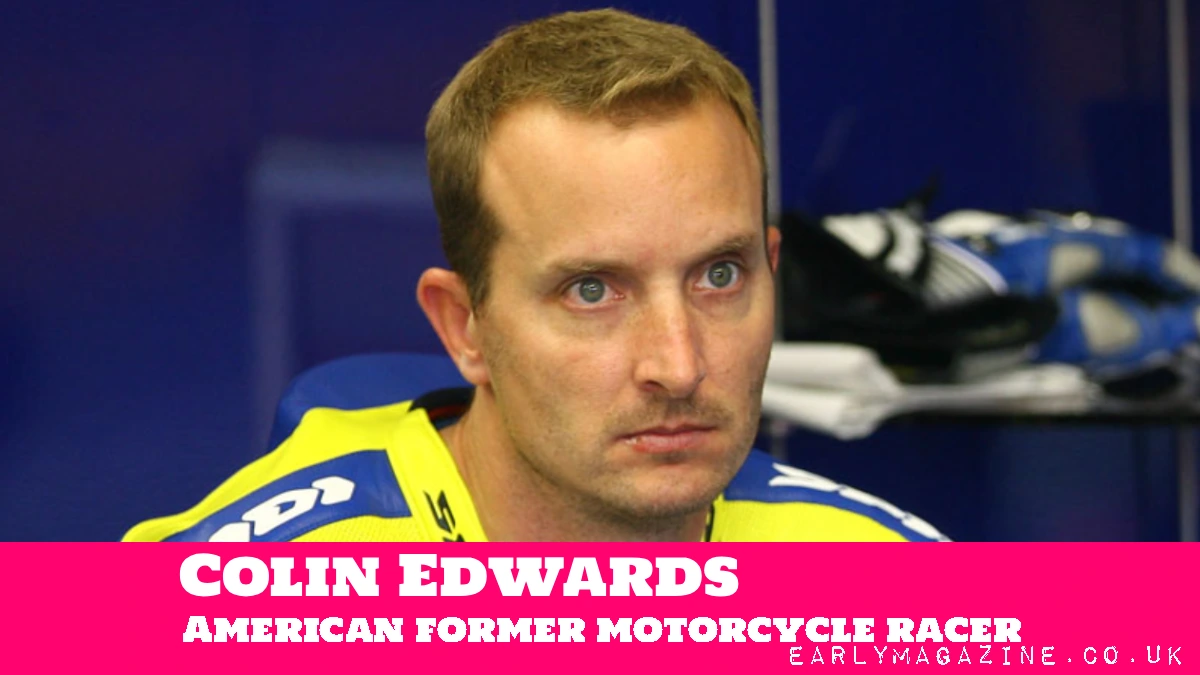
Colin Edwards, the two-time World Superbike Champion nicknamed the “Texas Tornado,” has an estimated net worth of $10 million as of 2025. His wealth comes from over two decades of professional racing, factory team contracts, brand sponsorships, and his ongoing Texas Tornado Boot Camp business in Conroe, Texas.
Who Is Colin Edwards?
If you follow motorcycle racing, you already know the name. Colin Edwards II, born February 27, 1974, in Conroe, Texas, is one of the most recognizable American riders in the history of Grand Prix motorcycle racing. He earned the nickname “Texas Tornado” long before he became a household name in MotoGP paddocks across Europe.
His story did not begin in a big-budget racing program. His Australian father, Colin Edwards Sr., introduced him to a minibike at age three. By four, Edwards was entering actual races. That early start shaped everything that came after. Over the next two decades, he built a career that stretches from amateur dirt ovals in Texas all the way to factory seats alongside Valentino Rossi at Yamaha.
So what is the Colin Edwards net worth today, and how did he build it? This article breaks down his career earnings, his biggest contracts, his business moves after retirement, and where he stands financially in 2025.
Here is what you will find below: an overview of his racing career income, his top sponsorship deals, what his Texas Tornado Boot Camp generates, and how his wealth compares to other MotoGP legends.
From Conroe to World Champion: Career Timeline
Edwards turned professional in 1992 after going undefeated on the amateur circuit in 1991. South West Motorsports gave him his first sponsored ride. Within a year, he had already won five of nine races in the AMA 250cc National Series and claimed the national title.
The big money did not come immediately. Through the mid-1990s, Edwards competed in the Superbike World Championship for Yamaha. The results were mixed, and injuries slowed him. But he kept grinding.
Then came the Honda years. Riding for Castrol Honda from 1998 onward, Edwards broke through. He finished second in the World Superbike Championship in 1999 and 2001. He won it outright in 2000 and 2002. Back-to-back world titles for Honda put him in a completely different earning bracket.
MotoGP: Eleven Years at the Top Level
In 2003, Edwards made the jump to MotoGP with Aprilia. He did not win a race there, but he proved he belonged. His best result in MotoGP overall came in 2005, when he finished fourth in the championship riding alongside Valentino Rossi on the factory Yamaha. That season alone featured podium finishes and placed him among the fastest riders on the planet.
He competed in MotoGP through teams including Telefonica Movistar Honda, Factory Yamaha, Monster Yamaha Tech 3, and the NGM Mobile Forward Racing team. He retired mid-season in 2014, closing out 11 years in the premier class.
Key Career Milestones
| Year | Achievement |
|---|---|
| 1992 | AMA 250cc National Champion |
| 2000 | World Superbike Champion (Honda) |
| 2002 | World Superbike Champion (Honda) |
| 2003 | MotoGP debut with Aprilia |
| 2005 | Career-best 4th in MotoGP Championship |
| 2006 | Narrowly missed MotoGP win at Assen |
| 2014 | Retired from professional racing |
How Much Did Colin Edwards Earn Racing?
Exact salary figures in motorcycle racing are rarely disclosed. But context gives us a solid picture.
Factory team riders in MotoGP during Edwards’s peak years (2003 to 2010) earned between $1 million and $5 million per year depending on their standing. Edwards spent two seasons as a factory Yamaha rider, including his 2005 campaign alongside Rossi. Factory contracts at that level typically included base salaries plus performance bonuses.
Before MotoGP, his World Superbike titles with Honda also carried significant financial packages. Title-winning riders in World Superbike during that era commonly earned in the range of $500,000 to $2 million annually, especially with factory backing.
Over roughly 22 years of professional racing, the cumulative figure from race contracts alone likely reached several million dollars. Add in prize money across AMA, World Superbike, and MotoGP events, and the racing income picture becomes even clearer.
The Role of Sponsorships
Sponsorship money made up a significant portion of Edwards’s income during his career. His major factory backers included Honda, Yamaha, Aprilia, and Kawasaki. Beyond team contracts, personal sponsor deals added to his earnings.
Riders at his level often negotiate personal appearance fees, merchandise revenue shares, and equipment deals on top of their team salary. Edwards was a popular figure with a strong fan base in both the US and Europe, which made him commercially attractive to brands targeting motorsport audiences.
Life After Racing: Business Income
Retirement from racing in 2014 did not mean retirement from income. Edwards was smart about what came next.
Yamaha Test Rider Role
Immediately after stepping away from full-time racing, Yamaha hired Edwards as a factory test rider. That role continued for a couple of years and kept him connected to the sport while generating income without the physical demands of competing.
Texas Tornado Boot Camp (TTBC)
This is where Edwards’s post-career finances get interesting.
Edwards founded the Texas Tornado Boot Camp (TTBC), a Yamaha-partnered motorcycle training facility located near Lake Conroe, Texas, about an hour from Houston. The facility runs programs for riders at every skill level, from beginners to seasoned track day enthusiasts.
The pricing structure gives a clear sense of revenue:
- 1-Day Camp: $350 per person (includes meals)
- 2-Day Camp: $650 to $750 per person (with optional overnight stay)
- 4-Day “Edwards Experience” with Colin himself as instructor: $2,250 per person (includes accommodations and all meals)
The TTBC has attracted riders from as far as Canada. The flagship 4-day camp is a limited-enrollment experience where Edwards personally coaches participants. With group sizes typically around 20 riders and multiple camps held per year, the TTBC generates a steady income stream outside of any racing payments.
The facility has over 100,000 followers on Instagram and is an officially Yamaha-branded training ground, which adds credibility and draws a global audience.
BT Sport Punditry
In 2016, Edwards joined the British MotoGP broadcaster BT Sport as an on-air pundit, providing analysis during pre- and post-race coverage. Television commentary work for major sports networks carries competitive compensation, and this further diversified his income.
Colin Edwards Net Worth: The Numbers
Multiple credible sources, including Celebrity Net Worth, place the Colin Edwards net worth at $10 million as of 2025. Some older estimates put the figure lower (around $1.1 million), but those calculations appear to undercount his full career earnings, post-retirement income, and the value of his business operations.
Breaking it down:
- Racing career earnings (1992–2014): Estimated $5 to $7 million cumulative, including salaries, bonuses, and prize money
- Sponsorships and personal deals: Significant additional income across 22 professional years
- Texas Tornado Boot Camp: Ongoing revenue from a successful, long-running training business
- Post-racing media work: BT Sport punditry and other appearances
- Test rider contracts: Yamaha payments after retirement
The $10 million estimate is the most credible current figure and aligns with what top-tier MotoGP riders from his era typically accumulated over long careers.
How Does He Compare to MotoGP Peers?
For context, Valentino Rossi net worth is estimated at over $200 million, reflecting his unmatched commercial appeal. Jorge Lorenzo is estimated at around $30 to $50 million. Edwards was never in the very top commercial tier of MotoGP, but a $10 million net worth for an American rider who spent 11 years at MotoGP’s top level and won two world titles is a strong result.
Family, Lifestyle, and Community
Edwards is married to Alyssia Edwards, and the couple has three children. His family remains based in the Conroe, Texas area, close to where the TTBC facility operates. By all accounts, his lifestyle reflects a man comfortable in his community rather than chasing celebrity.
He has been involved in charitable work supporting youth participation in motorsports. Through the TTBC, Edwards creates opportunities for younger riders to develop skills under professional guidance. That combination of personal passion and business sense has served him well since retirement.
FAQs About Colin Edwards Net Worth
What is Colin Edwards net worth in 2025?
Estimates place his net worth at approximately $10 million, built from racing earnings, sponsorship deals, the Texas Tornado Boot Camp, and media work.
Did Colin Edwards ever win a MotoGP race?
No. He came close, including losing a victory at the last corner at Assen in 2006, but he never won a MotoGP Grand Prix. He did win two World Superbike Championships.
What is the Texas Tornado Boot Camp?
It is Edwards’s motorcycle training facility near Lake Conroe, Texas. Programs range from 1-day sessions at $350 to 4-day immersive camps at $2,250 per person, with Yamaha as the official partner.
When did Colin Edwards retire from racing?
He retired mid-season in 2014 after competing professionally since 1992.
Is Colin Edwards still involved in motorsport?
Yes. He runs the TTBC, previously worked as a Yamaha test rider, and has appeared as a pundit on BT Sport’s MotoGP coverage.
Colin Edwards built genuine financial security through two decades of elite motorcycle racing and then made smart choices after hanging up his leathers. He did not chase the biggest celebrity deals. Instead, he turned his expertise into a business, stayed connected to the sport he loves, and built something that keeps generating income.
A $10 million net worth is no accident. It reflects consistent performance at the highest levels of the sport, valuable sponsorship relationships, and a willingness to reinvent himself after retirement. For aspiring racers and motorsport fans alike, the Colin Edwards net worth story is proof that sustained excellence on the track, paired with sound business thinking off it, creates real long-term financial strength.
Whether you remember him as the guy who pushed Rossi hard in 2005 or as the face behind the Texas Tornado Boot Camp, Edwards’s financial story is worth knowing.
For more insights into how motorsport legends build lasting wealth on and off the track, visit EarlyMagazine UK — where boundary-breaking careers and financial wisdom come together.
