

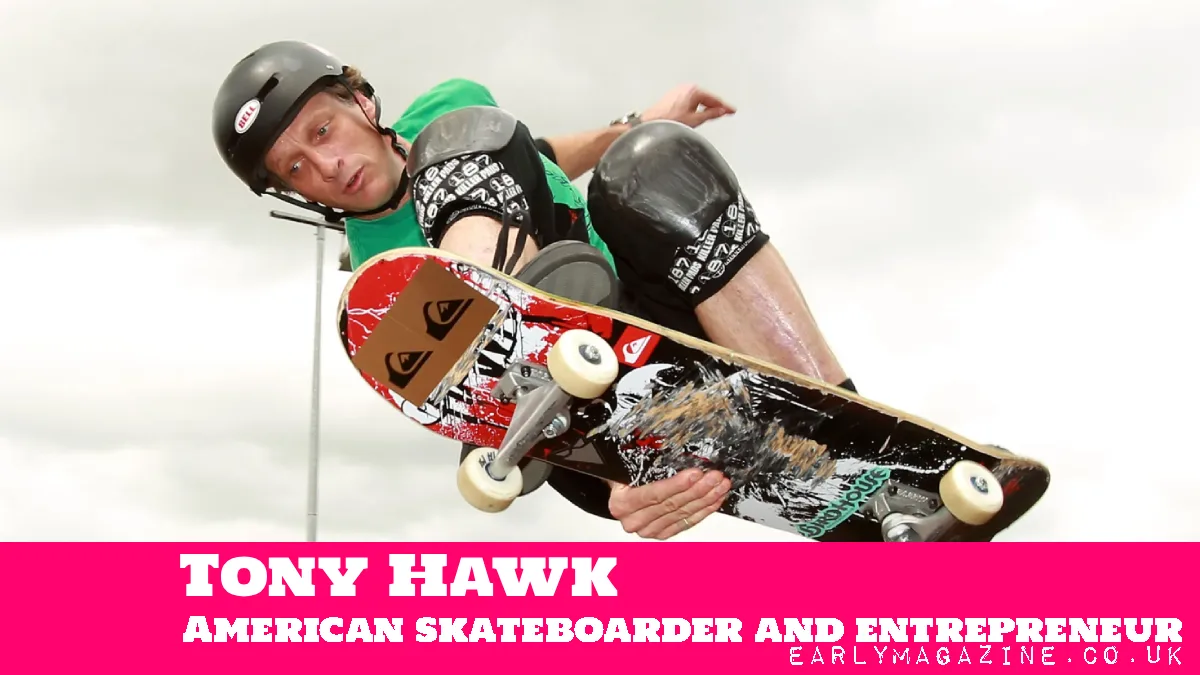
Tony Hawk net worth is approximately $140 million as of 2026. His wealth comes mainly from video game royalties tied to the Tony Hawk’s Pro Skater franchise, Birdhouse Skateboards ownership, endorsement deals, real estate, and decades of competitive skateboarding earnings.
Tony Hawk turned a skateboard and a relentless work ethic into one of the biggest fortunes in action sports. Tony Hawk net worth sits at roughly $140 million as of 2026, a number that puts him far ahead of nearly every other skateboarder in history. That figure didn’t come from one lucky break. It came from decades of contest wins, a video game franchise that changed gaming forever, and business decisions most athletes never attempt.
What makes Hawk’s story interesting isn’t just the size of his bank account. It’s how he built it. According to former Activision CEO Bobby Kotick, Hawk was offered $300,000 for the use of his name and likeness for the original Tony Hawk’s Pro Skater game, and at the time Hawk was living in his car due to financial issues. From that rocky starting point, he built an empire spanning gaming, apparel, real estate, and philanthropy. Here’s exactly how he did it.
This article breaks down Tony Hawk net worth, where his money actually comes from, and how his wealth stacks up against other skateboarders. You’ll get a clear picture of his career earnings, his biggest business wins, and the lifestyle his fortune supports. We’ll also answer the most common questions fans ask about his finances.
Tony Hawk Net Worth At A Glance
Tony Hawk net worth is estimated at $140 million in 2026. Most financial trackers, including Celebrity Net Worth, place the figure consistently in this range, with some estimates running as high as $150 million depending on how private business interests get valued.
Here’s a quick snapshot of his financial profile.
| Category | Detail |
|---|---|
| Net worth (2026) | $140 million |
| Primary income sources | Video game royalties, Birdhouse Skateboards, endorsements, real estate |
| Video game franchise revenue | Over $1.4 billion across 18 titles |
| Competition record | 70+ contest wins, including X Games gold medals |
| Pro career span | 1982 to 2003 |
| Foundation | The Skatepark Project (formerly Tony Hawk Foundation) |
This table covers the basics. The real story is in how each piece connects.
How Tony Hawk Built His Fortune
Early Skateboarding Career
Hawk didn’t waste any time. He turned professional at age 14, and by age 16 he was sponsored by Powell Peralta, Tracker, Sundek, Vans, and SIO. That’s a remarkable amount of brand interest for a teenager.
His talent backed up the hype. By age 16, Hawk had won seven competitions and was widely recognized as the best competitive skateboarder in the world. He used those early earnings wisely too. With the money he made from skateboarding, Hawk bought his first house during his senior year of high school.
Over a 17-year pro career, Hawk racked up more than 70 contest wins, according to Surprise Sports. His landing of the 900, a 900-degree aerial spin, at the 1999 X Games remains one of the most replayed moments in action sports history. That single trick boosted his name recognition at exactly the right time.
The Video Game Goldmine
If one decision built Hawk’s fortune more than any other, it’s the deal he signed for Tony Hawk’s Pro Skater. The game launched in 1999 under Activision and changed how the gaming industry treated extreme sports.
The franchise has since spawned 18 titles, including ten main-series games, four spin-offs, and four repackaged editions. Combined, those games have generated over $1.4 billion in total revenue. Hawk wasn’t just a name on the box either. He stayed involved creatively and negotiated long-term royalty payments instead of a one-time fee.
That royalty structure turned out to be the smartest financial move of his career. Every remaster, every re-release, and every new installment kept adding to his income long after his competitive days ended.
Business Ventures And Brands
Hawk didn’t stop at video games. He built a portfolio of companies that kept his name relevant across multiple industries.
His main ventures include:
- Birdhouse Skateboards — the company he co-founded, giving him creative control and equity instead of just sponsorship checks
- Hawk Clothing — an apparel line tied directly to his personal brand
- 900 Films — a media production company covering action sports content
- Blitz Distribution — a distribution company supporting the skateboarding product market
Each venture reinforced the others. A skater who buys a Birdhouse board might also wear Hawk Clothing or watch content from 900 Films. That overlap is what marketers call brand reinforcement, and Hawk built it before most athletes understood the concept.
Endorsements And Appearance Fees
Major brands wanted Hawk’s name for decades. He’s partnered with companies including Vans, Independent Trucks, Bones Wheels, and Nixon watches, generating millions in direct payments and, in some cases, equity stakes.
His appearance fees remain strong too. A single corporate speaking engagement can bring in $100,000 or more, depending on the size of the event. Companies pay that premium because Hawk speaks credibly to both skate culture and mainstream business audiences, a rare combination.
Tony Hawk’s Investments And Assets
Beyond his core businesses, Hawk built a diversified investment portfolio. According to Surprise Sports, he owns 10 real estate properties, six cars, two yachts, and holds more than $31 million in cash reserves. His stock portfolio reportedly includes nine holdings valued around $17 million.
He also made early bets on companies outside skateboarding entirely. Reports indicate Hawk was an early investor in Blue Bottle Coffee and Nest, two companies that delivered strong returns for early backers. That kind of diversification protects his wealth from any single industry downturn, whether in gaming, apparel, or action sports generally.
Real estate has played a particularly steady role. Hawk has bought and sold multiple California properties over the years, often benefiting from price appreciation in high-demand markets.
Tony Hawk Vs Other Skateboarders’ Net Worth
Hawk’s wealth isn’t just impressive on its own. It’s massive compared to his peers in the sport.
Most professional skateboarders rely heavily on contest prize money and short-term sponsorship deals. That model caps earnings once a skater’s competitive peak ends. Hawk avoided that trap by locking in licensing deals and owning equity in his own brand early in his career.
The result: Hawk consistently ranks as the wealthiest skateboarder in the world, often by a wide margin. Compared to mainstream sports stars in basketball or football, his net worth looks modest. Within skateboarding, though, he’s in a category of his own.
Tony Hawk’s Lifestyle And Giving Back
Despite his fortune, Hawk maintains a fairly grounded lifestyle. He’s known for driving practical vehicles rather than flashy luxury cars, and he still lives in California near the culture that built his career.
Philanthropy plays a major role in how he uses his wealth. Through The Skatepark Project, formerly the Tony Hawk Foundation, he funds the construction of skateparks in underserved communities across the country. The initiative reflects his belief that skateboarding should be accessible, not just profitable.
His family stays connected to that mission too, often participating in foundation events and public appearances tied to youth skate programs.
Frequently Asked Questions
How did Tony Hawk make most of his money?
Most of his wealth comes from video game royalties tied to Tony Hawk’s Pro Skater, plus income from Birdhouse Skateboards, endorsements, and real estate investments built up over decades.
Is Tony Hawk the richest skateboarder?
Yes. Most financial trackers place him well ahead of other professional skateboarders, largely due to his early licensing deals and business ownership outside of contest winnings.
How much did Tony Hawk make from his video games?
The Tony Hawk’s Pro Skater franchise has generated over $1.4 billion across 18 titles. Hawk earned long-term royalties rather than a single flat fee for the use of his name.
Does Tony Hawk still earn money from skateboarding?
He earns indirectly through Birdhouse Skateboards, brand licensing, and appearance fees at events. He retired from full-time competition in 2003 but remains active in the business side of the sport.
What is the Skatepark Project?
It’s Hawk’s philanthropic foundation, formerly named the Tony Hawk Foundation. It funds the construction of skateparks in underprivileged communities around the world.
Final Thoughts
Tony Hawk’s $140 million net worth tells a story bigger than skateboarding. He turned a sport that mainstream culture once dismissed into a media franchise, a business empire, and a charitable platform. His video game royalties alone outpaced what most athletes earn in a lifetime of competition, and his willingness to own equity instead of just collecting paychecks set him apart from nearly everyone in his sport.
The bigger lesson here applies well beyond skateboarding. Hawk built credibility first, then turned that credibility into ownership. He didn’t just chase endorsement checks. He built companies, negotiated for long-term royalties, and diversified into real estate and outside investments. That’s the blueprint behind his fortune, and it’s one any athlete, creator, or entrepreneur can learn from.
For more insights into how modern icons navigate fame and fortune, visit EarlyMagazine UK—where boundary-breaking careers and financial wisdom come together.
