

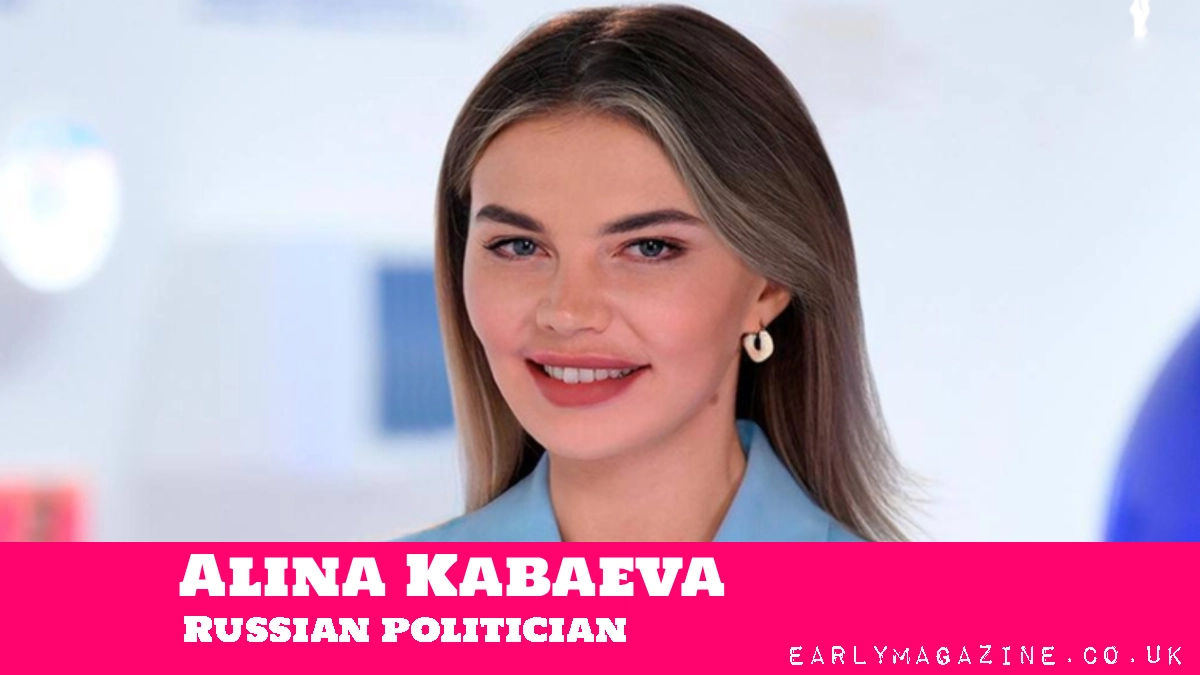
Alina Kabaeva is a legendary Russian rhythmic gymnast who won Olympic gold in 2004 and bronze in 2000. Born in 1983, she became one of the most decorated gymnasts in history before transitioning to politics and media management as National Media Group chairwoman.
The Alina Kabaeva biography tells the remarkable story of a young girl from Uzbekistan who became one of Russia’s most celebrated athletes. Her journey from an overweight child rejected by gymnastics clubs to Olympic champion captures the imagination of sports fans worldwide.
Today, most people know Kabaeva not just for her athletic achievements, but also for her role in Russian media and politics. Her life story shows how determination and hard work can overcome any obstacle, making her an inspiration to young athletes everywhere.
Who is Alina Kabaeva?
Alina Maratovna Kabaeva is a Russian politician, media manager, and retired individual rhythmic gymnast, who has been designated Honoured Master of Sports by the Russian government. She stands as one of the most successful gymnasts in the sport’s history.
Kabaeva is one of the most decorated gymnasts in rhythmic gymnastic history, with 2 Olympic medals, 14 World Championship medals, and 21 European Championship medals. Her athletic career spanned over a decade, during which she revolutionized the sport with new techniques and elements.
After retiring from gymnastics, Kabaeva successfully transitioned into politics and business. She served in Russia’s State Duma and now leads one of the country’s largest media companies. Her influence extends far beyond sports, making her one of Russia’s most prominent public figures.
Many people also recognize her name due to persistent media speculation about her personal relationships. Despite the attention, she has maintained a relatively private lifestyle while building her post-athletic career.
Early Life and Childhood
Kabaeva was born on 12 May 1983 in Tashkent, Uzbek SSR, Soviet Union, the daughter of Lyubov Kabaeva and Marat Kabayev, a professional football player. Her mixed heritage shaped her early identity, with her father being a Muslim Tatar and her mother being Russian.
Growing up in an athletic family, Alina was exposed to sports from an early age. Her father’s professional football career influenced the family’s understanding of dedication and discipline required for athletic success.
Kabaeva started rhythmic gymnastics at age three with coach Margarita Samuilovna. However, her path to greatness wasn’t smooth from the beginning. The young girl faced early rejection that would have discouraged many children.
At age seven, her mother took her to a club in Tashkent, where she was turned away for being too heavy. This painful experience could have ended her gymnastics dreams, but it only strengthened her family’s determination to help her succeed.
Despite this setback, Alina continued training and showed promise in international competitions. In 1993, she represented Kazakhstan at an international competition in Japan, marking her first taste of international competition at just ten years old.
Rise to Gymnastics Stardom
The turning point in Alina’s career came when she was twelve years old. At age 12, Kabaeva moved to Moscow, where her mother took her to the Russian head coach, Irina Viner. This move would change everything for the young athlete.
Even the legendary coach Viner had doubts initially. Viner initially thought she was too short and overweight for gymnastics, but she decided to accept her after watching her practice and seeing her flexibility and jumps. This shows how talent can shine through even when physical appearance suggests otherwise.
The training regime was incredibly demanding. Viner insisted that Kabaeva lose weight immediately; Kabaeva was only allowed to have water for three days, and she was put on a strict diet while training intensively. The young gymnast’s dedication was evident when Kabaeva later said that she begged Viner for food.
Kabaeva made her international debut representing Russia in 1996 and won two silver all-around medals, both behind Yulia Raskina. This marked the beginning of her rise to international prominence at just thirteen years old.
Success came quickly after her debut. In 1998, her first year as an international senior, the 15-year-old Kabaeva won the 1998 European Championships in Portugal. She was making history as the youngest member of Russia’s elite gymnastics team.
Olympic Success and Challenges
The 2000 Sydney Olympics marked Alina’s first Olympic appearance, and expectations were sky-high. At the 2000 Sydney Olympics, in Australia, Kabaeva was expected to claim the gold medal in the all-around. Everyone believed she would capture Russia’s first Olympic gold in rhythmic gymnastics.
However, even champions face setbacks. Due to an error in an otherwise clean performance—she dropped her hoop, and ran to retrieve it outside of the competition area—Kabaeva won the bronze medal. This moment taught her valuable lessons about resilience and perseverance.
The bronze medal was disappointing, but Alina used this experience to fuel her determination. She continued competing at the highest level, winning numerous World and European Championships. Her performances became more consistent and artistic.
She is the winner of the 2004 Summer Olympics in Athens, finally achieving her Olympic gold medal dream. The Athens Olympics represented the pinnacle of her athletic career, where she delivered when it mattered most.
After Athens, Alina made the difficult decision to retire from competitive gymnastics. She was at the peak of her career, but she wanted to explore new challenges beyond the gymnastics floor.
Life After Sports
Retirement from gymnastics opened new doors for the young champion. After the end of her athletic career, Alina Kabaeva was a member of the Russian Federation Civic Chamber Committee on charity and volunteering development from 2005 to 2007. This role introduced her to public service and social responsibility.
Alina’s passion for helping others became evident through her charitable work. In 2008, Alina Kabaeva founded a charitable foundation. Her foundation focuses on supporting young athletes and promoting sports development across Russia.
Today, its largest project is the Alina International Charitable Children’s Rhythmic Gymnastics Festival. This festival brings together young gymnasts from around the world, giving them opportunities to compete and learn from the best.
The festival has become one of the most prestigious events in rhythmic gymnastics. It showcases emerging talent while honoring the sport’s traditions. Young gymnasts consider participating in this festival a significant achievement in their careers.
Alina’s commitment to education also grew during this period. On October 11, 2018, Alina Kabaeva successfully defended her Ph.D. thesis at the Lesgaft National State University of Physical Culture, Sport and Health in St. Petersburg. Her academic work focused on training methods for young gymnasts.
Political and Media Career
Politics became Alina’s next major career chapter. From 2007 to 2014, Kabaeva was a State Duma deputy from United Russia. She used her platform to advocate for sports development and youth programs throughout Russia.
During her time in parliament, she focused on important social issues. Furthermore, Alina Kabaeva advocated for the rights of children and adolescent victims of abuse. A relevant law (Federal Law No. 50 of April 05, 2013) was enacted at her initiative. This shows her commitment to protecting vulnerable young people.
Her transition to media management marked another significant career shift. In September 2014, Kabaeva became the chairwoman of the board of directors of the National Media Group. This appointment made her one of Russia’s most influential media executives.
She was the head of the National Media Group Community Council between February 2008 and September 2014. Her leadership role in one of Russia’s largest media holdings demonstrates her business acumen and strategic thinking.
The National Media Group owns significant stakes in major Russian television channels and publications. Under her leadership, the company has expanded its influence across multiple media platforms and formats.
Recent Activities and Sky Grace Academy
In recent years, Alina has focused heavily on developing the next generation of gymnasts. In 2022, the Alina Kabaeva Sky Grace Rhythmic Gymnastics Academy opened its doors at the Sirius Federal Territory. This academy represents her vision for the future of rhythmic gymnastics.
The school has two notable features. First, its launch has made Kabaeva a significantly more public figure. The school frequently posts videos of training sessions where she advises students. She takes an active role in coaching and mentoring young athletes.
The Sky Grace Academy has received unprecedented support from Russian sports authorities. Sky Grace has been granted unrivaled privileges among Russia’s sports schools. Kabaeva’s creation is authorized to set its own competition calendar, organize tournaments under its own rules. This autonomy allows for innovative training methods.
Kabaeva’s visibility began to change in 2022 when she announced the creation of an international association of rhythmic gymnastics teams called “Sky Grace” and opened a school under the same name. The organization now operates internationally, promoting gymnastics globally.
Recent developments have shown some tension in the gymnastics world. The exceptionalism granted the Nebesnaya Gratsiya academy had at times put Kabaeva at odds with Viner, Kabaeva’s former coach and head of the Russian Rhythmic Gymnastics Federation until her resignation in October 2024.
Personal Life and Relationships
Alina’s personal life has attracted significant media attention over the years. She is reportedly the longtime partner of Russian president Vladimir Putin. However, both individuals have consistently denied these rumors and maintained their privacy.
Rumors of a relationship between Putin, 69, and Alina Kabaeva, 39, date back more than a decade. Despite persistent speculation, neither party has ever confirmed any romantic relationship between them.
The media attention surrounding these rumors has been intense. In 2008, the famously private Russian president was asked about Kabaeva during a news conference in Italy with Silvio Berlusconi. Putin dismissed the questions, calling them inappropriate and invasive.
In announcing sanctions against her on Tuesday, the Treasury Department said “Kabaeva has a close relationship to Putin” and that she was being targeted as part of an effort to “impose severe costs for those who support President Vladimir Putin’s war”. International sanctions have affected her business activities.
Despite the speculation, Alina has maintained her focus on her professional endeavors. She continues to balance her roles in media, sports development, and charitable work while avoiding extensive public commentary on personal matters.
Legacy and Impact
Alina Kabaeva’s impact on rhythmic gymnastics cannot be overstated. She revolutionized rhythmic gymnastics as one of the few gymnasts to have performed new skills and elements, which included the back split pivot with hand help (also known as “The Kabaeva”). Her technical innovations continue to influence the sport today.
Her charitable work has touched countless young lives across Russia and beyond. The annual Alina Festival brings together hundreds of young gymnasts, giving them opportunities to compete at the highest level and learn from experienced coaches.
Through the Sky Grace Academy, she’s creating a new model for gymnastics education. The academy combines traditional Russian coaching methods with innovative approaches, preparing athletes for international success while emphasizing artistic expression.
Her business leadership has also been significant. As chairwoman of National Media Group, she oversees operations that reach millions of Russians daily. Her influence extends across television, digital media, and publishing platforms.
The Alina Kabaeva biography represents more than just athletic achievement. It shows how champions can successfully transition between different careers while maintaining their commitment to excellence. Her journey from rejected child to Olympic champion to media executive inspires people in many fields.
Today, Alina continues expanding her influence through Sky Grace while supporting the next generation of gymnasts. Her story proves that with determination, hard work, and vision, it’s possible to achieve success in multiple areas of life while making a positive impact on others.
Frequently Asked Questions
Is Alina Kabaeva Putin’s relationship?
Alina Kabaeva, 39, has been romantically linked to Putin, 69, for more than a decade and is thought to have had at least three children with him. However, both Putin and Kabaeva have consistently denied any romantic relationship. Kabaeva has denied a relationship with Putin, and Putin has similarly never acknowledged any such partnership. The rumors have persisted for years, but neither party has ever confirmed them publicly. In 2008, the famously private Russian president was asked about Kabaeva during a news conference in Italy with Silvio Berlusconi, where Putin dismissed the questions as inappropriate invasions of privacy.
Is Vladimir Putin still married?
No, Vladimir Putin is not currently married. In 1983, Putin married Lyudmila Aleksandrovna Shkrebneva, who gave birth to two daughters, Maria (1985) and Katerina (1986). They divorced in 2014. On 6 June 2013, Putin and Lyudmila announced that they were planning to divorce; on 1 April 2014, their marriage was formally annulled. Putin has remained unmarried since his divorce from Lyudmila over a decade ago. Despite ongoing speculation about his personal relationships, there has been no official confirmation of any new marriage.
Where does the name Kabaeva come from?
The name Kabaeva comes from her father’s Tatar heritage. Kabaeva was born on 12 May 1983 in Tashkent, Uzbek SSR, Soviet Union, the daughter of Lyubov Kabaeva and Marat Kabayev, a professional football player. Her father is a Muslim Tatar and her mother is Russian. The surname follows Tatar naming traditions, which are part of the broader Turkic language family. Traditionally, Tatar surnames are derived from male ancestors’ names along the paternal line. The majority of Tatar surnames are formed based on male given names. In this case, Kabaeva is derived from her father’s surname “Kabayev,” following the typical Tatar practice of forming family names from paternal lineage.
For more inspiring stories like Alina Kabaeva’s journey from Olympic champion to influential media executive, visit us at EarlyMagazine, where we explore the remarkable paths of individuals who transform their athletic excellence into lasting impact and turn their competitive spirit into their greatest achievement.
