

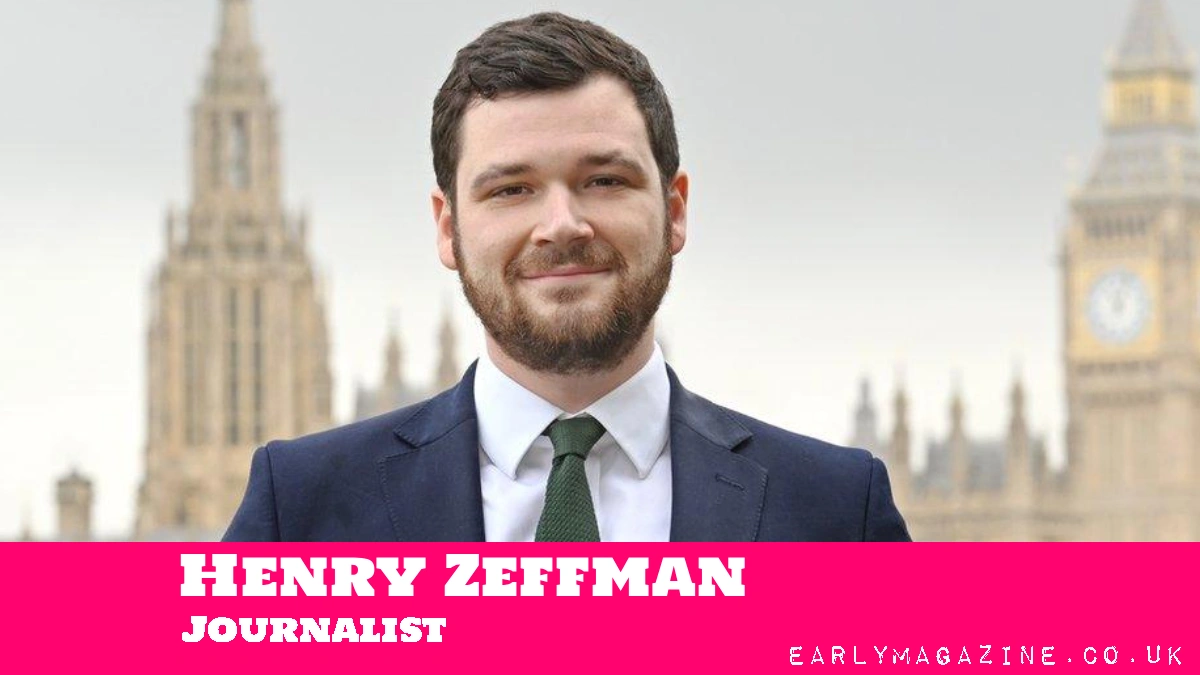
Henry Zeffman is a British journalist who serves as BBC News’s Chief Political Correspondent, a position he took in August 2023. Before joining the BBC, he spent seven years at The Times newspaper, where he worked as Associate Political Editor and covered major political events from Westminster and Washington.
Henry Zeffman has become one of the most recognizable faces in British political journalism. As BBC News’s Chief Political Correspondent since 2023, he delivers daily analysis of Westminster’s most pressing stories. His career trajectory from Oxford graduate to leading broadcast journalist offers valuable insights for anyone interested in political reporting or media careers.
This article covers Zeffman’s educational background, career progression, and his role at the BBC. You’ll learn how he built his reputation and what makes his reporting stand out.
Early Life and Education
Academic Foundation at Highgate School
Zeffman attended Highgate School, a private day school in North London. This institution provided him with a strong academic foundation. The school is known for producing journalists, writers, and public figures.
His early education shaped his analytical thinking. These skills would later prove essential in his journalism career.
Oxford University and PPE Degree
He studied Philosophy, Politics, and Economics (PPE) at Brasenose College, Oxford. The PPE program is a traditional path for British journalists and politicians. During his undergraduate years, he participated in student governance, gaining practical experience in political processes.
Zeffman received the Anthony Howard Award while at Oxford, recognizing his journalistic potential. This prestigious award honors outstanding student journalism and often predicts successful media careers.
Family Background
Zeffman has a brother Oliver who works as a conductor, and a sister who studied law. His family includes notable figures—pianist Solomon Cutner was a relative. This creative and intellectual family environment likely influenced his career choice.
Career at The Times (2016-2023)
Breaking into Political Journalism
Zeffman spent seven years at The Times, building his reputation through consistent reporting. He started covering Westminster politics during a tumultuous period in British government. Brexit negotiations, leadership changes, and coalition politics provided rich material for his reporting.
His work focused on breaking news and analysis. He developed sources across political parties and established himself as a reliable reporter.
Role as Associate Political Editor
Zeffman worked as Associate Political Editor at The Times, a senior position that involved coordinating political coverage. In this role, he managed major stories and provided strategic direction for the paper’s political desk.
He covered three prime ministers during his tenure. His reporting spanned domestic policy, international relations, and party politics. The Times recognized his ability to explain complex political situations clearly.
Washington Correspondent Experience
Zeffman served as Washington Correspondent for The Times. This international posting expanded his perspective beyond UK politics. His time in Washington added depth to his understanding of international politics and diplomacy.
He covered US-UK relations during a critical period. His reporting included presidential politics, congressional developments, and transatlantic policy issues. This experience proved valuable for understanding Britain’s global position.
Move to BBC News
Chief Political Correspondent Appointment
In August 2023, Zeffman joined BBC News as Chief Political Correspondent. He replaced Nick Eardley in the role. The appointment marked a significant career shift from print to broadcast journalism.
His appointment was seen as a strategic choice by the BBC to strengthen their political coverage. The BBC needed someone who could handle breaking news while providing thoughtful analysis. Zeffman fit both requirements.
The role involves daily appearances across BBC platforms. He reports for BBC News television, radio, and digital services. His work reaches millions of viewers and listeners each day.
Responsibilities and Coverage Areas
At the BBC, Zeffman provides daily political updates and breaking news coverage. His responsibilities include:
- Covering Prime Minister’s Questions and parliamentary debates
- Analyzing government policy announcements
- Reporting on party political developments
- Providing context for breaking political stories
- Conducting interviews with ministers and politicians
He specializes in government and politics, law and legal affairs, and general assignment news. His reporting extends beyond Westminster to include regional and international political stories when they affect UK interests.
Broadcasting Style and Approach
Zeffman’s broadcasting style emphasizes clarity over complexity. He explains political developments in accessible language without oversimplifying. His background in print journalism gives him strong writing skills that translate well to broadcast scripts.
He appears regularly on BBC News bulletins, Question Time, and Newsnight. His calm demeanor and thorough knowledge make him effective in live reporting situations. He handles breaking news with composure while maintaining analytical depth.
Personal Life
Age and Background
Henry Zeffman was born on August 16, 1993, making him 31 years old. His youth in such a prominent role demonstrates the rapid career progression possible in journalism. He represents a generation of political reporters who came of age during the Brexit era.
He maintains a private personal life despite his public role. This approach lets his work speak for itself rather than his personal circumstances.
Privacy and Public Profile
Zeffman keeps family and relationship details out of public view. He focuses professional attention on his reporting rather than personal brand building. This choice contrasts with some journalists who maintain high-profile social media presences.
His Twitter account (@hzeffman) has 59,700 followers, primarily used for professional updates and story links. He joined Twitter in May 2011, building his following over more than a decade.
Impact on Political Journalism
Reporting During Major Events
Zeffman has covered several defining moments in recent British politics. His reporting spans multiple prime ministerial transitions, general elections, and the ongoing evolution of UK-EU relations. He witnessed the COVID-19 pandemic’s impact on government operations and reported on its political consequences.
His coverage of Downing Street reorganizations provides insider perspective on how government machinery works. He reports on changes involving people who “are not even household names in Westminster,” giving readers insight into behind-the-scenes political operations.
Analysis and Commentary
Beyond breaking news, Zeffman provides analysis that helps audiences understand political developments. He connects current events to broader political trends. His explanations make complex parliamentary procedures and policy debates accessible to general audiences.
His radio documentaries add depth to daily news coverage. These longer-form pieces allow for more thorough exploration of political topics. They demonstrate his ability to work across different media formats.
Career Comparison: BBC vs. The Times
| Aspect | The Times (2016-2023) | BBC News (2023-Present) |
|---|---|---|
| Primary Medium | Print and digital text | Television, radio, and digital |
| Audience Reach | National newspaper readers | Multi-platform, millions daily |
| Role Focus | Written analysis and investigation | Live reporting and broadcast analysis |
| Story Length | Longer articles with detail | Shorter segments with clarity |
| Update Frequency | Daily editions | Multiple broadcasts daily |
| International Scope | Washington correspondent role | UK-focused with international context |
Key Skills for Political Journalism
Essential Competencies
Zeffman’s career demonstrates several critical skills for political journalism:
Source Development: Building relationships with politicians, officials, and party insiders provides access to information and quotes. Trust between journalists and sources enables better reporting.
Analytical Thinking: Breaking down complex policy issues into understandable explanations requires strong analytical skills. Political journalists must see connections between events and trends.
Clear Communication: Whether writing or broadcasting, clarity matters most. Audiences need to understand political developments without wading through jargon.
Speed and Accuracy: Political news moves quickly. Journalists must report breaking stories accurately while working under tight deadlines.
Adaptability: The shift from print to broadcast requires different skills. Successful journalists adapt their techniques to different media formats.
Professional Development Path
For those interested in following a similar career path:
- Education: Study politics, journalism, or related fields at university
- Student Media: Gain experience through campus newspapers or radio
- Internships: Secure placements at newspapers or broadcast outlets
- Entry Roles: Start in junior reporting positions covering local news
- Specialization: Develop expertise in political reporting
- Network Building: Cultivate sources and professional relationships
- Career Progression: Move to larger outlets and more senior roles
Future of Political Journalism
Changing Media Environment
Political journalism faces significant changes. Traditional broadcast and print media compete with digital platforms and social media. Journalists must reach audiences across multiple channels while maintaining quality standards.
Zeffman’s career demonstrates how journalists adapt to this environment. His move from print to broadcast shows the value of versatility. Political reporters need skills across different media formats.
Trust and Credibility
Public trust in media remains crucial for political journalism. Reporters must maintain accuracy and impartiality to serve their audiences effectively. Zeffman’s measured approach and factual reporting style reflect these priorities.
The BBC’s public service mandate requires balanced political coverage. This framework supports journalists who prioritize facts over opinion. Zeffman’s work fits this model well.
Frequently Asked Questions
How old is Henry Zeffman?
Henry Zeffman is 31 years old, born on August 16, 1993. His age places him among younger political correspondents at major broadcast outlets, demonstrating rapid career advancement in journalism.
What did Henry Zeffman study at Oxford?
He studied Philosophy, Politics, and Economics (PPE) at Brasenose College, Oxford. This degree program is a common path for British political journalists and has produced numerous prominent reporters and politicians over the decades.
When did Henry Zeffman join the BBC?
Zeffman joined BBC News as Chief Political Correspondent in August 2023. He left The Times after seven years to take this prominent broadcasting role, marking a significant career transition.
What was Henry Zeffman’s role at The Times?
Zeffman worked as Associate Political Editor at The Times and also served as Washington Correspondent. During his seven-year tenure, he covered major political events and built his reputation as a thorough and reliable political reporter.
Henry Zeffman’s journey from Oxford student journalist to BBC’s Chief Political Correspondent shows how dedication and clear communication can build a media career in just a decade. His ability to make complex Westminster politics accessible to everyday audiences reflects a commitment to informed public discourse. At EarlyMagazine, we spotlight emerging voices like Zeffman who are shaping how the next generation understands politics and current affairs—journalists who prove that youth and expertise aren’t mutually exclusive, but rather a powerful combination for creating more engaged citizens.
