

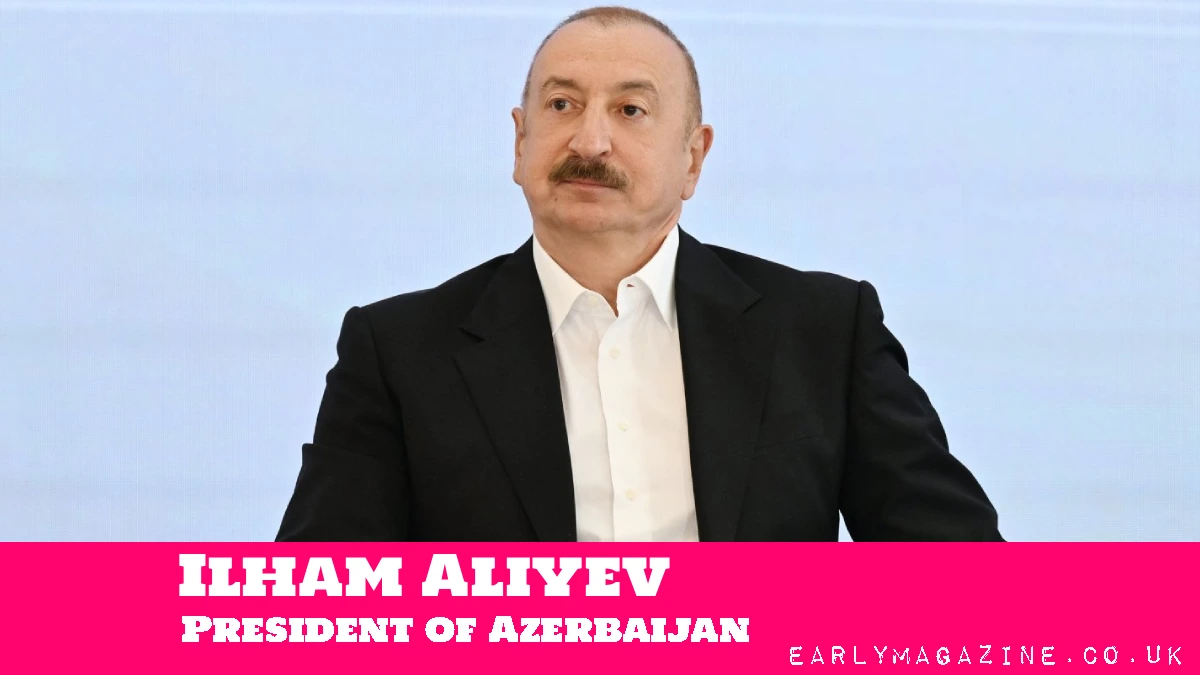
Ilham Aliyev net worth is estimated between $500 million and $2.9 billion, though exact figures remain unclear due to offshore holdings and lack of transparency. His family controls significant assets in real estate, gold mining, telecommunications, and banking across multiple countries.
The president of Azerbaijan has ruled the country for over two decades. During this time, questions about his financial empire have surfaced repeatedly. Ilham Aliyev net worth estimates vary wildly, but investigative reports suggest billions hidden across international holdings.
His family’s wealth extends far beyond official presidential salaries. Leaked documents have traced luxury properties, offshore companies, and business interests spanning from London to Dubai. The gap between Azerbaijan’s poverty rates and the first family’s lifestyle raises eyebrows globally.
What This Article Covers
This article examines the documented evidence of Aliyev’s wealth accumulation. You’ll learn about specific assets tied to his family, how petroleum revenues flow through Azerbaijan’s economy, and what international investigations have uncovered. We’ll also compare his wealth to other world leaders and address common questions about transparency in Azerbaijan’s government.
How Much Is Ilham Aliyev Worth?
Current estimates place Ilham Aliyev net worth at approximately $900 million, though some reports suggest figures as low as $500 million. The wide range reflects the difficulty of tracking assets hidden through offshore companies.
His official presidential salary stands at just $230,000 per year. The real wealth lies in what his family controls through state-connected enterprises and international real estate portfolios. Azerbaijan’s oil riches provide the foundation for this fortune.
The Path to Power and Wealth
Aliyev’s journey began in 1994 when he became Vice-President of SOCAR, the state-owned oil company, positioning him at the center of Azerbaijan’s resource economy. This role gave him direct access to the country’s most valuable commodity.
His father, Heydar Aliyev, served as president from 1993 to 2003. When his father’s health declined, Ilham was appointed prime minister. He became president in October 2003 through an election marked by irregularities, shortly before his father’s death.
The 2009 constitutional referendum removed presidential term limits, allowing Aliyev to run indefinitely. His wife, Mehriban Aliyeva, now serves as Vice President. This concentration of power within one family has enabled unprecedented control over state resources and business opportunities.
Where The Aliyev Family Keeps Its Money
The family’s property portfolio spans multiple continents. Aliyev’s son Heydar owns nine luxury properties in Dubai valued at $45 million, while his daughters Arzu and Leyla collectively own $30 million worth of Dubai real estate.
London represents their largest real estate investment. The Pandora Papers revealed the Aliyev family secretly acquired property in Britain worth nearly $700 million through offshore companies. When Heydar was just 11 years old, he owned four buildings in London’s Mayfair district. A $44.7 million building was purchased by a front company and transferred to him a month later.
Investigators found 84 offshore companies registered in the British Virgin Islands that the Aliyevs have owned since 2006. These entities appear connected through shared directors and simultaneous filing dates. The Panama Papers exposed Aliyev’s daughters controlling Panama and British Virgin Islands companies, with one Panamanian entity holding stakes in gold mining operations.
AtaHolding, created by Azerbaijan’s tax minister and later involving the Aliyev family, became one of the country’s biggest conglomerates with over $490 million in assets. Arzu Aliyeva holds shares in Silk Way Bank and SW Holding, which owns the state airline and serves as the government’s official contractor.
Azerbaijan’s laws prohibit public officials from owning private businesses, but these restrictions don’t apply to spouses and children. This legal loophole has allowed the Aliyev family to maintain control over key sectors while technically remaining compliant.
Azerbaijan’s Oil Economy: The Source of Wealth
The State Oil Company of Azerbaijan Republic (SOCAR) operates as the country’s dominant energy entity. In 2024, SOCAR transferred 2.4 billion manats to the state budget, representing more than half of total oil company payments.
Oil and gas revenues provided 48.35 percent of Azerbaijan’s 2024 budget, totaling nearly $7.77 billion. Given Aliyev’s political control and his family’s business interests, the line between state resources and personal wealth becomes blurred.
What International Investigations Revealed
The 2016 Panama Papers leak exposed financial secrets of political figures worldwide. Documents showed the Aliyev family used Panama foundations and companies to hold secret stakes in gold mines and London real estate. Investigative journalist Khadija Ismayilova played a key role in uncovering these connections before Azerbaijani authorities imprisoned her in 2015 on charges widely believed to be retaliation.
The 2021 Pandora Papers provided even more detailed evidence. A network of offshore companies administered by Trident Trust helped the Aliyevs secretly own vast real estate holdings in London. Documents showed groups of companies filed paperwork or changed directors on identical dates, suggesting coordinated management.
These investigations revealed a consistent pattern: trusted associates initially purchase properties through offshore vehicles, then transfer ownership to family members. This system provides deniability while maintaining ultimate control. The Aliyev family has consistently declined to respond to these allegations or provide alternative explanations.
Comparing Aliyev to Other World Leaders
Ilham Aliyev ranks among the world’s wealthiest political leaders. Estimates place Russian President Vladimir Putin’s wealth as high as $200 billion, making him potentially the richest political figure globally.
Other leaders in similar wealth ranges include Turkey’s Recep Tayyip Erdoğan at approximately $500 million, Rwanda’s Paul Kagame at $500 million, and South Africa’s Cyril Ramaphosa at $450 million. Donald Trump’s net worth stands at $7.2 billion, though most predates his presidency.
The disconnect between official salaries and actual wealth appears across many nations. Aliyev’s presidential salary ranges from $145,493 to $230,000 annually, depending on the source. Either figure pales compared to the family’s documented assets. This gap characterizes leaders in countries with significant state control over natural resources and limited financial transparency.
The Impact on Azerbaijan’s Citizens
Azerbaijan has experienced energy-driven economic growth, but prosperity hasn’t reached all citizens equally. While the Aliyev family accumulates properties in global capitals, many Azerbaijanis face economic challenges. The concentration of wealth at the top creates stark inequality.
Aliyev’s regime faces regular criticism for limiting political freedoms. International observers describe Azerbaijan’s government as authoritarian, characterized by the absence of free elections, widespread corruption, and serious human rights violations. In late 2023 and 2024, authorities arrested at least six journalists on charges widely viewed as politically motivated.
The family’s enormous wealth reinforces political power. Financial resources enable extensive lobbying efforts and international image management through major events like the European Games and Formula 1 races.
Family Members and Their Holdings
| Family Member | Known Assets | Estimated Value |
|---|---|---|
| Heydar Aliyev (Son) | 9 Dubai properties, 4 London buildings | $45+ million |
| Arzu Aliyeva (Daughter) | Silk Way Bank shares, SW Holding, Dubai real estate | $30+ million |
| Leyla Aliyeva (Daughter) | Dubai real estate, offshore companies | $30+ million |
| Mehriban Aliyeva (Wife) | AtaHolding interests, various properties | Undisclosed |
The true value likely exceeds these documented figures. Many assets remain hidden through complex corporate structures that investigators continue working to unravel.
How the System Works
Azerbaijan’s anti-corruption laws target public officials directly. By placing assets in the names of family members, the Aliyev clan technically complies with these rules. Children and spouses face no restrictions on business ownership.
Trusted associates like Suleyman Kamilov appear in 35 of the 84 offshore companies linked to the Aliyev family. These individuals acquire properties and hold them temporarily before transferring ownership. In three documented cases, Kamilov personally acquired offshore entities, accumulated real estate, then transferred everything to the Aliyev family. This system provides plausible deniability.
Tax minister Fazil Mammadov created AtaHolding in 2003, shortly before the presidential election. Two years later, Mehriban Aliyeva became one of two managers of the related foundation. This partnership between a government official and the first family exemplifies how public positions translate into private wealth.
Questions About Transparency
Azerbaijan maintains minimal financial disclosure requirements for public officials. The public cannot access detailed information about their leaders’ wealth, making independent verification nearly impossible.
Offshore jurisdictions like the British Virgin Islands and Panama provide confidentiality for company owners. The leaked documents that exposed the Aliyev holdings came from law firms managing these structures. Without such leaks, the true extent of hidden wealth would remain unknown.
Government officials dismiss corruption allegations as foreign interference, arguing that Western media targets Azerbaijan unfairly. This defensive posture avoids addressing specific documented findings like the £700 million in London properties or the offshore company network.
Frequently Asked Questions
How did Ilham Aliyev become so wealthy?
Control over Azerbaijan’s oil resources through SOCAR and family business interests in state-connected enterprises.
Is Ilham Aliyev’s wealth legal?
Many assets are held by family members rather than Aliyev directly. This technically complies with laws prohibiting official business ownership.
What is Ilham Aliyev’s official salary?
Between $145,000 and $230,000 annually, depending on the source. Far below his family’s documented wealth.
How much London real estate does the family own?
Investigative reports document nearly $700 million in British property acquired through offshore companies since 2006.
Can Azerbaijan’s citizens access information about presidential wealth?
No comprehensive financial disclosure system exists. Most information comes from international investigations rather than official sources.
Conclusion
Ilham Aliyev net worth estimates range from $500 million to $900 million, making him one of the world’s wealthiest political leaders. This fortune extends far beyond his modest official salary through offshore companies, luxury properties, and stakes in Azerbaijan’s most profitable industries.
International investigations from the Panama Papers to the Pandora Papers have revealed unprecedented details. Eighty-four offshore companies linked to the Aliyevs show a coordinated system for managing hidden assets. Trusted associates acquire properties through offshore vehicles, then transfer ownership to family members.
The concentration of both political power and economic resources in one family raises fundamental questions about governance. Azerbaijan’s oil wealth could fund broad-based development, yet much flows toward enriching a narrow elite. Limited press freedom and weak institutional checks create conditions for massive wealth concentration, while the international financial system’s opacity enables accumulation through offshore structures that shield assets from public scrutiny. These patterns will likely continue across resource-rich nations until systemic reforms address transparency and accountability.
For more insights into how global leaders navigate power and wealth, visit EarlyMagazine UK—where political finance and investigative reporting come together.

No Comments
This actually answered my drawback, thank you!
Your comment is awaiting moderation.