

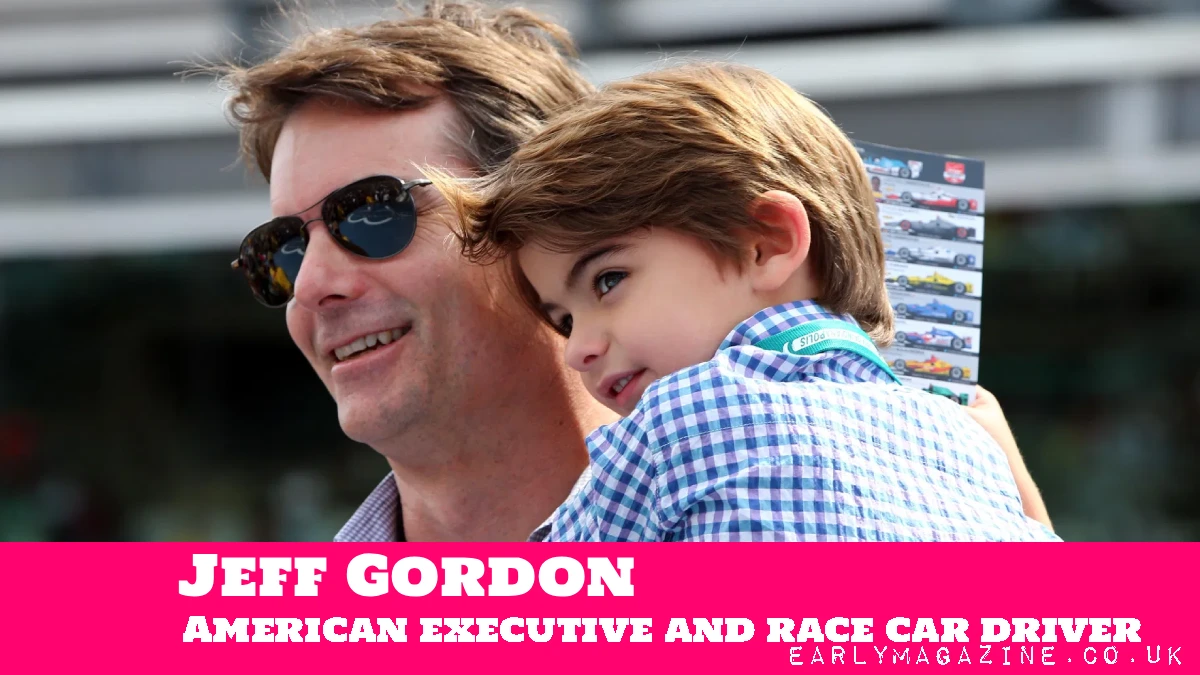
Jeff Gordon is a four-time NASCAR Cup Series champion who transformed stock car racing into mainstream entertainment. Born in California in 1971, he won 93 races and became one of NASCAR’s greatest drivers before transitioning to broadcasting and business leadership.
Jeff Gordon changed everything about NASCAR racing. This Jeff Gordon biography shows how a young kid from California became one of the sport’s biggest stars and helped bring racing to fans everywhere. Gordon won four championships, 93 races, and made NASCAR popular with people who never cared about cars before.
His story starts with a five-year-old boy getting his first race car. It ends with a Hall of Fame career that lasted over two decades. Along the way, Gordon broke records, started rivalries, and proved that talent comes from anywhere.
Who is Jeff Gordon?
Jeff Gordon is one of NASCAR’s most successful drivers ever. He won four Cup Series championships during the 1990s and 2000s. Gordon also claimed three Daytona 500 victories and five Brickyard 400 wins. His 93 career victories rank third in NASCAR history.
Gordon changed how people saw NASCAR drivers. He was young, clean-cut, and comfortable on camera. This helped racing reach new audiences who might never have watched before. Gordon brought fans from all backgrounds to the sport.
The driver from California spent his entire career with Hendrick Motorsports. He drove the famous number 24 car with its rainbow paint scheme. Today, Gordon serves as vice chairman of the same team where he built his legend.
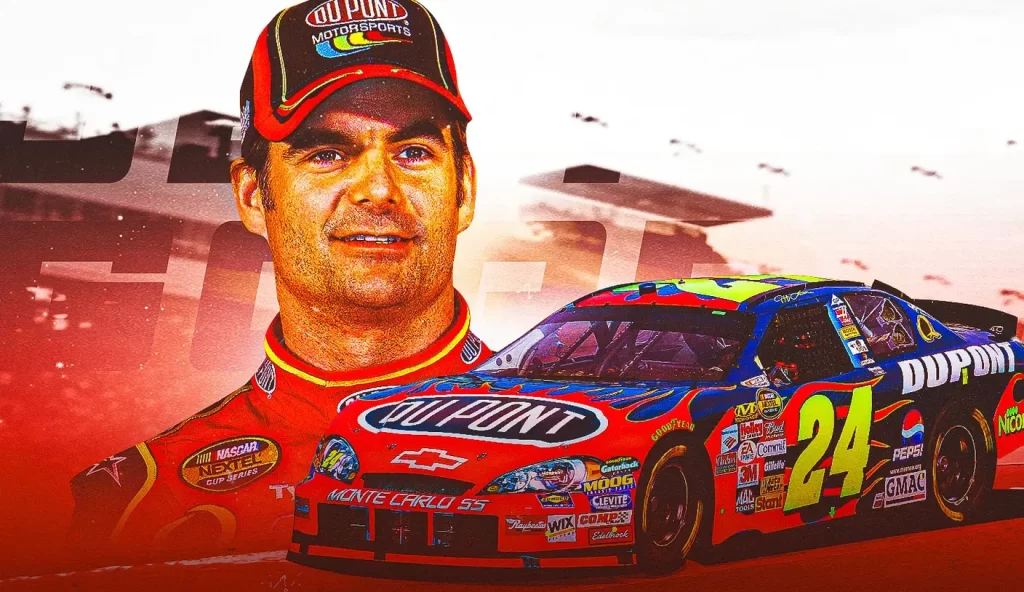
Early Life and Childhood
Jeffery Michael Gordon was born on August 4, 1971, in Vallejo, California. His parents Will and Carol divorced when he was just a baby. Carol started dating John Bickford, who became Jeff’s stepfather and biggest supporter.
John Bickford changed Jeff’s life when he bought him a BMX bicycle at age four. The next year, Bickford purchased a quarter midget race car for five-year-old Jeff. This tiny car would start an amazing journey that lasted decades.
Jeff took to racing immediately. He practiced every night after his stepfather got home from work. They would run lap after lap until it got dark. Jeff couldn’t get enough of the feeling of speed and competition.
By age six, Gordon had won 35 main events and set five track records. Other parents accused Bickford of cheating because Jeff was so good. Bickford would sell Jeff’s cars to competitors to prove they weren’t rigged. Then he’d build new ones that Jeff would drive to victory again.
The family faced a big decision when Jeff turned 13. California had age restrictions that prevented him from racing against adults. If Jeff wanted to keep improving, they needed to move somewhere with better racing opportunities.
Racing Career Beginnings
In 1985, the Gordon family made a life-changing move from California to Pittsboro, Indiana. This small town was close to Indianapolis and had a strong racing community. Jeff could finally race against adults and face real competition.
Jeff started racing sprint cars and midget cars in Indiana. He won three races in his first year in sprint cars. At 16, he became the youngest driver ever to get a USAC license. This opened doors to bigger races and better opportunities.
Gordon’s talent was obvious to everyone who watched him race. He won the USAC National Midget championship in 1990 when he was just 19 years old. The next year, he claimed the USAC Silver Crown Series title. He was the youngest driver ever to win that championship.
NASCAR scouts started paying attention to Gordon’s success. Hugh Connerty gave him a chance to race in the Busch Series in 1990. Gordon then joined Bill Davis Racing and won Rookie of the Year in 1991. He also set a NASCAR record with 11 pole positions in 1992.
Rick Hendrick saw Gordon race at Atlanta Motor Speedway in 1992. Gordon was driving a loose car that should have crashed, but he controlled it perfectly and won the race. Hendrick immediately told his team to sign “that Gordon kid” no matter what it cost.
NASCAR Success and Championships
Gordon made his NASCAR Cup Series debut in November 1992 at the same race where Richard Petty retired. It was symbolic of racing’s changing of the guard. Gordon won Rookie of the Year in 1993 and scored his first victory in 1994 at Charlotte Motor Speedway.
His breakthrough moment came at the inaugural Brickyard 400 at Indianapolis Motor Speedway in 1994. Gordon won this prestigious race in front of a huge crowd at his home state track. The victory made him a superstar and proved he could win the biggest races.
Gordon’s first championship came in 1995 when he was just 24 years old. He became the youngest champion in NASCAR’s modern era. His crew chief Ray Evernham and the “Rainbow Warriors” pit crew helped make the number 24 car nearly unbeatable.
The late 1990s belonged to Gordon. He won championships in 1997 and 1998, taking 13 races in the 1998 season to tie a modern era record. Gordon also won his first Daytona 500 in 1997, becoming the youngest winner ever of NASCAR’s biggest race.
Gordon added a fourth championship in 2001 with new crew chief Robbie Loomis. Between 1995 and 2001, he won 56 races and completely dominated NASCAR. His success created a rivalry with Dale Earnhardt that captivated racing fans everywhere.
Personal Life and Family
Gordon’s personal life attracted as much attention as his racing. He married Brooke Sealey, a former Miss Winston, in 1994. Their relationship made Gordon even more famous, but it ended in a highly publicized divorce in 2002.
The divorce cost Gordon $15.3 million, one of the largest settlements in sports history. Sealey claimed that Gordon had an affair with model Deanna Merryman. The legal battle played out in newspapers and magazines across the country.
Gordon found happiness again when he met Belgian model Ingrid Vandebosch at a dinner party in 2002. They didn’t start dating until 2004, but their relationship grew stronger over time. Gordon proposed in 2006 at a croquet event in California.
The couple married in a private ceremony in Mexico in November 2006. Their daughter Ella Sofia was born in June 2007, followed by son Leo Benjamin in August 2010. Gordon had special arrangements for both births, including standby drivers ready to replace him if needed.
Gordon established the Jeff Gordon Children’s Foundation in 1999 to help kids with cancer and other serious illnesses. The foundation has granted over $25 million to support children and families. Gordon also opened a children’s hospital in North Carolina in 2006.
Life After Racing
Gordon announced his retirement from full-time racing in January 2015. His final season was emotional for fans who had watched him for over two decades. He won one race that year and finished third in the championship standings.
The transition from driver to broadcaster came naturally for Gordon. FOX Sports hired him as a race analyst for their NASCAR coverage. His first broadcast was the 2016 Daytona 500, marking a new chapter in his career.
Gordon’s broadcasting work earned praise from fans and critics. His experience as a driver helped him explain racing strategy in simple terms. He worked alongside Mike Joy and other NASCAR legends to bring races to television audiences.
In 2016, Gordon came out of retirement temporarily to help Dale Earnhardt Jr., who was dealing with concussion symptoms. Gordon drove eight races in the number 88 car, showing he could still compete at the highest level.
Hendrick Motorsports named Gordon vice chairman in 2022. This executive role puts him second only to owner Rick Hendrick in the team’s leadership structure. Gordon helps guide the same organization where he built his racing legacy.
Legacy and Impact
Jeff Gordon’s impact on NASCAR extends far beyond his 93 victories and four championships. He helped transform stock car racing from a regional sport into mainstream entertainment. Gordon attracted new fans who might never have watched racing otherwise.
Gordon was inducted into the NASCAR Hall of Fame in 2019 as a first-ballot selection. He appeared on 96% of the ballots, the highest percentage in Hall of Fame history. The honor recognized his incredible achievements both on and off the track.
His records include 81 pole positions and 797 consecutive starts, an “iron man” streak that lasted his entire career. Gordon won at 24 of the 25 tracks where he competed, with Kentucky Speedway being the only place he never reached victory lane.
The number 24 car that Gordon made famous continues racing today. His partnership with Hendrick Motorsports as both driver and owner helped the team become NASCAR’s most successful organization. Gordon also co-owned Jimmie Johnson’s championship-winning car.
Gordon’s influence reaches beyond racing into business and entertainment. He hosted Saturday Night Live, appeared in movies and TV shows, and became one of sports’ most recognizable faces. His crossover appeal brought NASCAR into popular culture like never before.
Today, Jeff Gordon continues shaping NASCAR’s future through his executive role at Hendrick Motorsports. His journey from that five-year-old kid in a quarter midget to NASCAR legend proves that dreams really can come true with talent, hard work, and determination.
To learn more about Jeff Gordon’s family life and his daughter’s interests, read about Ella Sofia Gordon and how the Gordon family maintains privacy while supporting each other’s endeavors.

No Comments
hello there and thank you to your info – I’ve definitely picked up something new from proper here. I did then again experience some technical issues the use of this site, since I skilled to reload the website lots of instances previous to I may get it to load properly. I were wondering if your web hosting is OK? No longer that I’m complaining, but slow loading circumstances times will often affect your placement in google and can harm your high-quality ranking if ads and ***********|advertising|advertising|advertising and *********** with Adwords. Well I am adding this RSS to my e-mail and could look out for a lot extra of your respective exciting content. Ensure that you replace this once more soon..
Your comment is awaiting moderation.