

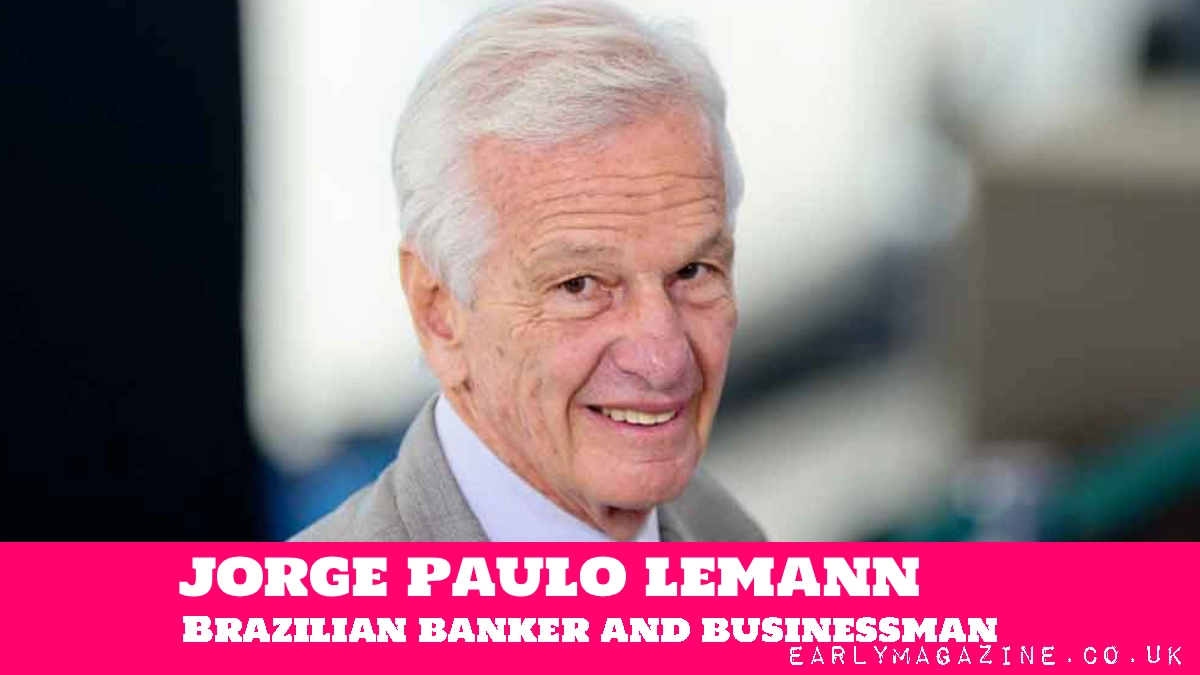
Jorge Paulo Lemann net worth stands at approximately $15.4 billion as of 2025. The Brazilian billionaire built his fortune through 3G Capital, acquiring and restructuring major brands including Anheuser-Busch InBev, Kraft Heinz, and Restaurant Brands International. His zero-based budgeting approach transformed these companies into highly profitable operations.
You’ve probably consumed his products today without realizing it. That morning beer, the ketchup on your burger, or the coffee you grabbed on your way to work—there’s a good chance Jorge Paulo Lemann had a hand in bringing them to your table. The Brazilian billionaire has quietly built one of the most impressive business empires in modern history, and his Jorge Paulo Lemann net worth reflects decades of strategic acquisitions and ruthless efficiency.
Lemann isn’t your typical flashy billionaire. He doesn’t launch rockets or buy social media platforms. Instead, he’s mastered the art of acquiring household brands and transforming them into profit machines. His approach has made him one of the wealthiest people in Latin America and a major player in global business.
This article breaks down how Lemann built his fortune, the companies he controls, his investment philosophy, and what his current wealth looks like in 2025. You’ll also learn about his background, the controversies he’s faced, and what sets him apart from other billionaires.
Who Is Jorge Paulo Lemann?
Born in Rio de Janeiro in 1939 to a Swiss father and Brazilian mother, Lemann showed early signs of competitive drive. He represented Brazil in tennis at the 1962 Davis Cup before pivoting to finance. After earning an economics degree from Harvard, he returned to Brazil and co-founded Banco Garantia in 1971.
That investment bank became his launchpad. Lemann and his partners sold it to Credit Suisse in 1998 for $675 million, then used those proceeds to start 3G Capital with Marcel Telles and Beto Sicupira. This trio would go on to reshape the global consumer goods industry.
The 3G Capital Formula
3G Capital operates on a simple but brutal principle: zero-based budgeting. Unlike traditional companies that adjust last year’s budget, 3G forces managers to justify every dollar spent from scratch each year. This philosophy leads to massive cost cuts, streamlined operations, and higher profit margins.
The approach works. But it also means layoffs, reduced spending on innovation, and cultures focused primarily on efficiency over growth.
How Lemann Built His Fortune
The AB InBev Empire
Lemann’s biggest win came from beer. His firm acquired Brazilian brewer Brahma in 1989, merged it with Antarctica to create AmBev, then engineered a series of deals that created Anheuser-Busch InBev—the world’s largest brewing company.
The numbers tell the story:
- Controls roughly 30% of global beer sales
- Owns brands like Budweiser, Corona, Stella Artois, and Modelo
- Generates over $57 billion in annual revenue
- Operates in more than 50 countries
Lemann’s stake in AB InBev represents the largest component of his wealth. The company’s stock performance directly impacts his net worth, which fluctuates with market conditions.
The Kraft Heinz Deal
In 2013, 3G Capital partnered with Warren Buffett’s Berkshire Hathaway to buy Heinz for $23 billion. Two years later, they merged it with Kraft Foods to create The Kraft Heinz Company, valued at $46 billion at the time.
The portfolio includes:
- Heinz ketchup and sauces
- Kraft Mac & Cheese
- Oscar Mayer meats
- Philadelphia cream cheese
- Planters nuts
However, this deal hasn’t aged well. Kraft Heinz struggled with changing consumer preferences toward healthier, less processed foods. The stock lost more than half its value between 2017 and 2019, forcing a $15 billion write-down. Lemann acknowledged the missteps publicly—a rare admission for the typically private investor.
Restaurant Brands International
3G Capital also controls Restaurant Brands International (RBI), the parent company of:
- Burger King (acquired 2010)
- Tim Hortons (merged 2014)
- Popeyes (acquired 2017)
- Firehouse Subs (acquired 2021)
RBI operates over 30,000 restaurants across 100+ countries. The company focuses on franchising rather than corporate ownership, which reduces costs and increases margins. This model aligns perfectly with 3G’s efficiency-first philosophy.
Jorge Paulo Lemann Net Worth Breakdown
| Asset | Estimated Value |
|---|---|
| AB InBev stake | $8.2 billion |
| Kraft Heinz holdings | $2.1 billion |
| Restaurant Brands International | $1.4 billion |
| 3G Capital private investments | $2.3 billion |
| Real estate and other assets | $1.4 billion |
| Total Net Worth | $15.4 billion |
These figures come from Bloomberg Billionaires Index data updated in early 2025. Market fluctuations cause his net worth to vary by hundreds of millions monthly.
The Investment Philosophy
Lemann’s success stems from several core principles:
Buy established brands: 3G targets companies with strong market positions but underperforming operations. They avoid startups or unproven concepts.
Cut aggressively: The firm typically eliminates 20-30% of costs within the first year of acquiring a company. This means layoffs, reduced marketing budgets, and stripped-down corporate structures.
Focus on cash flow: Lemann prioritizes generating cash over revenue growth. Companies must produce consistent profits that can fund more acquisitions.
Hold forever: Unlike private equity firms that flip companies, 3G takes a long-term view. Lemann plans to own his major holdings indefinitely.
“We like brands that have been around for 50 or 100 years,” Lemann told investors in 2018. “They’ve proven they can survive different economic cycles.”
Controversies and Criticisms
Lemann’s methods have attracted significant criticism:
Job Cuts
3G Capital’s acquisitions typically result in thousands of layoffs. When they bought Heinz, they cut 7,000 jobs. The Kraft Heinz merger eliminated another 2,500 positions. Critics argue this approach prioritizes short-term profits over employee welfare and long-term innovation.
Underinvestment in Brands
Some analysts believe 3G’s cost-cutting damages brand value. Kraft Heinz reduced marketing spending dramatically after the merger, which may have contributed to declining sales. The company struggled to compete with nimbler competitors willing to invest in product development.
Tax Strategies
Like many billionaires, Lemann uses legal but controversial tax optimization strategies. He holds citizenship in both Brazil and Switzerland, which provides tax advantages. His companies also utilize complex international structures to minimize tax obligations.
Cultural Impact
Employees describe 3G-owned companies as pressure cookers. The culture emphasizes metrics, efficiency, and results above all else. This drives performance but also leads to high turnover and complaints about work-life balance.
Lemann vs. Other Billionaires
At $15.4 billion, Lemann ranks among the world’s 150 richest people. Here’s how he compares to other notable billionaires:
Warren Buffett ($138 billion): Buffett partners with Lemann on deals but takes a gentler approach to company management. Berkshire Hathaway typically maintains existing management teams rather than implementing wholesale changes.
Jeff Bezos ($195 billion): While Bezos built Amazon from scratch, Lemann buys existing businesses. Their wealth-building strategies represent opposite approaches—creation versus acquisition.
Carlos Slim ($92 billion): The Mexican telecom mogul operates in similar markets as Lemann but focuses on infrastructure rather than consumer brands.
Lemann’s wealth comes almost entirely from a handful of massive companies. This concentration creates both opportunity and risk—his fortune rises and falls with beer sales, fast food consumption, and packaged food demand.
Personal Life and Philanthropy
Despite his wealth, Lemann maintains a relatively low profile. He lives primarily in Switzerland and Brazil, avoiding the celebrity status many billionaires cultivate.
His philanthropic work focuses on education in Brazil. The Fundação Lemann has invested over $1 billion in Brazilian educational initiatives since 2002. The foundation supports:
- Teacher training programs
- Educational technology
- Leadership development for school administrators
- Research on improving Brazilian education outcomes
Lemann has also signed the Giving Pledge, committing to donate at least half his wealth to charitable causes. However, he’s been less public about his philanthropy compared to peers like Bill Gates or MacKenzie Scott.
What’s Next for Lemann?
At 85 years old, Lemann remains active in business but has stepped back from day-to-day operations. His proteges at 3G Capital now handle most deal-making and management decisions.
The firm faces challenges:
- Changing consumer preferences away from processed foods
- Declining beer consumption in developed markets
- Competition from private equity firms with similar strategies
- Economic uncertainty affecting consumer spending
However, 3G still has significant resources for future acquisitions. The firm raised $2 billion in 2023 for a new fund focused on consumer and retail companies.
Frequently Asked Questions
How did Jorge Paulo Lemann make his money? L
emann built his fortune by acquiring and restructuring major consumer brands through 3G Capital, including AB InBev, Kraft Heinz, and Restaurant Brands International.
Is Jorge Paulo Lemann the richest person in Brazil?
No. Eduardo Saverin and Vicky Safra currently have higher net worths. Lemann typically ranks among Brazil’s top five wealthiest individuals.
What companies does Jorge Paulo Lemann own?
He has significant stakes in Anheuser-Busch InBev, Kraft Heinz, Restaurant Brands International, and various private investments through 3G Capital.
How old is Jorge Paulo Lemann?
Born August 26, 1939, Lemann is currently 85 years old.
What is 3G Capital’s investment strategy?
3G uses zero-based budgeting to cut costs aggressively, focuses on cash flow generation, and takes long-term positions in established consumer brands.
Jorge Paulo Lemann net worth of $15.4 billion represents one of the most successful acquisition strategies in business history. His approach—buying established brands, cutting costs ruthlessly, and focusing on cash generation—has created enormous wealth while transforming how major consumer companies operate.
The strategy has delivered results for investors but drawn criticism for job cuts and underinvestment in innovation. As consumer preferences shift toward healthier, more sustainable products, the 3G model faces new tests.
Whether Lemann’s methods remain effective in this changing landscape will determine if his fortune continues growing or if the next generation of consumer companies requires a different playbook. One thing’s certain: the brands he controls will continue touching billions of lives daily, even if most people never know his name.
For more insights into how billionaire investors build empires and shape global industries, visit EarlyMagazine UK—where business acumen and wealth-building strategies come together.
