

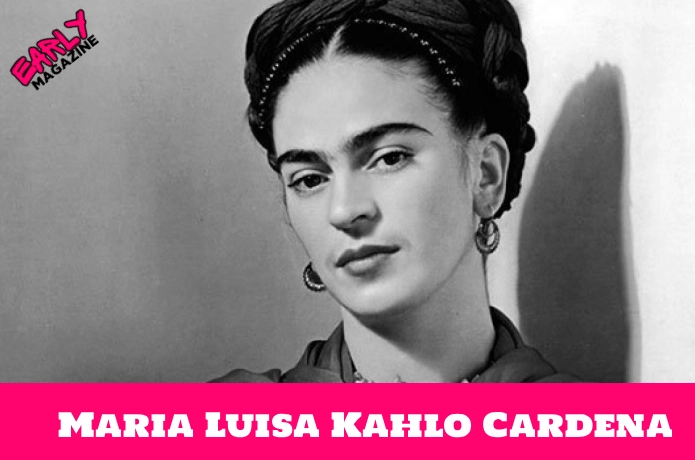
When people hear the name Kahlo, they instantly think of vibrant paintings and the iconic unibrow of Frida Kahlo. But behind every famous artist lies a family story filled with complex relationships and untold tales. Maria Luisa Kahlo Cardena, born on September 9, 1894, was Frida’s half-sister whose life remained largely in the shadows despite playing a crucial role in the family’s history.
Maria Luisa’s story begins in Tacubaya, Mexico City, where she entered a world that would soon be marked by tragedy and separation. Her early years were shaped by circumstances beyond her control, setting the stage for a life that would be both resilient and quietly influential within the Kahlo family dynamics.
Early Life and Tragic Beginnings
Maria Luisa Kahlo Cardena came into the world during a time of great change in Mexico. Her father, Guillermo Kahlo, was a German immigrant who had established himself as a photographer in Mexico City. Her mother, Maria Cardena Espino, gave birth to Maria Luisa but tragically died shortly after delivering her second daughter, Margarita.
The loss of their mother when Maria Luisa was just an infant changed everything for the two young girls. Guillermo Kahlo, faced with raising two small children while building his photography business, made a decision that would define Maria Luisa’s childhood. He sent both daughters to live in a convent, where they would receive care and education from the nuns.
Life in the convent was strict and regimented. Maria Luisa and her sister Margarita grew up surrounded by religious teachings and discipline rather than family warmth. This early separation from their father would create a distance that lasted throughout their lives, even as Guillermo went on to remarry and have more children.
The convent years taught Maria Luisa self-reliance and quiet strength. While other children played at home with their parents, she learned to find comfort in routine and structure. These formative experiences shaped her into a woman who valued independence and privacy, qualities that would define her throughout her adult life.
Family Connections and Complex Dynamics
After remarrying Matilde Calderon in 1898, Guillermo Kahlo began building a new family. This union produced four daughters: Matilde, Adriana, Frida, and Cristina. While these children grew up in the family home, Maria Luisa remained at the convent, creating a clear division between the two sets of siblings.
Despite the physical separation, family connections weren’t entirely severed. As the years passed, Maria Luisa did eventually meet her half-sisters, including the young Frida who would later become world-famous. However, the relationship between Maria Luisa and her father’s second family was complicated by their different upbringings and living situations.
The age difference also played a role in their relationships. Maria Luisa was thirteen years older than Frida, making her more of an aunt figure than a sister. When Frida was still a young child learning to walk, Maria Luisa was already a teenager navigating the transition from convent life to the adult world.
This family structure created unique dynamics that would influence all the children in different ways. While Frida grew up with the direct influence of her father’s artistic eye and her mother’s nurturing presence, Maria Luisa developed her own sense of independence and self-sufficiency through her convent upbringing.
A Quiet Life Away from Fame
Unlike her famous half-sister, Maria Luisa Kahlo Cardena chose a path away from the spotlight. In April 1917, at the age of 22, she married Jose Jesus Escanes. Little is known about her husband, which reflects Maria Luisa’s preference for privacy and her ability to keep her personal life away from public attention.
The couple never had children, which was somewhat unusual for that time period in Mexican society. Whether this was by choice or circumstance remains unknown, but it meant that Maria Luisa’s legacy would be carried through her connection to her famous family rather than through descendants of her own.
While Frida was developing her artistic talents and creating the bold, colorful paintings that would make her internationally famous, Maria Luisa lived a quieter existence. She maintained contact with her family and watched from a distance as her half-sister’s career flourished and her personal struggles became public knowledge.
Maria Luisa’s life choices reflected the values instilled in her during her convent years. She valued discretion, stability, and privacy over public recognition or dramatic personal relationships. This approach to life stood in stark contrast to Frida’s tumultuous marriage to Diego Rivera and her very public artistic and political statements.
The Observer in the Family Story
Throughout Frida’s rise to fame, Maria Luisa remained a quiet observer of her family’s increasingly public life. She witnessed Frida’s struggles with health problems, her passionate but troubled marriage to fellow artist Diego Rivera, and her growing reputation as both an artist and a political figure.
While Frida was creating self-portraits that revealed her deepest emotions and physical pain, Maria Luisa kept her own thoughts and feelings private. Her convent upbringing had taught her the value of introspection without the need for external expression or validation.
The sisters’ different approaches to life highlight the impact of their early experiences. Frida, raised in a household where artistic expression was encouraged, learned to channel her emotions into her art. Maria Luisa, shaped by the structured environment of the convent, developed a more reserved approach to personal expression.
Despite their different paths, Maria Luisa maintained family connections throughout her life. She understood her place in the family history and watched as Frida’s art gained international recognition. Her presence provided a sense of continuity and stability within a family often marked by drama and public attention.
Legacy and Later Years
Maria Luisa Kahlo Cardena lived an remarkably long life, passing away in 1989 at the age of 94 in Azcapotzalco, Mexico City. She had witnessed nearly a century of Mexican history, from the revolutionary period of her youth through the modern era when her half-sister’s art achieved worldwide fame.
Her longevity meant that she saw Frida become an international icon long after Frida’s death in 1954. She watched as museums dedicated to Frida’s work opened, as books about her half-sister were published, and as Frida’s image became synonymous with Mexican art and feminist strength.
Though Maria Luisa never sought the spotlight for herself, her existence adds depth to understanding the Kahlo family story. She represents the quieter voices in family histories, the people who provide stability and continuity without seeking recognition or fame.
Her life also highlights the different paths available to women in early 20th-century Mexico. While Frida broke barriers and challenged social conventions through her art and lifestyle, Maria Luisa chose a more traditional route that emphasized privacy and personal contentment over public achievement.
Understanding the Kahlo Family Through Maria Luisa
The story of Maria Luisa Kahlo Cardena offers valuable insight into the family dynamics that shaped one of the world’s most famous artists. Her early separation from the family due to her mother’s death and subsequent convent upbringing created a unique perspective on the Kahlo family experience.
Her quiet presence in the family story reminds us that behind every celebrated figure are family members who contribute to the narrative in less visible ways. Maria Luisa’s stability and longevity provided a constant connection to the family’s origins and early history.
Understanding Maria Luisa’s life helps us appreciate the complexity of family relationships and how different experiences within the same family can shape individuals in vastly different ways. Her story adds layers to our understanding of the environment that produced Frida Kahlo’s artistic vision.
While Frida’s art captured the attention of the world, Maria Luisa’s quiet strength and resilience represent the often-overlooked foundation that supports artistic genius. Her life demonstrates that not all important family members need to be famous to have significance in the larger story of cultural history.
Thanks for reading. For more inspiring biographies and untold stories, visit Early Magazine today!
