

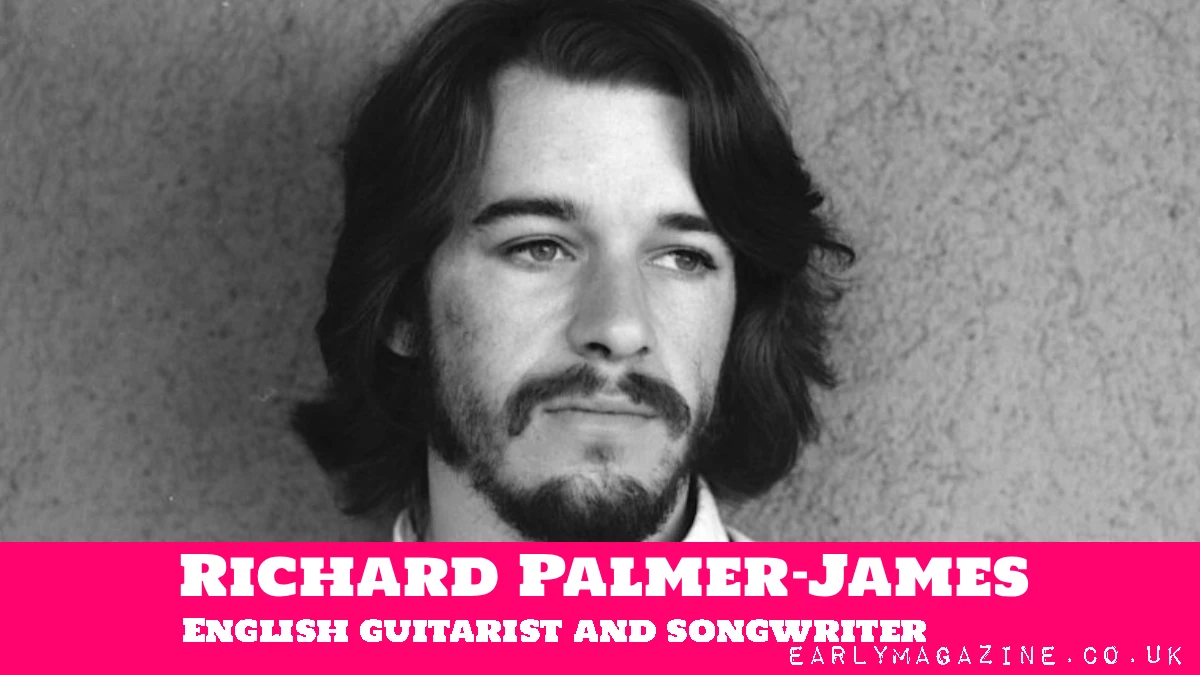
Richard Palmer-James is an English guitarist and songwriter best known for writing lyrics for King Crimson during the 1970s. Before his songwriting career, he played guitar in the progressive rock band Supertramp. His poetic approach helped define progressive rock’s artistic direction during its golden era.
Who is Richard Palmer-James?
Richard Palmer-James is a talented English guitarist and songwriter who made his mark in the world of progressive rock music. Born in Bournemouth, England, he became famous for his creative lyrics and musical contributions during the 1970s. While many people recognize his name from the legendary band King Crimson, his musical journey started much earlier and took several interesting turns along the way.
What makes Richard Palmer-James special is how he combined poetry with rock music. Unlike many songwriters who focused only on catchy phrases, he brought literary depth to his work. His words painted pictures and told stories that made listeners think deeply about life, dreams, and human emotions. This unique approach helped shape what we now call the golden age of progressive rock.
Throughout his career, Palmer-James worked with some of the biggest names in British rock music. His collaborations went beyond just writing songs—he helped create entire artistic visions for albums. Today, musicians and fans still study his lyrics to understand how great songwriting works. His influence continues to inspire new generations of artists who want to make meaningful music.
Early Life and Musical Beginnings
Richard Palmer-James grew up in Bournemouth, a beautiful coastal town in southern England during the post-war years. As a young boy, he discovered his love for music through the guitar. The 1950s and early 1960s were exciting times for British youth, with rock and roll arriving from America and changing everything about popular culture. Like many teenagers of his generation, Richard felt drawn to the rebellious energy of this new sound.
His family supported his musical interests, though they probably never imagined where it would lead. Richard spent countless hours practicing guitar in his bedroom, learning songs from records and the radio. He wasn’t content with just playing other people’s music—he wanted to create something original. This creative hunger pushed him to write his own songs and experiment with different musical styles.
By his late teens, Palmer-James had developed real skill as a guitarist. He started playing in local bands around Bournemouth, performing at youth clubs and small venues. These early experiences taught him valuable lessons about performing live and working with other musicians. The local music scene helped him build confidence and connections that would prove crucial for his future career.
During this time, Richard also developed his interest in poetry and literature. He read widely and started writing verses that went beyond typical pop song lyrics. This combination of musical talent and literary interest set him apart from other young guitarists. He understood that rock music could be more than just entertainment—it could be art.
The Supertramp Years
In the late 1960s, Richard Palmer-James joined a band that would eventually become world-famous: Supertramp. He was there at the very beginning when the group was still finding its sound and identity. As the guitarist, he contributed to the band’s early progressive rock direction. Those first rehearsals and performances helped establish the foundation for what Supertramp would later achieve.
Working with Supertramp exposed Palmer-James to serious musical experimentation. The band wanted to push boundaries and try things that hadn’t been done before in rock music. They mixed classical influences with rock energy, creating complex arrangements that challenged both musicians and listeners. Richard’s guitar work added texture and depth to these ambitious compositions.
However, the music industry can be unpredictable, and Richard’s time with Supertramp didn’t last as long as some might have expected. Creative differences and changing band dynamics led to his departure before the group achieved their massive commercial success. While this might seem unfortunate, it actually opened doors to new opportunities. Sometimes the path we don’t take leads us exactly where we need to be.
Leaving Supertramp turned out to be a blessing in disguise for Palmer-James. It freed him to explore his real passion: songwriting and poetry. Instead of focusing on guitar performance, he could now dedicate himself to crafting meaningful lyrics. This transition marked an important turning point in his artistic journey and prepared him for his most significant collaboration.
Partnership with King Crimson
The collaboration between Richard Palmer-James and King Crimson began in the early 1970s and became one of progressive rock’s most important creative partnerships. King Crimson’s guitarist and leader, Robert Fripp, recognized Palmer-James’s unique lyrical talent. He invited Richard to write lyrics for the band’s albums, starting with “Larks’ Tongues in Aspic” in 1973. This marked the beginning of an incredibly productive period.
Palmer-James brought a fresh perspective to King Crimson’s music. His lyrics were philosophical, surreal, and deeply poetic—perfectly matching the band’s complex instrumental arrangements. Songs like “Starless” showcased his ability to write words that felt both mysterious and emotionally powerful. He understood that progressive rock fans wanted substance, not just simple love songs or party anthems.
Over the next few years, Richard wrote lyrics for three groundbreaking King Crimson albums. Each record pushed progressive rock further into experimental territory. His words explored themes of alienation, dreams, and the human condition. They weren’t always easy to understand on first listen, which was exactly the point. Palmer-James believed lyrics should reward careful attention and multiple hearings.
The creative process between Palmer-James and the band members was fascinating. Robert Fripp would compose intricate instrumental pieces, and Richard would add lyrics that complemented the music’s emotional journey. Sometimes he wrote complete poems first; other times he shaped words around existing melodies. This flexibility made him an ideal collaborator for King Crimson’s constantly evolving sound.
Working with such an innovative band taught Palmer-James important lessons about artistic integrity. King Crimson never compromised their vision for commercial success. They made challenging music because they believed in it, not because radio stations wanted it. Richard embraced this approach completely, and it influenced his entire creative philosophy.
Songwriting Style and Influence
Richard Palmer-James developed a distinctive songwriting style that set him apart from typical rock lyricists. He drew inspiration from European poetry, surrealist art, and philosophical texts. While other songwriters in the early 1970s wrote straightforward narratives, Palmer-James created impressionistic word paintings. His lyrics often felt like puzzles that listeners could interpret in personal ways.
One of his greatest strengths was using imagery that sparked imagination. Instead of telling listeners exactly what to feel, he gave them evocative phrases and let their minds do the work. A line like “starless and bible black” from the song “Starless” creates a mood without explaining everything. This approach respected the intelligence of the audience.
Palmer-James also understood the importance of rhythm in lyrics. He knew that words needed to flow with the music, not fight against it. His syllable choices and line breaks worked naturally with King Crimson’s complex time signatures. This technical skill often goes unnoticed by casual listeners, but it’s crucial for making lyrics feel effortless.
His influence on progressive rock songwriting cannot be overstated. Before Palmer-James, many bands in the genre focused primarily on instrumental prowess. He proved that lyrics could be just as adventurous and artistic as the music itself. Later songwriters in progressive rock looked to his work as a model for combining literary quality with rock sensibility.
Even musicians outside progressive rock have acknowledged Palmer-James’s impact. His approach to lyric writing—treating words as poetry that happens to be sung—influenced alternative rock and indie music decades later. Artists who value substance over commercial formulas often cite King Crimson’s 1970s albums as inspiration.
Later Career and Legacy
After his work with King Crimson ended in the mid-1970s, Richard Palmer-James continued his career as a songwriter, though he stepped away from the spotlight. He worked on various musical projects in Europe, particularly in Germany and Switzerland. His songwriting skills remained in demand even as musical trends changed around him.
Palmer-James also translated songs between English and German, using his linguistic abilities in new ways. This work showed his versatility as a wordsmith. Understanding how meaning shifts between languages requires deep sensitivity to nuance, and Richard had developed that skill through years of crafting careful lyrics.
Throughout the decades, he maintained connections with the progressive rock community. Fans never forgot his contributions to King Crimson’s classic period. When those albums were reissued and remastered, new generations discovered his lyrical genius. The internet age brought renewed appreciation for his work as music lovers shared their favorite lines and discussed their meanings.
Today, Richard Palmer-James is recognized as one of progressive rock’s most important lyricists. Music historians and critics consistently praise his contributions to the genre’s development. His work with King Crimson is studied in courses about rock music and popular culture. The albums he helped create are considered essential listening for anyone interested in artistic rock music.
His legacy teaches an important lesson about artistic success. Palmer-James never became a household name or achieved mainstream fame. Yet his influence runs deep through the music that matters to serious listeners. Sometimes the most significant contributions happen behind the scenes, in the careful crafting of words that give music lasting meaning.
Interesting Facts Worth Knowing
Many people don’t realize that Richard Palmer-James was actually in Supertramp before they became internationally famous. Imagine leaving a band just before they hit it big—but finding even more meaningful artistic success elsewhere. His journey shows that career success isn’t always about commercial achievement.
Palmer-James’s approach to writing lyrics was quite unusual for rock music. He would often write complete poems first, without hearing the music. Then he would adapt them to fit the songs Robert Fripp created. This method is almost backward from how most songwriters work, but it produced remarkable results.
Despite writing some of progressive rock’s most celebrated lyrics, Richard Palmer-James rarely performed live. He preferred working in the studio environment where he could focus on perfecting every word. This shows how different musical talents contribute to creating great albums—not everyone needs to be a stage performer.
The song “Starless,” which features Palmer-James’s lyrics, is considered by many fans to be King Crimson’s greatest achievement. When the band performs it in concert decades later, audiences still respond with intense emotion. Those words Richard wrote in the early 1970s continue touching people’s hearts today.
Richard Palmer-James represents the unsung heroes of rock music—the writers, arrangers, and behind-the-scenes artists who shape the music we love. His story reminds us that creating meaningful art matters more than chasing fame. The English guitarist and songwriter may not be a household name, but his words have become part of progressive rock’s permanent legacy.
For more fascinating stories about musicians who shaped rock history from behind the scenes and artists whose creative integrity defined entire genres, explore Early Magazine—where the true architects of musical innovation get the recognition they deserve and artistic authenticity takes center stage.
