

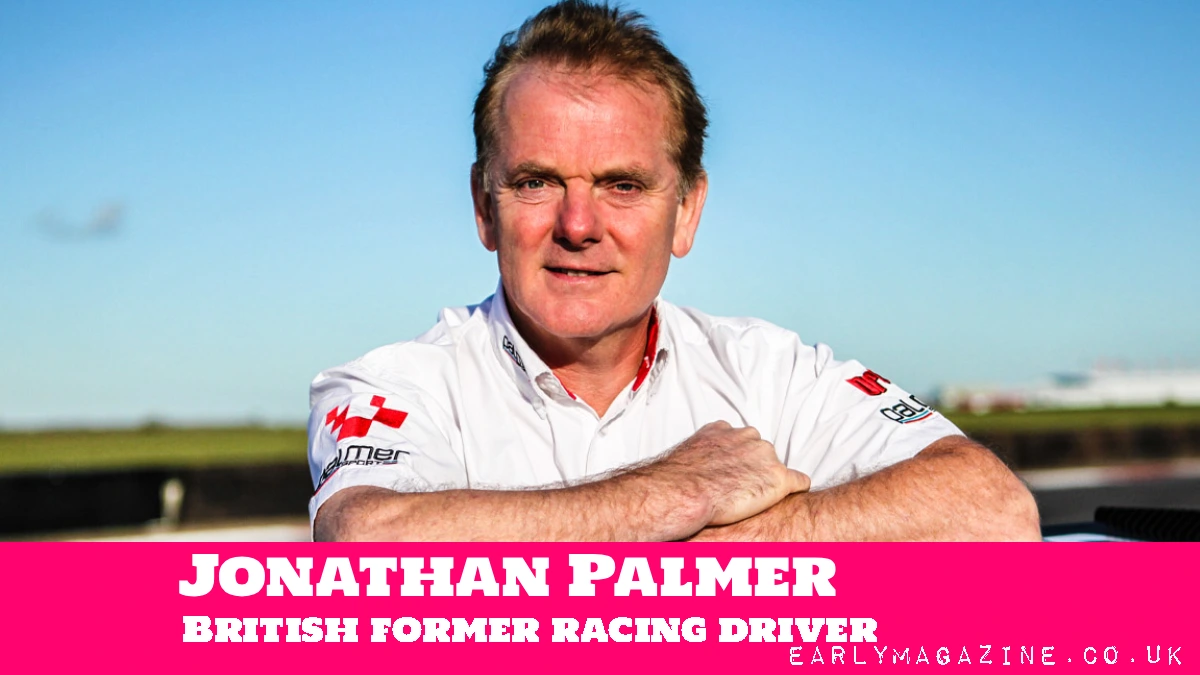












Jonathan Palmer net worth is estimated at $35 million as of 2025. The British former Formula One driver built his fortune through racing earnings, the founding of PalmerSport in 1991, and his majority ownership of MotorSport Vision (MSV), Europe’s largest motor racing circuit operator, running seven circuits across the UK and Spain.
When people search for Jonathan Palmer net worth, they are often surprised. Here is a man who never won a single Formula One race in 84 career starts. Yet he has built a business empire worth far more than most of his contemporaries who did win. That gap between on-track results and off-track wealth tells a genuinely compelling story about what happens when a racing driver thinks like a businessman.
Palmer, born in London on November 7, 1956, was always more than just a driver. He trained as a physician at Guy’s Hospital before choosing motorsport. He competed in F1 from 1983 to 1989, scored 14 World Championship points, and then did something few former drivers manage: he turned the contacts, the knowledge, and the passion into a lasting enterprise. Today his net worth reflects decades of smart moves, not just fast laps.
This article breaks down exactly where Jonathan Palmer’s wealth comes from, how he built it, what his companies are worth, and how his financial story compares to other former F1 drivers who tried similar paths.
Jonathan Palmer Net Worth: The Current Estimate
As of 2025, Jonathan Palmer’s net worth is estimated at $35 million. Celebrity Net Worth, one of the most cited sources for athlete and entrepreneur wealth estimates, places him at that figure. Some sources estimate slightly lower, ranging from $10 million to $35 million depending on how they value his private company holdings.
The wide range exists for a simple reason. Palmer is the majority shareholder of MotorSport Vision (MSV), a private company. Private company valuations are not publicly reported. What we do know is that when MSV posted £41 million in sales in 2010 and made £2.6 million in profit, it was already valued at roughly £26 million. Since then, the company has added three more circuits, expanded internationally, and grown its staff to approximately 785 people as of 2025.
The $35 million figure is the most widely cited, and it aligns with the Sunday Times Rich List estimate of $33 million from 2012, adjusted for business growth over the past decade.
How Jonathan Palmer Built His Wealth
F1 Racing and Early Career Earnings
Palmer’s racing career was the foundation, but not the main source of wealth. During his F1 years with teams including RAM, Zakspeed, and Tyrrell, he earned solid but not spectacular driver fees. F1 salaries in the mid-1980s varied hugely; top drivers like Ayrton Senna and Alain Prost earned millions per season, while midfield drivers like Palmer typically earned between £200,000 and £500,000 annually.
More valuably, racing gave Palmer access to a network of sponsors, circuit owners, and industry figures that would later fund his business ventures.
PalmerSport: The Corporate Driving Business
In 1991, the same year Palmer retired from professional driving, he launched PalmerSport. The concept was clear and well-timed: offer corporate clients the chance to drive Formula One and GT cars on a proper racing circuit.
PalmerSport operates from Bedford Autodrome, a circuit Palmer developed himself at a former airfield in Bedfordshire. The event is described as the world’s leading corporate hospitality driving experience. Clients pay premium prices to drive high-performance cars in a competitive, structured format. It caters directly to the corporate entertainment market, where budgets are generous and brand experiences command significant fees.
This business was profitable from early on and provided the capital that allowed Palmer to scale into circuit ownership.
MotorSport Vision: The Circuit Empire
This is where the real wealth was created. In 2004, Palmer co-founded MotorSport Vision with Sir Peter Ogden and John Britten. MSV purchased four iconic British circuits from Octagon: Brands Hatch, Oulton Park, Snetterton, and Cadwell Park. The acquisition price was £15.5 million.
What followed was a methodical expansion. Palmer’s key moves included:
- 2006: Founded MotorSport Vision Racing (MSVR), organizing over 35 race events annually
- 2008: Acquired the commercial rights to the British Superbike Championship (BSB)
- 2009–2012: Operated the FIA Formula Two Championship
- 2011: Oversaw a near-total redesign of Snetterton circuit
- 2017: Acquired Donington Park, followed by a multi-million pound redevelopment
- 2022: Purchased Circuito de Navarra in northern Spain
- 2024: Extended the Navarra circuit by 650 metres
Today, MSV is the largest motor racing circuit operator in Europe. It manages seven venues, runs over 400 track day events annually through its MSVT division, and employs close to 800 people.
Palmer holds a controlling majority stake in MSV. The company’s revenue streams include circuit hire fees, race event ticketing, sponsorship, the British Superbike Championship rights, PalmerSport experiences, and corporate hospitality. With that scale of diversified income across premium motorsport assets, the £26 million company valuation from 2010 has almost certainly grown considerably.
Jonathan Palmer’s Income Sources at a Glance
| Income Source | Description |
|---|---|
| MSV Circuit Operations | 7 circuits across UK and Spain generating rental, events, and ticketing revenue |
| PalmerSport Corporate Events | Premium driving experiences at Bedford Autodrome |
| British Superbike Championship | Commercial and organisational rights holder |
| Track Day Operations (MSVT) | 400+ events annually, one of the UK’s largest track day operators |
| Broadcasting | F1 commentary for BBC and CBC during the 1990s |
| Driver Management | Represented driver Justin Wilson; contributed to Jolyon Palmer’s F1 career |
BBC Commentary and Media Earnings
After retiring from driving, Palmer joined the BBC’s Formula One commentary team in 1991 as a pit lane reporter. Following the death of James Hunt in 1993, he moved into the commentary box alongside Murray Walker, one of the most beloved broadcast partnerships in British motorsport history.
Palmer remained with the BBC until the end of 1996, when the BBC lost F1 broadcast rights. He then moved to CBC for Canadian Grand Prix coverage. While media work does not account for the bulk of his net worth, it kept him at the centre of F1 during a period when Palmer was simultaneously building his business empire.
Jonathan Palmer’s Sons: A Racing Dynasty
One notable aspect of Palmer’s story is the motorsport legacy he built through his family. Both of his sons, Jolyon Palmer and William Palmer, became racing drivers.
Jolyon reached Formula One, competing for Renault from 2016 to 2017. While his F1 career was short, getting two sons to racing careers at the highest levels reflects the resources and connections their father built. Jonathan Palmer also represented the late driver Justin Wilson during Wilson’s career, demonstrating a broader interest in nurturing motorsport talent.
How Does Palmer’s Net Worth Compare?
To put Jonathan Palmer’s $35 million net worth in context:
Nigel Mansell, 1992 F1 World Champion, has an estimated net worth of around $50 million. Damon Hill, the 1996 World Champion, sits around $40 million. Palmer, who never won an F1 race, sits in the same financial bracket through business acumen alone.
Martin Brundle, another driver from the same era who moved into media rather than business, has a lower estimated net worth. The contrast illustrates how Palmer’s circuit ownership model generated wealth at a completely different scale than commentary or brand ambassador work.
The Medical Background That Shaped His Business Mind
One detail worth noting: Palmer trained as a qualified physician at London’s Guy’s Hospital and worked as a junior doctor at Cuckfield and Brighton hospitals before committing to racing. This is not just an interesting biographical footnote.
A medical education requires rigorous analytical thinking, discipline, and the ability to manage complex systems. Those same qualities appear throughout Palmer’s business decisions: methodical acquisitions, careful investment in circuit infrastructure, and a long-term approach to building MSV rather than seeking a quick sale.
Frequently Asked Questions
What is Jonathan Palmer net worth in 2025?
Jonathan Palmer net worth is estimated at $35 million as of 2025, primarily derived from his majority stake in MotorSport Vision and PalmerSport corporate events.
How did Jonathan Palmer make his money after F1?
He founded PalmerSport in 1991 and MotorSport Vision in 2004, building Europe’s largest motor racing circuit group with seven venues across the UK and Spain.
Is Jonathan Palmer related to Jolyon Palmer?
Yes. Jolyon Palmer is Jonathan’s son. Jolyon raced in Formula One for Renault between 2016 and 2017. William Palmer, another son, also pursued a racing career.
Did Jonathan Palmer ever win an F1 race?
No. In 84 Formula One starts across his career from 1983 to 1989, Palmer never won a race. His best results came during his years with Tyrrell.
What circuits does Jonathan Palmer own?
Through MotorSport Vision, Palmer’s portfolio includes Brands Hatch, Donington Park, Oulton Park, Snetterton, Cadwell Park, Bedford Autodrome, and Circuito de Navarra in Spain.
What Jonathan Palmer’s Story Actually Tells Us
Jonathan Palmer’s financial journey is a practical case study in post-athletic career building. His estimated $35 million net worth did not come from prize money or F1 podiums. It came from identifying a market gap in British motorsport infrastructure, acquiring undervalued assets, and building systems around them over two decades.
The circuit business Palmer built did not happen overnight. MSV’s purchase of four circuits in 2004 for £15.5 million required patient capital and industry relationships built during his racing years. The company’s growth to seven venues, approximately 800 staff, and European market leadership took 20 years of reinvestment.
For anyone interested in how athletes translate career capital into lasting wealth, Jonathan Palmer’s path is one of the clearest examples in British sport. He did not just race. He built something that will outlast any trophy cabinet.
For more insights into how motorsport legends turn track careers into lasting empires, visit EarlyMagazine UK — where boundary-breaking careers and financial wisdom come together.
