

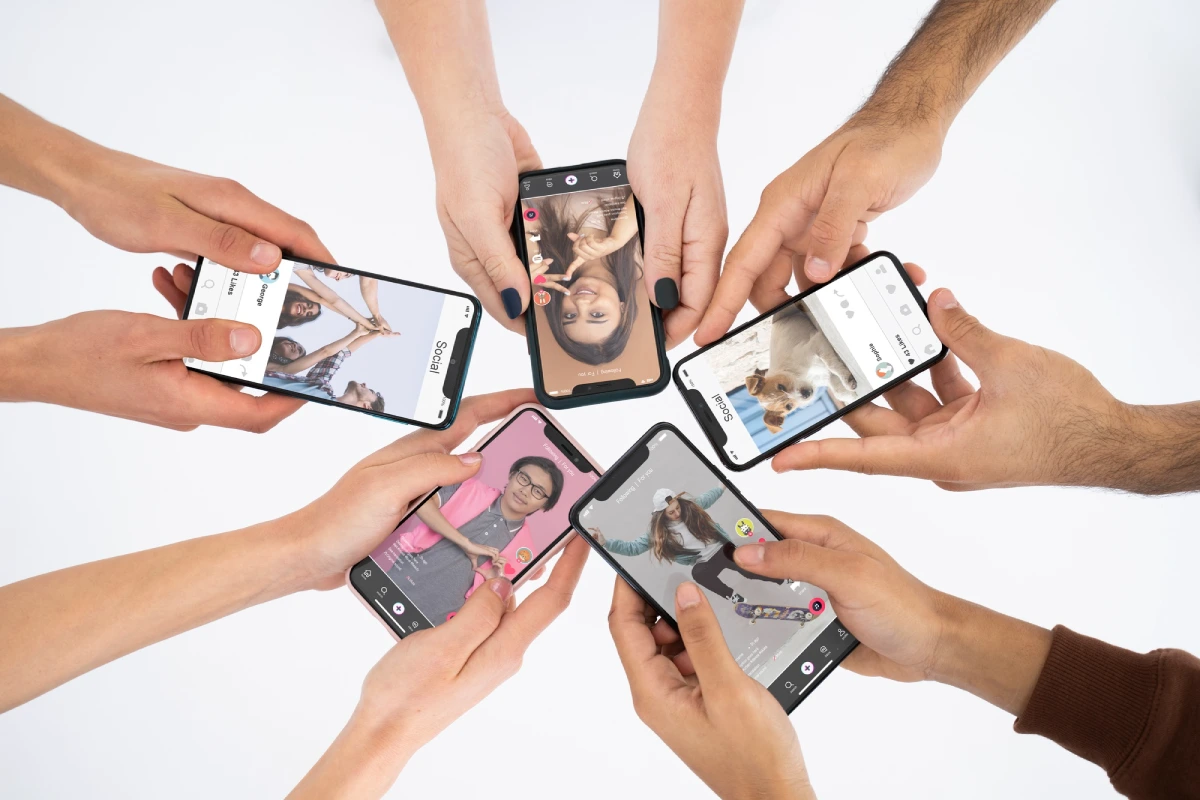
The notification never stops. Another comment, another share, another wave of strangers reacting to your face. For many public figures — athletes, politicians, journalists, YouTubers — that constant noise has started to feel less like connection and more like a slow erosion. A Pew Research study found that 38% of social media users had taken a deliberate break from all platforms for at least several weeks. Among those with large audiences, that number climbs considerably higher.
Something is shifting. And it’s not just burnout.
The Weight of Always Being On
Social media fatigue is real, clinically documented, and spreading fast. The always-online demand of modern fame — where silence itself becomes a statement — creates a loop that is genuinely hard to escape. Post too much and you’re overexposed. Post too little and the algorithm punishes you with shrinking reach.
Public figures are not immune to that trap. They are its most visible victims.
Escaping Algorithmic Pressure
Platforms reward consistency, controversy, and volume. The incentive structure is simple: post more, earn more engagement, grow faster. But for people who already have an audience, this formula often feels hollow. Many creators describe a quiet moment of realization — they are no longer making things they care about; they are feeding a machine.
Opting out, even partially, becomes a form of resistance. The decision to reduce a digital footprint isn’t a failure. It’s often a deliberate, strategic recalibration.
Online Harassment Has Changed the Calculus
One statistic that keeps appearing in research: the Anti-Defamation League’s 2022 report found that 41% of Americans experienced online harassment, with women and minorities facing the most severe forms. For public figures with millions of followers, that risk scales dramatically.
Coordinated pile-ons, doxxing threats, fabricated screenshots — these are not rare events. They are routine hazards. The decision to mitigate online harassment often starts not with mental health, but with physical safety. Disappearing from timelines is, for some, a pragmatic survival strategy.
Cybersecurity, Privacy, and the Tools People Use
Beyond harassment, there’s a quieter threat: surveillance, data harvesting, and exposure of personal information. Public figures are increasingly seeking tools to protect their digital privacy. VPNs have become a standard part of that toolkit, not just for celebrities but for everyday users who want to browse without being tracked. The VeePN service has grown in popularity among users who want encrypted connections on all their devices, including smart TVs and streaming devices. VeePN gives them both security and free access to geo-restricted foreign web resources.
The Transition to Private Communities
Going quiet on public platforms does not mean going silent altogether. The shift is toward intimacy — smaller, curated spaces where the relationship between creator and audience actually feels like one. Substack newsletters. Discord servers. Patreon tiers. Telegram channels with a few hundred loyal readers rather than millions of passive scrollers.
This transition to private communities is one of the clearest trends in digital culture right now. Fewer people. More trust. Less noise.
Protecting Personal Boundaries in Public Life
Visibility and vulnerability travel together. The more famous you become, the more people feel entitled to every corner of your life — your relationships, your opinions, your silence. Setting limits on what gets shared is one of the few things public figures can still control.
Many now draw a hard line between their professional presence and their personal existence. They manage mental well-being not by logging off forever, but by choosing what to show, when, and to whom. That choice is itself a boundary.
Anonymous Accounts and the Second Life Online
Some public figures don’t leave — they simply shift to anonymous accounts. It’s more common than most people assume. A separate profile, without a verified badge or a real name, lets someone engage with the internet on their own terms. No performance, no brand, no audience management.
This practice of using anonymous accounts sits in a complicated ethical space when the person involved has power or influence. But for many, it’s simply a way to reclaim offline time while remaining loosely connected—to scroll without being scrolled at. Part of living anonymously is using a VPN extension to protect against surveillance. This is the only way to regain privacy.
The Low-Visibility Lifestyle, Reconsidered
What some researchers are calling the “low-visibility lifestyle” is a conscious effort to not constantly show the world what is going on in one’s life.The “low-visibility lifestyle,” as some researchers put it, is a conscious decision to not constantly broadcast one’s life. The idea of being known but not over-known has become more attractive than maximum reach for creators of Gen Z, in particular.
What This Means for the Future of Fame
The old model — be everywhere, always, constantly — is cracking. Not breaking entirely, but cracking. A new generation of public figures is watching their predecessors burn out and choosing a different path from the start.
Some will disappear and come back. Others will never fully return. A few will find entirely new ways to be known without being consumed. The platforms will adapt, or they won’t, but the human need to protect personal boundaries does not disappear just because an algorithm prefers you don’t.
