

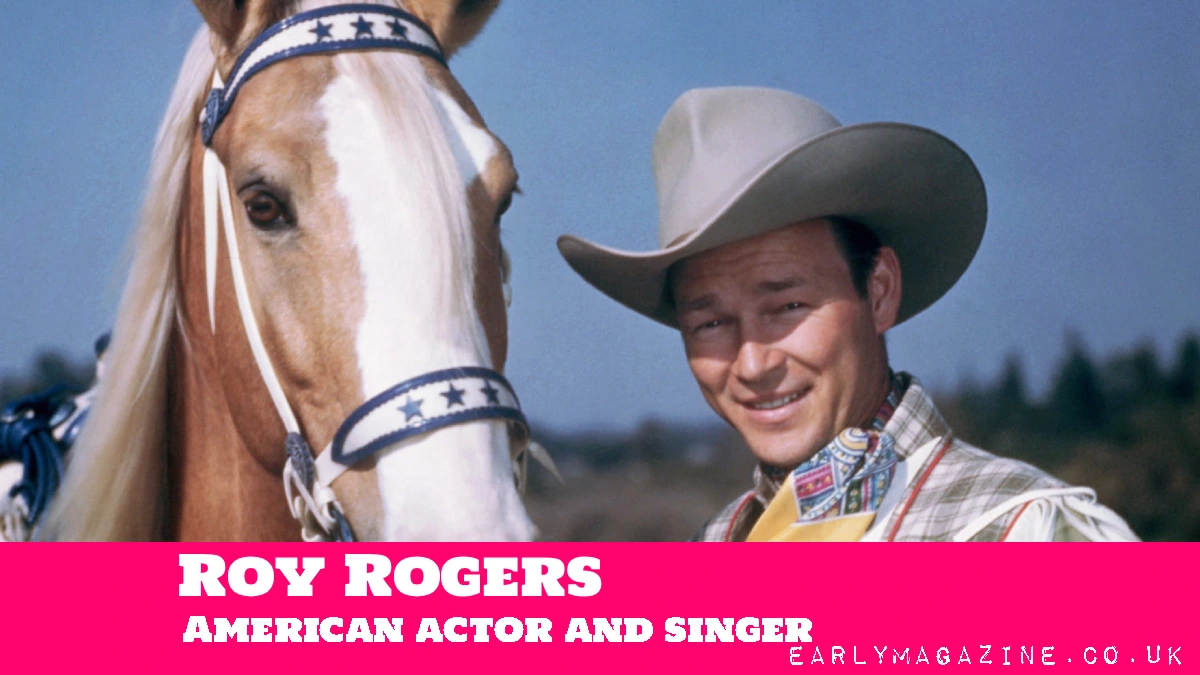
Most people picture Roy Rogers in a white hat, riding Trigger into the sunset. What they don’t picture is a sharp businessman quietly building one of the most powerful celebrity empires in American history — decades before anyone called it “personal branding.”
Here’s the story of how a singing cowboy turned fame into fortune — and why his playbook still matters today.
Hollywood’s Dirty Secret: Famous Didn’t Mean Rich
In the so-called Golden Age of Hollywood, the glamour was real — but so was the trap.
Movie studios ran everything. Stars signed long-term contracts, collected weekly paychecks, and showed up wherever the studio told them to. They could be loaned out to other studios, suspended without pay, or simply dropped when the bosses decided they were no longer useful. The actor was the product. The studio owned the factory.
The music world was even rougher. Labels and publishers grabbed the rights to songs. Artists could sell millions of records and still walk away with almost nothing. The people who made the music rarely got rich from it. The people who owned it did.
By every normal expectation, Roy Rogers was heading for that same fate.
Why Nobody Expected Rogers to Win
Rogers wasn’t starring in Oscar-bait films. He was making B-western movies — quick, cheap, formulaic pictures that Hollywood barely respected. His characters rode horses, sang songs, and caught bad guys. Critics weren’t exactly lining up to review them.
The realistic path for someone like Rogers? Enjoy a good run, watch the western genre fade, and spend his retirement years waving at crowds at state fairs and rodeos.
That’s not even close to what happened.
When Roy Rogers passed away in 1998 at age 86, his net worth topped $100 million — roughly $200 million in today’s money. For a cowboy actor in B-movies, that’s jaw-dropping.
So how did he pull it off?
The Contract That Quietly Changed Everything
In 1937, Rogers — born Leonard Slye — signed a deal with Republic Productions. He wasn’t a superstar yet, just a promising western performer trying to climb the studio ladder.
But buried in that contract was something extraordinary for its time.
Rogers agreed to accept a smaller studio paycheck in exchange for something far more valuable: full control over his own name, voice, and likeness for commercial use. He also secured the same rights for his famous horse, Trigger.
Today, image rights and licensing deals are standard stuff. Back in the 1930s, this was almost unheard of. Studios owned their stars — at least, they thought they did. Rogers made sure Republic could use him in movies, but the studio had no claim over the wider commercial world that his name could unlock.
That one clause was worth more than any salary bump he could have asked for.
Building the Roy Rogers Brand Machine
Once Rogers controlled his own image, he and his manager Art Rush got to work building something that looked less like a movie career and more like a consumer goods company.
At the peak of his popularity, the Roy Rogers name was everywhere:
- Toy cap guns and action figures
- Lunchboxes and comic books
- Cereal boxes and clothing
- Cowboy hats, boots, and bedsheets
Sears reportedly stocked hundreds of Roy Rogers-licensed products at the height of the craze. Trigger wasn’t just a horse — Trigger was a brand asset. So was Bullet, his dog. So was Dale Evans, his wife and co-star, who became the wholesome female half of the western universe Rogers was selling.
The only entertainer of that era who ran a similar operation was Walt Disney. Disney had Mickey Mouse. Rogers had himself, his horse, his wife, his dog, and an entire toy aisle to go with them.
The genius wasn’t just getting famous. It was owning the rights that turned fame into cash flow.
Why Ownership Beats a Paycheck Every Time
Most studio-era stars were paid for their performance, not for the full commercial value of their celebrity. A studio could make you a household name — but that didn’t mean you saw any money from the merchandise, the endorsements, or the licensing deals built around your image.
Rogers flipped that model.
Because he owned his name and likeness, every cap gun sold at a Sears counter sent a royalty back to him. Every lunchbox. Every cereal box. Unlike a one-time movie salary, royalties keep paying long after the cameras stop rolling.
That’s the real difference between being a well-paid employee and being an owner. Rogers wasn’t just starring in westerns. He was running a company that happened to star himself.
How TV Reruns Became a Secret Goldmine
When television started threatening Hollywood’s movie business in the early 1950s, most old-school film stars panicked or resisted. Rogers saw opportunity.
“The Roy Rogers Show” premiered on NBC in 1951 and ran for 100 episodes across six seasons. It dropped right when American families were buying their first TV sets and gathering around them every evening. Perfect timing.
But Rogers didn’t just act in the show — he formed Roy Rogers Productions, giving him ownership stakes that most performers of his generation never had. That mattered enormously when reruns entered the picture.
A traditional actor got paid once for their work, then watched the studio collect rerun revenue for decades. Rogers’ ownership structure meant the show kept feeding his larger business machine long after filming ended.
Every rerun kept kids asking for Roy Rogers toys. Every episode introduced his brand to a fresh wave of children. The reruns weren’t just entertainment — they were free advertising.
Music, Movies, and the Power of Cross-Platform Fame
Before he was the King of the Cowboys, Rogers was a founding member of the Sons of the Pioneers, one of the most celebrated western singing groups in American history.
His music career wasn’t separate from the rest of his business — it was woven into it. Fans who loved the movies bought the records. Kids who watched the TV show wanted the merchandise. Families who knew the songs trusted his restaurants. Each piece made the other pieces worth more.
That kind of cross-platform strategy feels completely normal today. In the 1940s and 50s, it was genuinely ahead of its time.
Roast Beef, Fixin’s Bars, and a Fast-Food Empire
In 1968, Rogers stepped into the fast-food world — and it worked.
That year, Marriott launched the Roy Rogers restaurant chain, converting earlier concepts and pairing their operational muscle with something money can’t easily buy: Rogers’ decades of earned trust with American families.
The Roy Rogers name meant something — wholesome food, cowboy spirit, clean fun. For a restaurant chain trying to attract parents and kids, that was pure gold.
The menu built its reputation around roast beef, fried chicken, hamburgers, and the famous Fixin’s Bar, where customers could customize their own sandwiches. The chain grew quickly through the 1970s and 80s, especially across the Mid-Atlantic and Northeast. At its peak, over 600 Roy Rogers locations were open across the country.
Rogers didn’t just lend his name and disappear. He showed up, shook hands, signed autographs, and kept the brand feeling personal. He gave the restaurants something rare: a real human identity backed by 30 years of goodwill.
For Rogers himself, it was another steady income stream long after his days as Hollywood’s top cowboy had wrapped up.
Smart Real Estate: Turning Land Into Legacy
Rogers also understood something that many entertainers miss entirely — convert income into assets.
He invested in California real estate before certain areas exploded in value. He and Dale Evans owned ranch properties in the San Fernando Valley, which transformed dramatically as Los Angeles expanded after World War II.
Later, they became closely linked with Apple Valley in the High Desert. His Double R Bar Ranch near Victorville became a well-known part of his public persona — not just a private home, but an equestrian facility, a filming location, and a living, breathing extension of the Roy Rogers brand.
The real estate wasn’t the biggest piece of his fortune, but it reflected the same thinking that made him rich in the first place: don’t just earn money — own things that hold value over time.
The Original Celebrity Brand Before Anyone Had a Name for It
Today, we’re used to celebrities launching tequila brands, cosmetics lines, production companies, and licensing empires. Athletes own equity stakes. Musicians reclaim their masters. Everyone talks about owning your name and controlling your upside.
Roy Rogers was doing all of that before most Americans owned a television.
He saw clearly what most of his peers missed: fame is temporary, but ownership endures. A movie career can cool. A genre can die. A studio can stop calling. But royalties, real estate, licensing rights, and restaurant chains? Those keep paying.
He owned his name. He owned Trigger’s likeness. He built a merchandising machine. He moved into TV production and collected from reruns. He expanded into music, restaurants, and land.
The Bottom Line
Roy Rogers didn’t get lucky. He got strategic.
At a time when the entertainment industry was designed to extract value from artists, Rogers figured out how to extract value for himself — through one smart contract, sharp management, and an instinct for owning rather than just performing.
He didn’t just ride into the sunset. He owned the sunset — and then licensed it.
That’s a lesson that holds up just as well today as it did in 1937.
For more fascinating stories about how legendary icons turned fame into lasting fortune, visit EarlyMagazine UK — where iconic careers, smart money moves, and boundary-breaking legacies all come together.
