

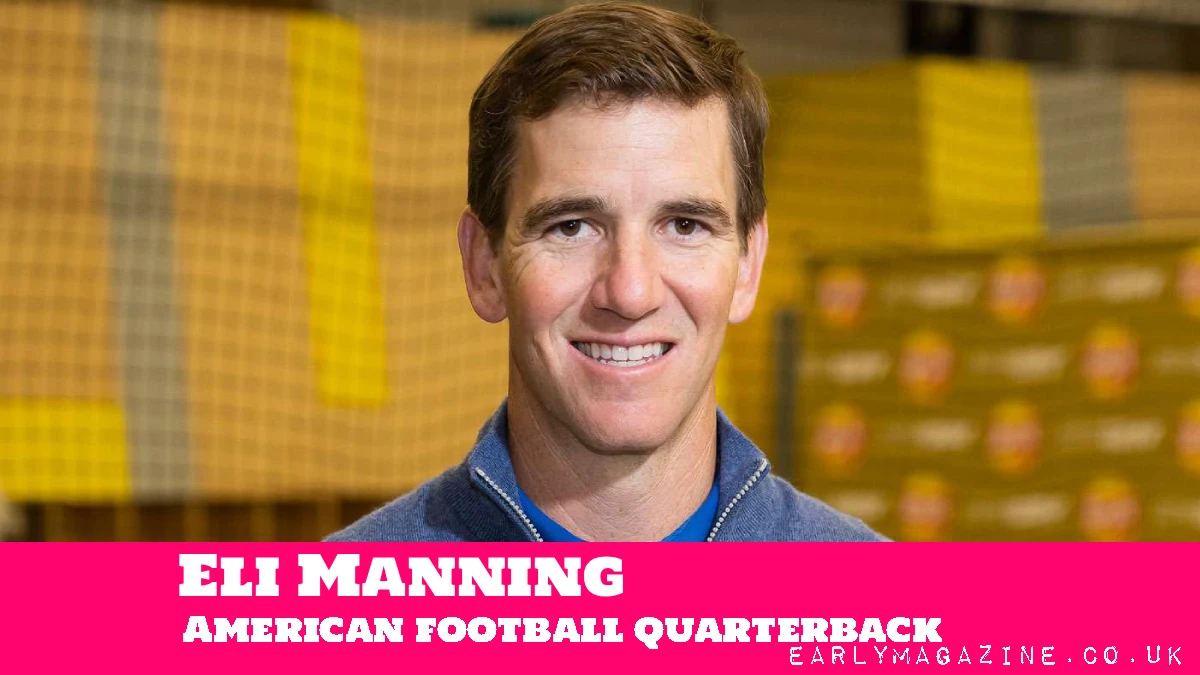
Most people thought it was his dad’s call. Turns out, Eli Manning engineered his own future — and it paid off in a massive way.
When you think about a young college athlete standing up to an NFL franchise before even playing a single pro game, it sounds almost impossible. But that’s exactly what Eli Manning did — and the decision changed his life forever.
Manning recently sat down on the Bussin’ With The Boys podcast, hosted by former NFL players Will Compton and Taylor Lewan. What he shared surprised a lot of people. The real story behind one of the most famous draft-day moves in NFL history? It started with a college kid trusting his gut.
| Category | Value |
|---|---|
| Career NFL earnings | $252M |
| Super Bowl MVP | 2× |
| Seasons with the Giants | 15 |
Draft Day Drama: What Really Happened in 2004
In the 2004 NFL Draft, the San Diego Chargers held the first overall pick. Manning was coming out of Ole Miss and was widely seen as the top prospect. Everyone expected him to land in San Diego. But Manning’s camp made it crystal clear: he was not going to play for the Chargers.
The result? A blockbuster trade. Eli went to the New York Giants, who had the fourth pick. San Diego turned around and selected Philip Rivers instead. On the surface, it looked like a family power move — with Archie Manning pulling strings behind the scenes to protect his son.
But that version of events was never the full truth.
My parents really weren’t supportive. My dad didn’t really like the idea — he just bit his tongue and said, ‘This is what Eli wants to do.
It Was Eli’s Idea All Along
For years, people blamed Archie Manning for the controversial move. The narrative painted him as an overprotective football dad steering his son away from a struggling franchise. But according to Eli himself, the decision was all his.
“My parents really weren’t supportive. My dad didn’t really like the idea,” Manning told the podcast. Archie ultimately backed his son publicly, even stepping up to take the heat from the media so Eli wouldn’t have to.
It was a father shielding his son — but the plan itself came straight from Eli.
So Why Not San Diego?
The Chargers had just finished the worst record in the NFL the previous season. But poor performance on the field wasn’t Eli’s only concern. He sensed something deeper — a lack of real commitment to winning at the organizational level.
“I just didn’t feel like they were the most committed team to winning at the time,” Manning said. He pointed to friction between the coaching staff, the front office, and team ownership.
One moment that stuck with him: during a team dinner in New Orleans — a city famous for its incredible food scene — the Chargers took him to eat at a Marriott hotel restaurant. Manning liked head coach Marty Schottenheimer, but the coach himself wasn’t happy with the choice either. To Manning, small things like that revealed a bigger cultural problem.
Was He Right? The Numbers Say Yes
It’s impossible to know for certain how Manning’s career would have turned out in San Diego. The Chargers did have some strong seasons — first with Drew Brees and then with Rivers, who had a long and productive career. But neither of them ever won a Super Bowl with San Diego.
Brees eventually won his only championship ring after leaving for New Orleans. Rivers never won one at all.
Meanwhile, Manning won two Super Bowls with the Giants — and was named Super Bowl MVP both times. He also out-earned Rivers by roughly $34 million over their careers. Manning banked around $252.2 million in NFL salary. Rivers earned notably less.
Beyond the money, a disgruntled Manning stuck in a dysfunctional organization might never have reached those heights. A player’s environment matters. Manning found his in New York.
A Legacy Built on One Brave Call
The Giants haven’t returned to the Super Bowl since their 2011 season appearance — the second of Manning’s two championship runs. That alone tells you how rare and special those moments were.
What makes this story so compelling is how early it started. Manning wasn’t a seasoned veteran making a calculated career move. He was a college student, walking into the biggest moment of his professional life, deciding to bet on himself.
He trusted his instincts over the pressure of going first overall. He stood his ground even when his own family had doubts. And his father, to his credit, trusted his son enough to follow his lead — and take the public criticism so Eli didn’t have to.
The Takeaway
Eli Manning’s story is a reminder that big decisions made early can shape an entire career. Trusting your gut, reading a room, and being willing to go against the grain — even when no one believes in you yet — can make all the difference. For Manning, that one decision in college didn’t just change where he played. It changed everything.
For more stories about the bold decisions behind legendary careers and life-changing money moves, visit EarlyMagazine UK — where sports, success, and financial wisdom meet.
