

July 1st doesn’t look like much on a calendar. Summer is halfway over. Most sports leagues are quiet. Kids are off at camp, and parents are just trying to survive the heat.
A few things did happen on this date in history. Rwanda celebrates its independence from Belgium. Sony launched the Walkman back in 1979. Britain handed Hong Kong back to China in 1997. And if you’re actress Liv Tyler, rapper Missy Elliott, or comedian Dan Aykroyd, you’re blowing out birthday candles.
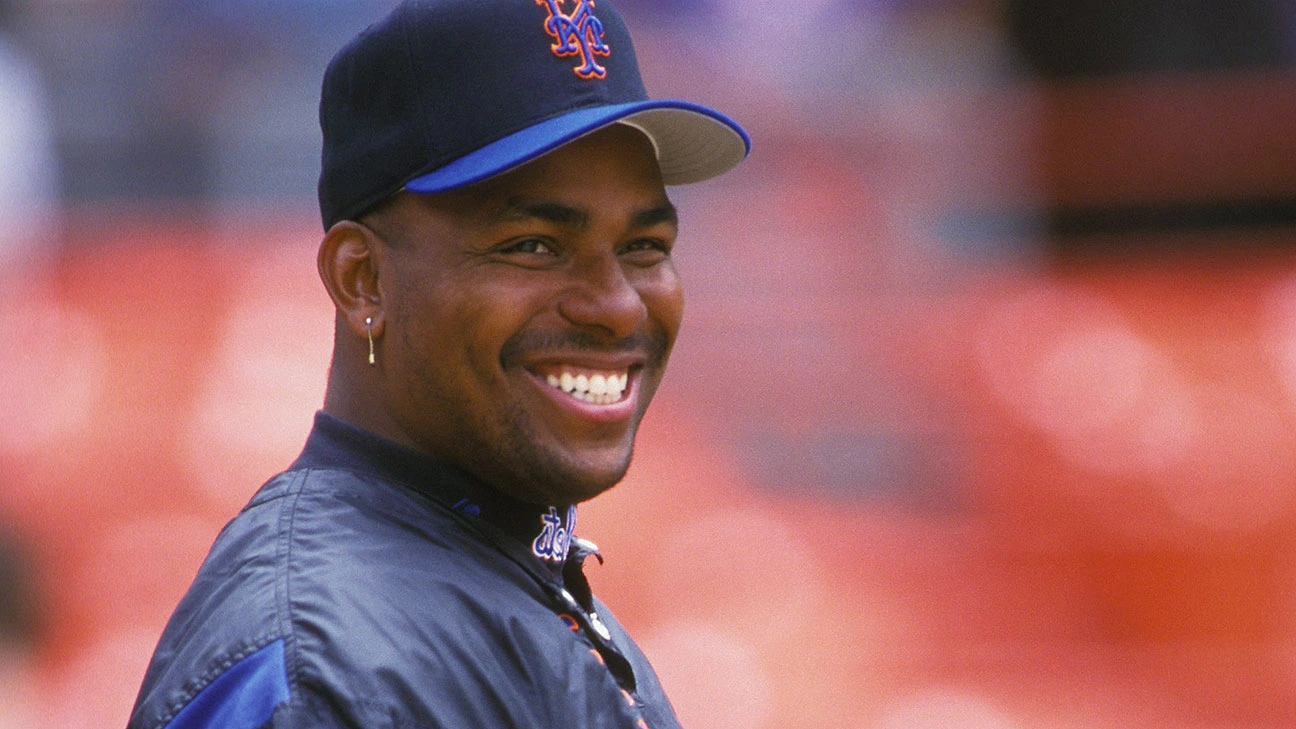
But for baseball fans, there’s one reason July 1st stands out above all the rest. It’s the day a retired slugger named Bobby Bonilla collects one of the strangest paychecks in sports history.
What Exactly Is Bobby Bonilla Day?
Every single year on July 1st, Bobby Bonilla opens his mailbox and finds a check from the New York Mets. The amount never changes: $1.4 million.
Here’s the twist. Bonilla hasn’t played a single game for the Mets since 1999. He’s not a coach. He’s not a scout. He’s just a former player who negotiated one of the smartest deferred payment deals ever created.
And get this: the Mets still mail him an actual paper check. No direct deposit. No wire transfer. Just an old-school check, year after year, for a man old enough to think seriously about retirement benefits.
A Career Worth Remembering
Before the famous paycheck became his claim to fame, Bonilla was genuinely one of baseball’s top hitters. Over 16 seasons from 1986 to 2001, he earned roughly $52 million in salary playing third base and right field.
His stats tell the story of a serious ballplayer:
- .279 career batting average
- 287 home runs
- 1,173 RBIs
- Six-time All-Star
- Three-time Silver Slugger winner
- 1997 World Series Champion
During his best seasons, Bonilla was a reliable power hitter, regularly smashing 20-plus home runs and driving in over 100 runs a year.
The Contract That Made Him a Superstar
In 1991, the Pittsburgh Pirates lost Bonilla to the Mets in a bidding war. New York locked him up with a five-year, $29 million deal. That works out to almost $6 million per season, which sounds modest today but was massive money in 1991.
Adjusted for inflation, that salary equals roughly $12 million in today’s dollars. At the time, it made Bonilla the highest-paid baseball player ever, and the highest-paid athlete on the planet.
The world’s highest-paid athletes in 1992:
- Bobby Bonilla — $5.9 million
- Patrick Ewing — $5.5 million
- Dan Marino — $5 million
- Wayne Gretzky — $3.1 million
Things Fall Apart With the Mets
After leaving New York, Bonilla played for the Orioles, Marlins, and Dodgers before returning to the Mets. That comeback didn’t go smoothly.
In 1999, his final season, Bonilla hit a weak .160 with only four home runs and 18 RBIs. He clashed repeatedly with the team’s manager. Then came the low point: during the final game of a losing playoff series, Bonilla and teammate Rickey Henderson were spotted playing cards in the dugout instead of watching the game.
Needless to say, the relationship between Bonilla and the Mets had soured badly. Yet the team still owed him $5.9 million for that final year.
A Deal That Would Outlive His Career
Bonilla and his agent came up with an unusual pitch. Rather than take the $5.9 million right away, they suggested spreading it out: $29.8 million total, paid over 25 years, with payments starting in 2011 and running through 2035.
That breaks down to about $1.2 million every year for a quarter century, starting more than a decade after he stopped playing.
This wasn’t even Bonilla’s first deferred deal with the Mets. Back in 1994, he’d already agreed to defer half of a $6 million salary, taking $250,000 a year for 25 years starting in 2003.
Combine both agreements, and Bonilla was set to receive $1.4 million annually well into his retirement years.
Enter Bernie Madoff
To understand why the Mets agreed to this, you need to know about the team’s owner at the time, Fred Wilpon. Wilpon bought half the Mets in 1986, became majority owner in 2002 for $135 million, and eventually sold the team to hedge fund manager Steve Cohen in 2020 for $2.35 billion.
But back in the late 1990s, Wilpon and the Mets had their money tied up with investor Bernie Madoff. In fact, the team essentially treated Madoff’s fund like a personal bank account, and for years, it paid off. Wilpon was reportedly earning around 13% in annual returns.
So when Bonilla’s agent pitched the deferred payment plan in 1999, Wilpon ran the numbers and liked what he saw. Even a conservative 8% annual return on that $5.9 million would grow to somewhere between $60 and $70 million over three decades. Paying out $29.8 million later looked like a steal.
There was just one problem nobody saw coming: Madoff was running the largest fraud scheme in financial history. When it collapsed, Wilpon lost an estimated $700 million, including $160 million in fake profits that regulators clawed back. He nearly had to sell the Mets entirely during the 2009-2010 financial crisis.
The math that made Bonilla’s deal such a bargain vanished overnight. But the contract itself was still legally binding.
What Bonilla Is Actually Getting Paid Right Now
Here’s the current payment schedule. From now until 2028, Bonilla collects $1.4 million every July 1st, combining both deferred deals ($1.2 million plus $225,000). Once the earlier contract wraps up, he’ll receive $1.2 million annually from 2028 all the way through 2035.
So How Does He Actually Get the Money?
You’d think a $1.4 million payment would arrive by wire transfer. It doesn’t. In an interview with NPR’s “Planet Money,” Bonilla confirmed the Mets still send him a physical paper check every year, one he has to drive to the bank himself to deposit.
Whether that’s tradition, habit, or just how the original contract was written, it’s a funny detail in an already unusual story. And honestly, if anyone out there has a mobile banking app that can’t handle a seven-figure deposit, we’d love to hear about it.
For more wild sports contracts, celebrity net worth breakdowns, and stories you won’t find anywhere else, keep exploring EarlyMagazine UK.
