

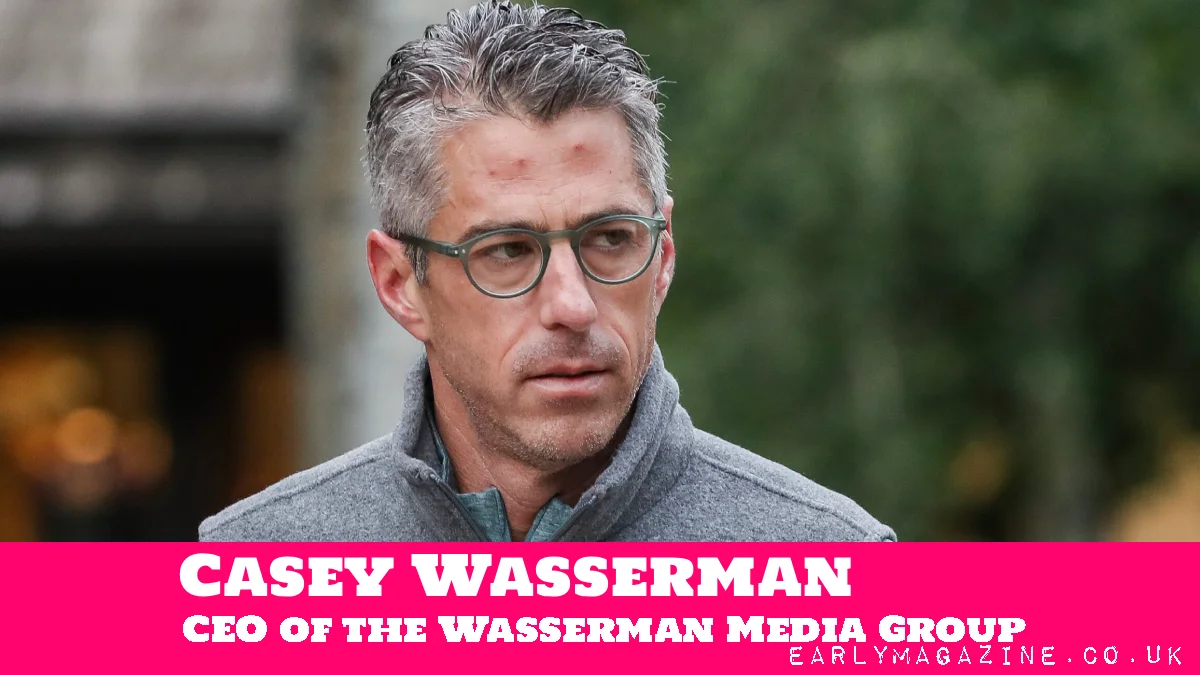












Casey Wasserman net worth stands at $400 million as of 2025. The American entertainment executive and sports agent built his fortune through Wasserman, his global sports marketing and talent management agency, along with strategic real estate investments and sports franchise ownership.
Casey Wasserman stands at the center of American sports power. As chairman and CEO of Wasserman, a global sports marketing and talent management agency, he has built one of the most influential firms in the industry. But his influence reaches far beyond athlete representation. He chairs the 2028 LA Olympics organizing committee, commands rooms filled with political leaders, and carries the weight of Hollywood royalty as grandson of legendary mogul Lew Wasserman.
The sports executive’s financial standing reflects decades of calculated risk-taking and relationship building. From purchasing a football team at age 24 to negotiating billion-dollar sponsorship deals, Wasserman has transformed himself from a famous grandson into a power broker who shapes how sports and entertainment intersect in America.
Casey Wasserman Net Worth in 2025
Casey Wasserman has a net worth of $400 million. This figure comes from authoritative celebrity wealth tracking sources and reflects his position as one of America’s most successful sports and entertainment executives. His wealth has doubled from an estimated $200 million in 2012 over the past decade, driven primarily by strategic acquisitions and the expansion of his sports marketing empire.
The $400 million valuation accounts for his ownership of Wasserman, real estate holdings, and various business investments. Some analysts suggest his actual wealth could be higher when factoring in the value of contracts his agency manages and his Olympic committee leadership role, though these figures remain difficult to verify independently.
Building the Wasserman Empire
Wasserman started Wasserman Media Group in 1998, the same year he purchased the Los Angeles Avengers of the Arena Football League for about $5 million. Despite his youth, he became chairman of the entire league and negotiated groundbreaking deals. In 2002, he secured a national television partnership between the league and NBC, as well as a collective bargaining agreement with players.
The Arena Football League venture ended in 2009, but it taught valuable lessons. In 2002, Wasserman founded Wasserman Media Group, now known simply as Wasserman. Initially focused on representing athletes in action sports and golf, the firm quickly expanded into basketball, baseball, soccer, and Olympic sports.
Strategic Acquisitions Drive Growth
Under his leadership, Wasserman grew through acquisitions of other sports agencies, becoming one of the most prominent representation and marketing companies in the world. Key purchases shaped the company’s trajectory:
- 2002: Acquired Envision (sports marketing and naming-rights company) and The Familie (action sports firm)
- 2004: Purchased 411 Productions, relaunching it as Studio 411
- 2021: Acquired Paradigm Agency’s music business
- 2023: Bought Brillstein Entertainment Partners
In 2016, Wasserman Media Group rebranded as Wasserman and is frequently referred to as “Team Wass”. The company now represents over 1,000 athletes and entertainers.
Client Roster and Revenue Streams
The firm’s client roster has included high-profile athletes such as Russell Westbrook, Giancarlo Stanton, and Megan Rapinoe, as well as numerous sports broadcasters and coaches. Beyond talent representation, Wasserman’s business handles brand consulting, sponsorship sales, and media rights negotiations for global sports properties.
The business model creates multiple revenue streams:
- Commission from athlete contracts
- Sponsorship deal negotiations
- Brand consulting services
- Media rights management
- Entertainment production
His leadership style emphasizes long-term partnerships and a data-driven approach to athlete branding and corporate strategy. This approach has made Wasserman essential to how major brands connect with sports audiences.
The Lew Wasserman Legacy
Casey Wasserman is the grandson of Lew Wasserman, a legendary Hollywood mogul and former president of MCA. The elder Wasserman transformed the entertainment industry, representing stars like Ronald Reagan before becoming one of Hollywood’s most powerful executives.
Wasserman refers to his grandfather as his teacher. The two would have breakfast together every Saturday and Sunday from the time he was a child until his grandfather’s death in 2002. Wasserman said, “He was my most valuable resource in terms of information”.
The Wasserman family legacy provided Casey with unparalleled access to entertainment industry power structures from childhood. Lew Wasserman’s career spanned nearly eight decades, during which he brought about changes in virtually every aspect of show business and received the Presidential Medal of Freedom from President Bill Clinton in 1995.
These weekend breakfasts weren’t casual family time. They were masterclasses in negotiation, relationship building, and business strategy. Lew taught Casey to anticipate problems, prepare exhaustively, and think several moves ahead.
Casey changed his surname from Myers to Wasserman when he was 18, signaling his intention to honor and continue his grandfather’s legacy while forging his own path.
Real Estate Holdings
Wasserman’s real estate transactions reveal both his wealth and his willingness to make bold moves. In October 2018, Casey listed his Beverly Hills home for sale for $125 million. He built the 18,000 square-foot home on a triple lot. Two of the lots belonged to his grandparents. The third lot was acquired from the estate of Frank Sinatra.
The property featured extraordinary amenities. The house, which sits on 3 acres, has an 85-foot infinity pool and parking for as many as 30 cars. The house finally sold in June 2020 for $68 million to music mogul David Geffen. While he took a significant loss from the asking price, the sale still represented a massive transaction.
In August 2020, Casey paid $23 million for a new home in Beverly Hills. His real estate portfolio contributes substantially to his overall net worth, though specific valuations of all his holdings remain private.
Leading the 2028 Los Angeles Olympics
In 2015, the USOC selected Los Angeles as the American applicant for the 2024 Summer Olympics. Wasserman successfully led Los Angeles’ 2017 bid for the 2028 Summer Olympics. He heads the city’s Olympic organizing committee.
This volunteer position carries no salary but immense prestige and influence. The Olympics represent the culmination of Wasserman’s career trajectory, combining sports, entertainment, politics, and civic leadership.
Recent high-profile moments include his August 2025 meeting with President Trump at the White House, where he presented Olympic medals from the 1984 LA Games while securing federal support for 2028 preparations. This diplomatic engagement, despite his Democratic Party affiliations, demonstrates his commitment to Olympic success over partisan politics.
The 2028 Games could significantly impact his legacy and potentially his wealth. Successful Olympic leadership often opens doors to board positions, speaking engagements, and business opportunities worth millions.
Philanthropy and Civic Engagement
As President and CEO of the Wasserman Foundation, established by his grandparents in 1952, Wasserman continues the family’s tradition of philanthropy. The foundation supports initiatives in education, health, arts and culture, and global causes.
His grandfather taught him that privilege comes with responsibility. Lew Wasserman always said the two things they would always do were, one, happily pay their taxes and two, give away their money.
Education remains a primary focus. His significant, long-term investment in the Partnership for Los Angeles Schools supports 19 LAUSD schools in Watts, Boyle Heights, and South Los Angeles. The foundation also created annual service days where volunteers help renovate schools.
While philanthropy doesn’t directly increase net worth, it builds social capital and relationships that create business opportunities. Wasserman’s charitable work keeps him connected to political leaders, corporate executives, and influential families across America.
Net Worth Comparison Table
| Executive | Net Worth | Primary Industry | Notable Achievement |
|---|---|---|---|
| Casey Wasserman | $400M | Sports/Entertainment | Chairman, LA 2028 Olympics |
| Ari Emanuel | $450M | Entertainment | CEO, Endeavor/WME |
| Rich Paul | $120M | Sports Agency | Founder, Klutch Sports Group |
| Scott Boras | $450M | Sports Agency | Baseball Super Agent |
| David Geffen | $10B+ | Entertainment/Media | Co-founder, DreamWorks |
Casey Wasserman’s $400 million net worth positions him among elite sports business executives, though below entertainment industry titans like Ari Emanuel (estimated $450 million) or David Geffen (over $10 billion).
Personal Life and Background
Casey Wasserman was born on June 28, 1974, and graduated from the University of California, Los Angeles (UCLA) in 2000 with a BA in political science. He is divorced from music supervisor Laura Ziffren Wasserman, whose grandfather Paul Ziffren was a Democratic Party leader and chair of the Los Angeles 1984 Summer Olympics Organizing Committee. They have two children together.
His parents divorced when he was seven, and his mother raised him with significant involvement from his grandfather. This upbringing in Los Angeles high society provided access to power brokers across entertainment, politics, and business from an early age.
In September 2025, Wasserman joined a search committee led by UCLA Bruins athletic director Martin Jarmond to assist with identifying their next head football coach. His continued involvement with UCLA reflects both his alma mater loyalty and his influence in college sports.
Future Wealth Trajectory
Where does Wasserman’s wealth go from here? Several factors could drive growth:
Olympic Success: A flawlessly executed 2028 Olympics would cement his reputation as one of sports’ great organizers. This could lead to consulting opportunities, board positions, and speaking fees worth millions annually.
Wasserman Expansion: The company continues acquiring talent agencies and production companies. Each successful acquisition adds value to his primary asset.
Real Estate: Beverly Hills property values continue rising. His holdings could appreciate significantly over the next decade.
Political Connections: His relationships with leaders across both parties create business opportunities that others cannot access.
Some observers speculate whether Wasserman could reach billionaire status. Forbes’ 2025 rankings place Wasserman among the top 20 most powerful sports agents, with his company overseeing contracts worth billions in active agreements. If Wasserman were to sell the company or take it public, his stake could be worth significantly more than current estimates suggest.
Frequently Asked Questions
How did Casey Wasserman make his money?
Wasserman built his fortune as chairman and CEO of Wasserman, a global sports marketing and talent management agency representing hundreds of top athletes, coaches, and broadcasters.
Is Casey Wasserman related to Lew Wasserman?
Yes. Casey Wasserman is the grandson of Lew Wasserman, the legendary Hollywood mogul and former president of MCA. He changed his surname from Myers to Wasserman at age 18.
Does Casey Wasserman get paid for leading the Olympics?
No. His role as chairman of the LA 2028 Olympics organizing committee is a volunteer position. However, the prestige and connections create indirect financial opportunities.
What athletes does Wasserman represent?
The firm’s client roster has included high-profile athletes such as Russell Westbrook, Giancarlo Stanton, and Megan Rapinoe, among many others across multiple sports.
Where does Casey Wasserman live?
In August 2020, Casey paid $23 million for a home in Beverly Hills after selling his previous Beverly Hills mansion to David Geffen.
Conclusion
Casey Wasserman net worth of $400 million tells a story beyond dollars. It reflects a career built on relationships, strategic thinking, and willingness to take calculated risks. From purchasing a football team at 24 to leading preparation for the world’s biggest sporting event, Wasserman has consistently positioned himself at the intersection of sports, entertainment, and power.
His grandfather’s legacy opened doors, but Wasserman’s success comes from what he did after walking through them. He transformed a sports agency into a global powerhouse, acquired competitors strategically, and built relationships with everyone from presidents to pop stars. The 2028 Olympics represent his biggest test yet. Success could transform him from wealthy executive into legendary figure, potentially opening pathways to even greater wealth and influence. Los Angeles will be watching closely.
For more inspiring stories like Casey Wasserman’s rise as a sports and entertainment powerhouse leading the LA 2028 Olympics, visit us at EarlyMagazine, where we uncover the journeys of remarkable individuals turning passion and vision into lasting legacies.
