

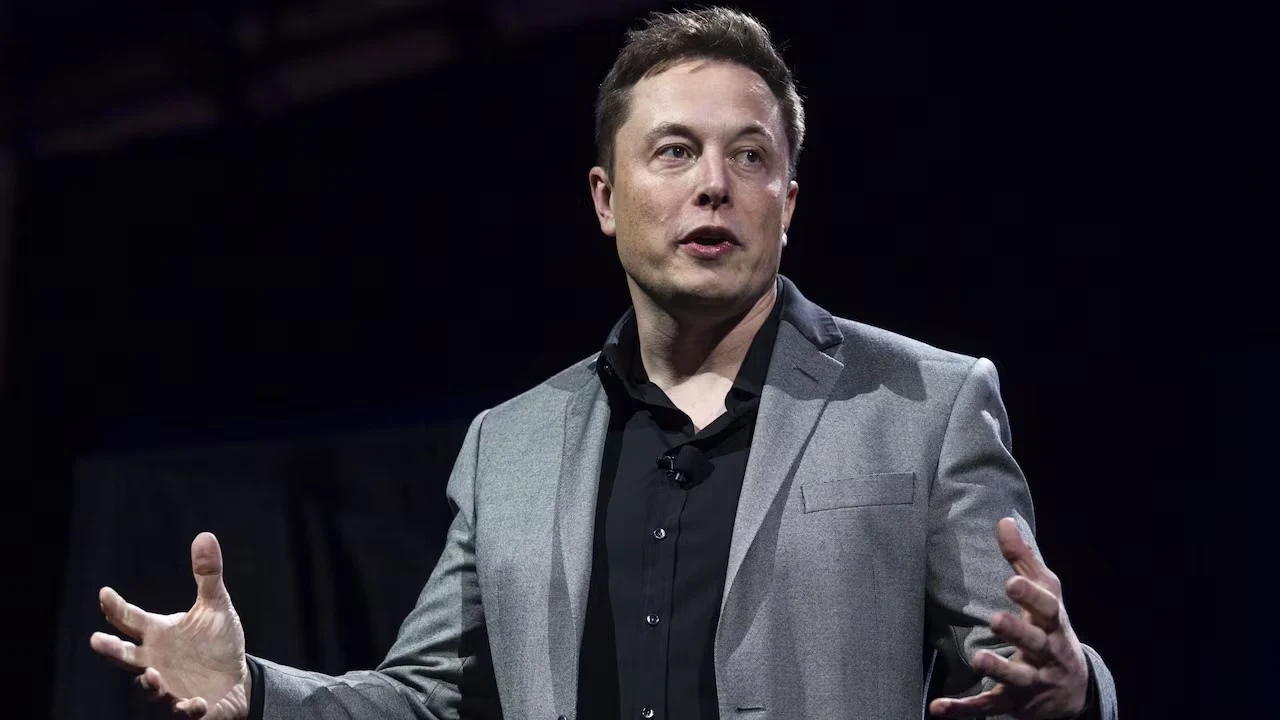
For years, the idea of someone becoming the world’s first trillionaire sounded like something out of a movie. Sure, Elon Musk was always the name people threw around when this topic came up, but the numbers needed a lot of things to go right first. Tesla had to keep growing. SpaceX had to eventually open up to public investors. And Starlink had to prove it was worth the kind of money usually reserved for tech giants like Apple or Google.
Well, it looks like all those pieces just clicked into place.
The Big Moment: SpaceX Goes Public
Most people who track wealth and billionaires figured Musk would only hit trillionaire status once SpaceX officially started trading on the stock market. Not when rumors floated around. Not when private investors guessed at a price. The real, official number was always going to come from SpaceX listing on the Nasdaq under the ticker symbol “SPCX.”
That listing is happening soon — but here’s the twist. Before any company starts trading publicly, there’s a step that happens the night before: the actual sale of shares. Bankers gather orders from investors, lock in a final price, and divide up shares between big institutions and everyday retail buyers. Only after that does the stock begin trading the next morning.
That’s exactly what just took place.
SpaceX Just Set a Massive Record
On Thursday, SpaceX priced its shares at $135 each, selling a jaw-dropping 555.6 million shares. Do the math, and that’s $75 billion raised in a single offering — the biggest IPO the world has ever seen.
This pricing puts SpaceX’s total value at around $1.77 trillion, or close to $1.8 trillion once you factor in all outstanding shares and stock options.
Demand was off the charts. The offering was oversubscribed by more than 4 times, meaning investors wanted way more shares than were available. Everyday retail investors alone put in over $100 billion in orders, and major firms like BlackRock reportedly wanted at least $5 billion worth of stock.
Based on this new pricing, and using CelebrityNetWorth’s earlier estimate of Musk’s fortune at $800 billion, it looks like Elon Musk has now officially crossed the $1 trillion threshold — making him history’s first trillionaire.
Breaking Down the Trillion-Dollar Math
So how exactly does this work? Let’s walk through it step by step.
Before this IPO, Musk’s net worth was estimated at $800 billion. That number already made him the richest person alive, but it was still $200 billion short of trillionaire status.
The big question was: how much of that $800 billion came from his SpaceX ownership?
Musk’s other assets — mainly his Tesla shares and stakes in various other companies — add up to roughly $260 billion. Subtract that from his total $800 billion, and his SpaceX stake was previously valued at around $540 billion.
That number actually makes sense. Earlier this year, SpaceX merged with Musk’s AI company, xAI, in a deal that valued the combined business at about $1.25 trillion. If Musk owns roughly 43% of SpaceX, here’s what that looks like:
$1.25 trillion × 43% = $537.5 billion
That checks out with the earlier estimate. But here’s where things get interesting — SpaceX’s IPO didn’t price at $1.25 trillion. It priced much higher.
The New Numbers After Pricing
With SpaceX now valued at $1.77 trillion, Musk’s 43% stake jumps significantly:
$1.77 trillion × 43% = $761.1 billion
Now add back his other assets:
$761.1 billion + $260 billion = $1.021 trillion
That’s $1,021,000,000,000 — officially over the trillion-dollar line.
And the Stock Hasn’t Even Started Trading Yet
Here’s the part that makes this even more wild: this calculation is based purely on the IPO price. The stock hasn’t started trading publicly on the open market.
If shares open exactly at $135 with no movement, Musk is already sitting just above $1 trillion. But if the stock pops on its first trading day — which often happens with hot IPOs — his net worth could climb even higher, fast.
Here’s how different scenarios could play out:
- A 5% jump: SpaceX’s value rises to about $1.86 trillion. Musk’s stake gains roughly $38 billion, pushing his net worth to around $1.06 trillion.
- A 10% jump: SpaceX’s value rises to about $1.95 trillion. Musk’s stake gains roughly $76 billion, pushing his net worth to around $1.10 trillion.
- A 20% jump: SpaceX’s value rises to about $2.12 trillion. Musk’s stake gains roughly $152 billion, pushing his net worth to around $1.17 trillion.
That 20% scenario isn’t just a wild guess pulled from thin air. Pre-IPO futures contracts tied to SpaceX have been trading around $162 — about 20% higher than the $135 IPO price. These markets tend to be driven by aggressive crypto traders, so they’re not a guaranteed forecast. But they do hint that investors are expecting a strong first-day surge.
How This Stacks Up Against Other Famous IPOs
Even without Musk’s personal wealth being part of the story, this IPO would still be making headlines for breaking records.
For some perspective, here’s how past major IPOs compare:
- Saudi Aramco raised $29.4 billion back in 2019
- Alibaba raised $25 billion in 2014
- Facebook (now Meta) raised $16 billion in 2012
- Uber raised $8.1 billion in 2019
SpaceX just blew past all of them with $75 billion raised in a single day.
And it could grow even bigger. SpaceX gave its underwriters an option to sell an additional 83.3 million shares at the same IPO price. If that option gets used fully, the total deal could reach close to $86 billion.
Why Is SpaceX Worth So Much?
Investors aren’t treating SpaceX like a typical rocket-launching business — and that’s because it isn’t one anymore.
The company now has its hands in multiple major industries at once:
- Falcon rockets and reusable launch technology
- NASA and defense contracts
- Starlink satellite internet service
- Starship, built for heavy-lift missions and space infrastructure
- xAI, Musk’s artificial intelligence company
- Plans for space-based data centers
- Long-term goals around colonizing Mars
The more cautious outlook is that SpaceX simply becomes the dominant player in rocket launches, grows Starlink into a massive internet provider, and locks in long-term government contracts.
The bolder outlook? Some believe SpaceX could become the backbone of the entire AI industry — combining satellites, energy, data centers, and computing power, all under one roof.
But Don’t Ignore the Risks
Before anyone gets too carried away, it’s worth pointing out: none of this means SpaceX stock is a safe bet, or that its price will only go up from here.
SpaceX is reportedly still not profitable. A huge chunk of its valuation rests on businesses that are either brand new, incredibly expensive to build, or completely unproven — like space-based data centers, factories on the Moon, and a future Mars colony. Those ideas still sound more like science fiction than business plans.
There’s also a major governance concern. After the IPO, Musk is expected to retain enormous voting power, meaning regular shareholders won’t have much say in how the company is run. If Musk decides to pour billions into Mars exploration instead of paying out profits to investors, there’s little anyone could do about it.
Well-known short-seller Jim Chanos has reportedly called this a “hopes-and-dreams IPO” — and honestly, that’s not an unfair label. SpaceX’s valuation is based far more on future potential than current earnings.
The Bottom Line
This wouldn’t be the first time people doubted a Musk company. Tesla was called overpriced for years before becoming one of the most valuable companies on the planet. SpaceX could follow a similar path — or it could prove the skeptics right. Maybe both, at different points over the coming years.
But for right now, one thing is certain: Elon Musk has officially become the world’s first trillionaire, and the stock hasn’t even started trading yet.
Curious who else stands to gain big from this historic IPO? Find out how Antonio Gracias could walk away with $20 billion from the SpaceX deal.
