

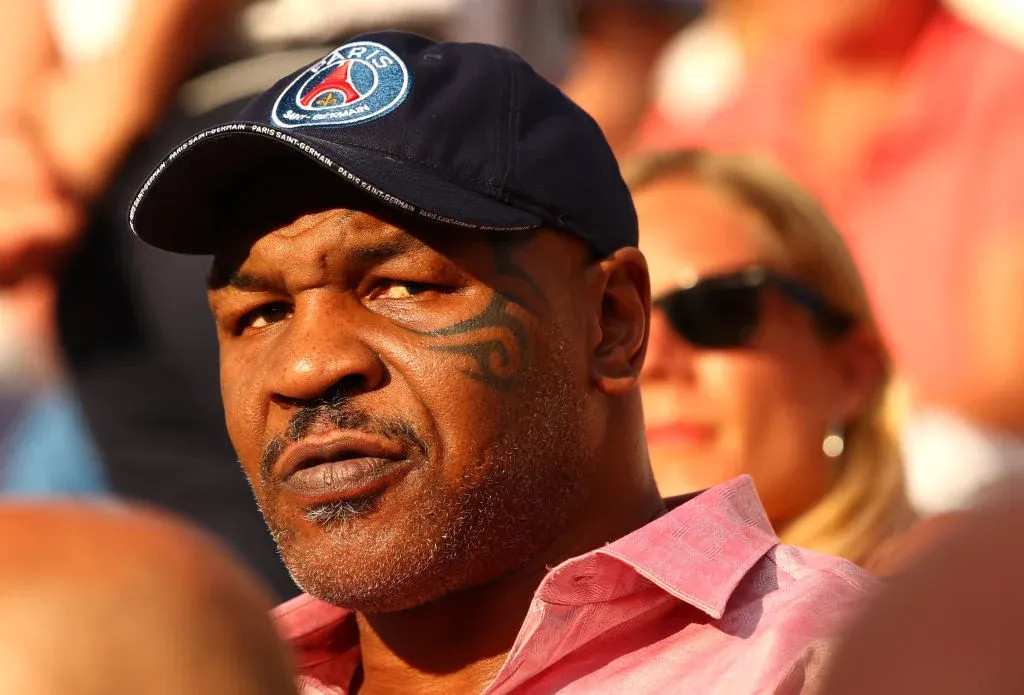
Mike Tyson is famous for many things. There is the face tattoo, the shocking Evander Holyfield ear bite, and of course the knockouts. “Iron Mike” is still one of the most feared heavyweights ever to enter a boxing ring.
He is also famous for something less flattering: the way he spent money.
Tyson made hundreds of millions of dollars in his boxing career. At his peak, his net worth reached about $300 million. That is enough to support a family for generations. Yet Tyson spent it all, and in 2003 he filed for bankruptcy with about $23 million in debt.
So how does a man lose a fortune that big? Let’s break it down.
How Do You Spend $300 Million?
The short answer is “very quickly.” Here are the main reasons Tyson’s money disappeared:
- He travelled with a huge entourage that cost a fortune to support.
- He kept Siberian tigers and paid heavily to feed and care for them.
- He bought luxury cars, flashy jewelry and giant mansions.
- He paid out big cuts of every fight purse to promoters and managers.
- Taxes and other bills kept piling up.
Tyson’s total ring earnings, including his later comeback fights, are estimated at around $370 million. Even that was not enough to keep up with his lifestyle.
From Brownsville to the Top of the World
To understand the spending, it helps to understand where Tyson came from. He grew up poor in Brownsville, Brooklyn, in the 1970s. By age 20, he was the youngest heavyweight champion in boxing history.
Almost overnight, he went from having very little to being one of the most famous and best-paid athletes on Earth. He had no financial education and little guidance on handling sudden fame. That mix is risky for anyone.
Tyson turned pro in 1985 and flattened opponent after opponent. His first big setback came in 1990, when Buster Douglas shocked the world by beating him.
In 1991, Tyson was accused of rape by Desiree Washington. He was convicted in 1992 and sentenced to six years in prison. Tyson has said the encounter was consensual. He was released in March 1995 after serving about three years.
Even after prison, his earning power was huge. TV networks and casinos lined up with big offers. His comeback fight against Peter McNeeley reportedly paid him $25 million for about 89 seconds of work.
Where the Money Went After Prison
In the first three years after his release, Tyson’s spending reportedly included:
- $4.5 million on cars and motorbikes, including 19 vehicles bought as gifts for friends
- $400,000 on pigeons and big cats, including Siberian tigers
- $300,000 on lawn care and garden upkeep
- $240,000 per month in personal spending money
- $230,000 on cell phones, pagers and phone bills
- $125,000 per year for a trainer to look after his big cats
- $100,000 per month on jewelry and clothing
Take a moment with those numbers. Spending $240,000 every month on everyday personal costs would drain most bank accounts fast. And he paid close to a quarter of a million dollars for phones and pagers at a time when most people did not own a mobile phone.
Then there were the animals. Some of his tigers reportedly cost up to $70,000 each, and feeding and caring for them added six-figure bills every year.
The Connecticut Mansion That Had It All
In 1996, Tyson paid $2.8 million for a mansion of more than 50,000 square feet on 17 acres in Farmington, Connecticut. The address was 50 Poplar Hill Drive, and the house already had a wild backstory.
A real estate developer built it in 1985 and later pleaded guilty to fraud and went to prison. The home went into foreclosure in 1992, and a bank bought it at auction for $3.5 million. The bank resold it at a loss, and the next owner sold it to Tyson.
Tyson then poured millions into upgrades. The finished property included:
- A nightclub that could hold 1,000 people
- An indoor gym
- An indoor shooting range
- More than 100 phone extensions
- A full-size NBA-regulation basketball court
It was less a home and more a private entertainment complex.
In 2003, during his divorce and bankruptcy, the house went to his ex-wife Monica Turner as part of their settlement. She sold it to rapper 50 Cent that same year for $4.1 million.
The story has a twist. When 50 Cent filed for bankruptcy in July 2015, he revealed the mansion cost him about $70,000 a month in utilities and upkeep. After years on the market and many price cuts, he sold it in April 2019 for only $2.9 million.
Tyson also owned homes in Maryland, Las Vegas and Ohio. His Ohio estate came with gold-plated furniture, swimming pools and a basketball court.
Mike Tyson’s Car Collection
Tyson is believed to have bought more than 100 cars in his lifetime. His garage included:
- A $500,000 Bentley Continental SC, one of only 73 ever built
- Lamborghinis and Ferraris
- A Mercedes-Benz 500
- A Range Rover
- A 1995 Rolls-Royce that he crashed
One famous story says Tyson dropped the wrecked Rolls-Royce at a repair shop and told the staff to keep it. He also lent cars to friends so often that he sometimes forgot who had them. Members of his team reportedly had to hunt down missing vehicles.
The Ferrari F50
The star of the collection was a Ferrari F50, chassis number 104220, finished on February 13, 1996. Ferrari built only 349 F50s, so it ranks among the rarest supercars of its time.
Tyson sold it in 2001 to a tech entrepreneur, two years before his bankruptcy. After a few more owners, the same car sold at auction in August 2022 for $4.625 million.
Other Wild Spending Stories
Some Tyson money stories sound made up, but they are part of his legend:
- He once found tens of thousands of dollars in a laundry basket. He had put the cash there two years earlier and forgot about it.
- He reportedly bought a $2 million gold bathtub for his first wife, actress Robin Givens.
The Hidden Cost: Promoters, Managers and Taxes
Not every lost dollar went to toys. A big share never reached Tyson at all.
During his comeback years, promoter Don King was entitled to 30% of Tyson’s fight purses. Two managers took 10% each. On a $30 million fight, that meant about $15 million was gone before taxes or personal bills.
Tyson later sued King for $100 million, claiming he had been cheated. The case settled in 2004 for $14 million, but the money went to Tyson’s creditors.
Tyson has since admitted that much of the damage was his own doing. He loved the lifestyle, even as his finances slipped out of control. By the time he filed for bankruptcy in 2003, the man once worth $300 million was buried in debt.
Mike Tyson’s Financial Comeback
The story did not end in bankruptcy. Over the next two decades, Tyson slowly rebuilt his income through:
- Movies and TV: His role in The Hangover introduced him to a new generation.
- Live shows: His one-man show, Mike Tyson: Undisputed Truth, brought in new revenue.
- Appearances and licensing deals: Steady paid work kept money coming in.
- Cannabis: He co-founded Tyson 2.0, which became part of Carma HoldCo, a company that also handles brands tied to Ric Flair and Future. Forbes reported Carma’s 2024 revenue at about $200 million, with Tyson 2.0 making most of the sales. Tyson became CEO in April 2025.
Boxing paid out one more time too. In November 2024, Tyson earned $20 million for his Netflix fight against Jake Paul. Two months later, he and his wife, Kiki, bought a 12,000-square-foot waterfront mansion near Delray Beach, Florida, for $13 million. They also picked up a nearby $1.7 million property with access to a private airstrip.
Mike Tyson’s Net Worth Today
Estimates put Tyson’s current net worth at around $30 million. That is only about one-tenth of his peak, yet it is a big recovery for a man who once called himself broke.
Final Thoughts: What Mike Tyson’s Money Story Teaches Us
Tyson spent $400,000 on pigeons and tigers, $2 million on a gold bathtub, and millions more on cars he could not always find. Even so, he climbed back to multimillionaire status.
His story offers a few simple lessons:
- Big income does not mean lasting wealth. Spending habits matter more than earnings.
- Watch the fees. Promoters, managers and taxes can take half of a paycheck.
- Get financial advice early, especially when money arrives fast.
- A comeback is possible. New income streams can rebuild what was lost.
Want more stories about celebrity fortunes, dream homes and big money moves? Keep reading EarlyMagazine UK.
