

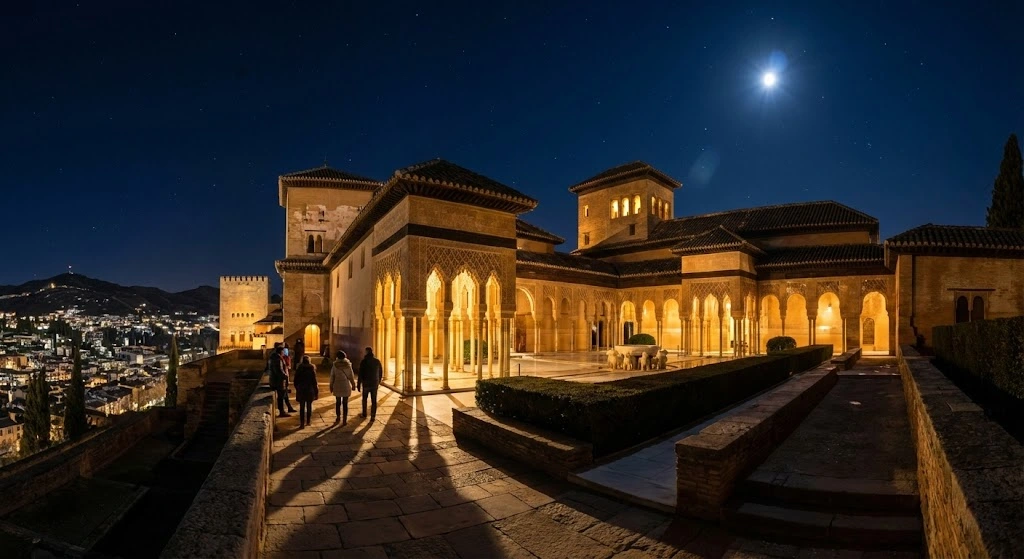
The Alhambra night tours generate substantial revenue through ticket sales and guided experiences, contributing to Granada’s economy. With tickets priced around 12.73 euros and growing attendance, these magical evening visits help sustain Spain’s most visited monument.
Walking through the Alhambra palace under the soft glow of moonlight creates a completely different experience than visiting during the day. The night tours at this magnificent UNESCO World Heritage Site have become increasingly popular, and they’re doing more than just creating magical memories for visitors. They’re also generating significant revenue that helps keep this historic treasure alive for future generations.
Understanding the Alhambra’s Financial Powerhouse
The Alhambra isn’t just a beautiful monument. It’s actually one of the biggest money makers in Spain’s tourism industry. Back in 2010, research showed that this single attraction brought in more than 490 million euros to Granada and created over 6,800 jobs in the city. That’s a pretty impressive impact for one historic site.
Fast forward to 2024, and the numbers keep getting better. The Alhambra welcomed around 2.72 million visitors throughout the year, which marked a 6.8 percent increase from the previous year. Think about it like this: that’s roughly the same as if every person in Chicago decided to visit Granada just to see the Alhambra. The monument now operates at nearly 98 percent capacity, which means tickets are selling out almost every single day.
How Night Tours Add to the Revenue Stream
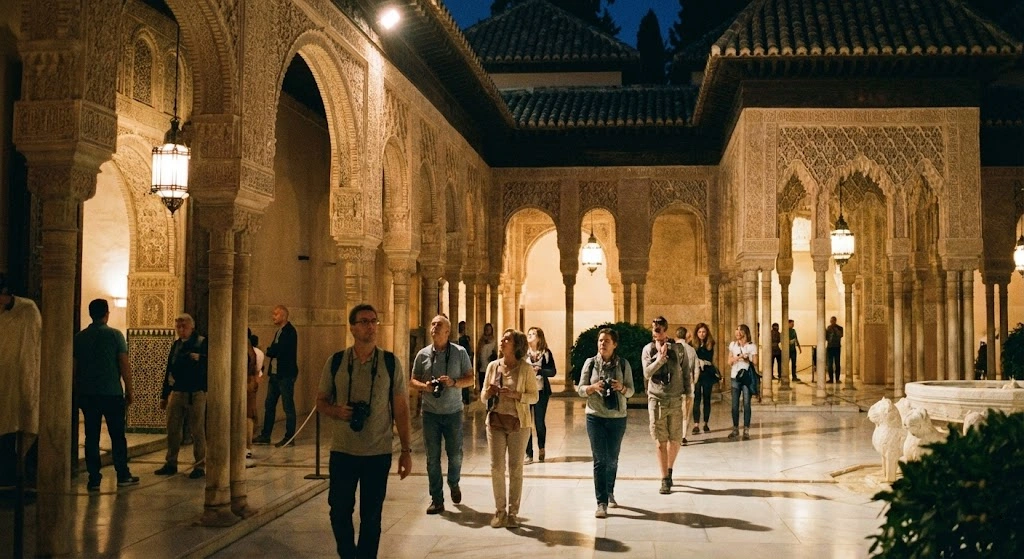
Night tours work differently than regular daytime visits, and that’s part of what makes them special from a business perspective. During evening hours, visitors can only explore the Nasrid Palaces and the Palace of Charles V. The gardens and fortress areas stay closed once the sun goes down. This focused experience comes with a ticket price of about 12.73 euros for adults, which is actually lower than the general daytime admission of around 19 euros.
You might wonder why they’d charge less for something so special. Well, here’s the thing: night tours attract a different type of visitor. Some people come back for a second visit because the nighttime atmosphere offers such a unique perspective. Others choose the evening option specifically because they prefer quieter, more intimate experiences away from the bustling daytime crowds.
The monument operates these night tours year round, though the start times change with the seasons. During winter months from October through March, tours begin at 5:30 in the evening. When summer arrives from March to October, they push the start time to 7:30 to take advantage of longer daylight hours and cooler evening temperatures.
Breaking Down the Numbers Game
Here’s where things get really interesting when you look at the capacity limits. The Alhambra lets in about 300 people every thirty minutes during peak hours. That adds up to roughly 8,000 visitors each day when you include both daytime and nighttime slots. For night tours specifically, the number is smaller because they only run for a few hours and focus on limited areas of the complex.
Let’s do some quick math to understand the revenue potential. If a night tour session accommodates 300 visitors and each ticket costs 12.73 euros, that’s 3,819 euros in ticket sales every half hour. Multiply that across several evening time slots, and you can see how the revenue adds up pretty quickly. Keep in mind, these are just the official entrance fees. Many visitors also purchase guided tours, which run anywhere from 60 to 140 euros depending on whether you want a private guide or join a group.
The Economic Ripple Effect Through Granada
The money from night tour tickets doesn’t just disappear into some government account. It creates what economists call a multiplier effect throughout Granada’s economy. When tourists come for evening visits, they often grab dinner at local restaurants before or after their tour. They might stay an extra night in Granada hotels. They buy souvenirs from shops in the old town. All of this spending adds up.
According to research from 2010, about 157.5 million euros of Alhambra-related tourism spending went to hotels in Granada. Restaurants received another 83.5 million euros. Local shops saw 62 million euros, while leisure and cultural activities brought in 73.5 million euros. Transportation services got 9 million euros. These numbers have likely grown even larger as visitor numbers have increased over the years.
The study also found something pretty remarkable: 83 percent of all hotel revenue in Granada city could be traced back to the Alhambra’s presence. That means if you took away the Alhambra, most of Granada’s hotels would probably struggle to survive. The monument is that important to the local economy.
What Makes Night Tours So Appealing
There’s something almost magical about seeing the intricate Islamic architecture highlighted by strategic lighting rather than harsh sunlight. The shadows emphasize details in the carved walls and ceilings that you might miss during the day. The sound of water fountains seems louder and more soothing without the background noise of thousands of daytime visitors.
Tour guides often describe the night experience as stepping into the tales of “The Thousand and One Nights.” The special lighting conditions bring out colors and patterns that look completely different under artificial illumination. Photographers love the golden hour just before sunset and the dramatic contrasts created by nighttime lighting.
This unique experience justifies the ticket price even though visitors see less of the overall complex. Quality trumps quantity here. People would rather spend ninety minutes in an intimate, atmospheric setting than rush through the entire monument fighting crowds.
Guided Tours and Premium Experiences
While basic night tour tickets cost around 12.73 euros, the real revenue boost comes from guided tours and premium experiences. Official guides charge anywhere from 240 euros for private groups, with the cost split among participants. For individual travelers joining group tours, prices typically range from 60 to 80 euros per person.
These guided experiences include the basic entrance fee plus expert commentary in multiple languages. The Alhambra offers guides who speak Spanish, English, French, German, Italian, Portuguese, Danish, Russian, Dutch, Swedish, Arabic, and Japanese. That’s quite a range, and it shows how international the visitor base has become.
Some tour operators combine night visits with other Granada experiences, like flamenco shows in the Sacromonte neighborhood or wine tastings featuring local Andalusian wines. These package deals can cost 100 euros or more, but they provide a complete evening experience that many travelers find worth the investment.
The Challenge of Managing Success
Operating at 98 percent capacity sounds great from a revenue perspective, but it creates some challenges too. When tickets sell out months in advance, some potential visitors simply can’t get in. Others turn to third-party resellers who mark up prices significantly. This has led to complaints about fairness and accessibility.
The Alhambra management team has tried to address this by implementing a sophisticated booking system that opens tickets up to a year in advance. They’ve also created different ticket types to spread out demand. Garden-only tickets, for example, cost less and don’t include the Nasrid Palaces, which are the most crowded section.
For night tours, the limited capacity actually works in their favor. The experience depends on maintaining that intimate, quiet atmosphere. If they packed in too many people, it would ruin what makes these evening visits special in the first place.
Looking at the Bigger Tourism Picture
Granada ranks as the sixth most visited destination in all of Spain and the second most popular in Andalusia. The Alhambra is the main reason for that ranking. Without this monument, Granada would probably be a pleasant but unremarkable mid-sized Spanish city. Instead, it’s a must-see destination that attracts visitors from every corner of the world.
The tourism sector as a whole contributes about 13 percent to Spain’s GDP. In cities like Granada where historic monuments drive the industry, that percentage is probably even higher. The jobs created by tourism range from hotel staff and restaurant workers to tour guides, taxi drivers, and museum curators.
Night tours specifically create employment opportunities that might not otherwise exist. Guides, security staff, lighting technicians, and administrative workers all need to be on hand for evening operations. This extends the working day and creates part-time positions that can supplement income for students or people with other daytime commitments.
Sustainability and Future Revenue Concerns
Running at near-full capacity raises important questions about sustainability. The Nasrid Palaces, built in the 13th and 14th centuries, weren’t designed to handle millions of visitors trampling through them every year. The constant foot traffic causes wear and tear on delicate tile work, plaster carvings, and wooden ceiling panels.
Some conservationists worry that maximizing attendance for revenue purposes might conflict with the monument’s preservation needs. The Alhambra’s management has responded by investing heavily in restoration projects and implementing strict capacity limits. Every euro earned from ticket sales helps fund these conservation efforts, creating a balance between access and preservation.
Night tours actually help with this balance. By spreading visitors across more hours of the day, they reduce the concentration of people during peak daytime periods. The cooler evening temperatures also mean less heat stress on both visitors and the historic structures themselves.
Ticket Pricing Strategy and Market Positioning
At 12.73 euros, night tour tickets are priced strategically. They’re affordable enough to attract budget-conscious travelers but expensive enough to generate meaningful revenue. The price point sits below a typical restaurant meal in Granada but above a movie ticket, which seems about right for a world-class cultural experience.
Children under three get free admission, while those aged three to eleven must have tickets booked along with adult purchases. Students and seniors from European Union countries get reduced rates of about 7.42 euros. This tiered pricing structure maximizes revenue while maintaining accessibility for different demographic groups.
The Alhambra also offers combination tickets that bundle night visits with other experiences. For example, you can buy a ticket that includes daytime access to the gardens and fortress plus a nighttime visit to the Nasrid Palaces on consecutive days for 22.27 euros. These packages encourage longer stays in Granada, which benefits the whole local tourism ecosystem.
Revenue Allocation and Monument Maintenance
Where does all this money actually go? The revenue collected from ticket sales flows to the Council of the Alhambra and Generalife, which is part of the Andalusian regional government. This public body manages the monument’s operations, conservation, security, and visitor services.
A significant portion of the budget goes toward ongoing restoration work. The Alhambra isn’t a static museum piece. It’s a living monument that requires constant attention from expert craftspeople who specialize in Islamic architecture and historic preservation techniques. These specialists use traditional materials and methods to repair damage while maintaining historical authenticity.
Security represents another major expense. Protecting an outdoor monument complex that covers more than 35 acres requires a sophisticated system of cameras, guards, and monitoring equipment. The night tours add complexity because they extend operational hours well into the evening when visibility challenges increase.
The Role of Private Tour Companies
While the Alhambra itself is a public institution, numerous private companies have built businesses around facilitating visits. These tour operators purchase blocks of tickets in advance and bundle them with guide services, transportation, and sometimes meals or other activities.
This creates a secondary economy around the monument. A private guide might charge 240 euros for a group night tour. After paying for the entrance tickets, the guide keeps the difference as their fee. Multiply this across dozens of guides working every evening, and you can see how much economic activity the Alhambra generates beyond just its own ticket sales.
Some travel companies offer specialized experiences like photography-focused night tours or culinary tours that combine Alhambra visits with tapas crawls through Granada’s old town. These premium offerings can cost 150 euros or more per person, but they appeal to travelers seeking unique, Instagram-worthy experiences.
Comparing Night Tours to Daytime Revenue
Daytime tickets generate more total revenue simply because they’re available for more hours and include access to a larger portion of the monument. General admission costs 19.09 euros compared to 12.73 for night visits. But when you calculate revenue per hour of operation, the night tours might actually be more efficient.
Evening tours run in concentrated time blocks with high attendance rates. There’s less downtime between visitor groups, and the streamlined experience means people move through more quickly. This efficient use of space and time maximizes the return on operational costs like lighting and staffing.
The emotional impact of night tours also can’t be measured in euros alone. Many visitors describe their evening visit as the highlight of their entire Spanish vacation. These memorable experiences lead to positive reviews, social media posts, and word-of-mouth recommendations that attract future visitors. That kind of marketing value is hard to quantify but extremely valuable.
Planning for the Future
Looking ahead, the Alhambra faces the challenge of balancing growing demand with preservation needs. They can’t simply keep adding more time slots or squeezing in more visitors without damaging the monument or degrading the visitor experience.
Some proposals include extending night tour hours slightly during peak summer months or creating virtual reality experiences that could satisfy some of the demand without adding physical stress to the actual structures. Others suggest raising prices to manage demand, though this risks making the monument inaccessible to lower-income visitors.
The night tour model has proven successful both culturally and financially. It demonstrates that thoughtful tourism management can generate substantial revenue while still protecting historic treasures. As other monuments around the world look for sustainable tourism strategies, the Alhambra’s approach to evening visits offers valuable lessons.
The Bottom Line
Night tours at the Alhambra represent a win-win situation. Visitors get an unforgettable experience that they simply can’t have during daytime hours. Granada’s economy benefits from the spending that these visitors bring to hotels, restaurants, and local businesses. The monument itself receives funding for critical conservation work that will preserve it for future generations.
At 12.73 euros per ticket, the night tours might seem modestly priced compared to the overall impact they create. But when you multiply that across thousands of visitors each month, the revenue adds up to a significant sum that supports one of Spain’s most important cultural treasures. The magic of experiencing the Alhambra by moonlight comes with the practical benefit of economic sustainability that keeps those palace lights burning for years to come.
For more expert career guidance, hiring insights, and practical resources that help professionals stand out in competitive job markets, visit EarlyMagazine, where informed decisions lead to meaningful career growth.
