

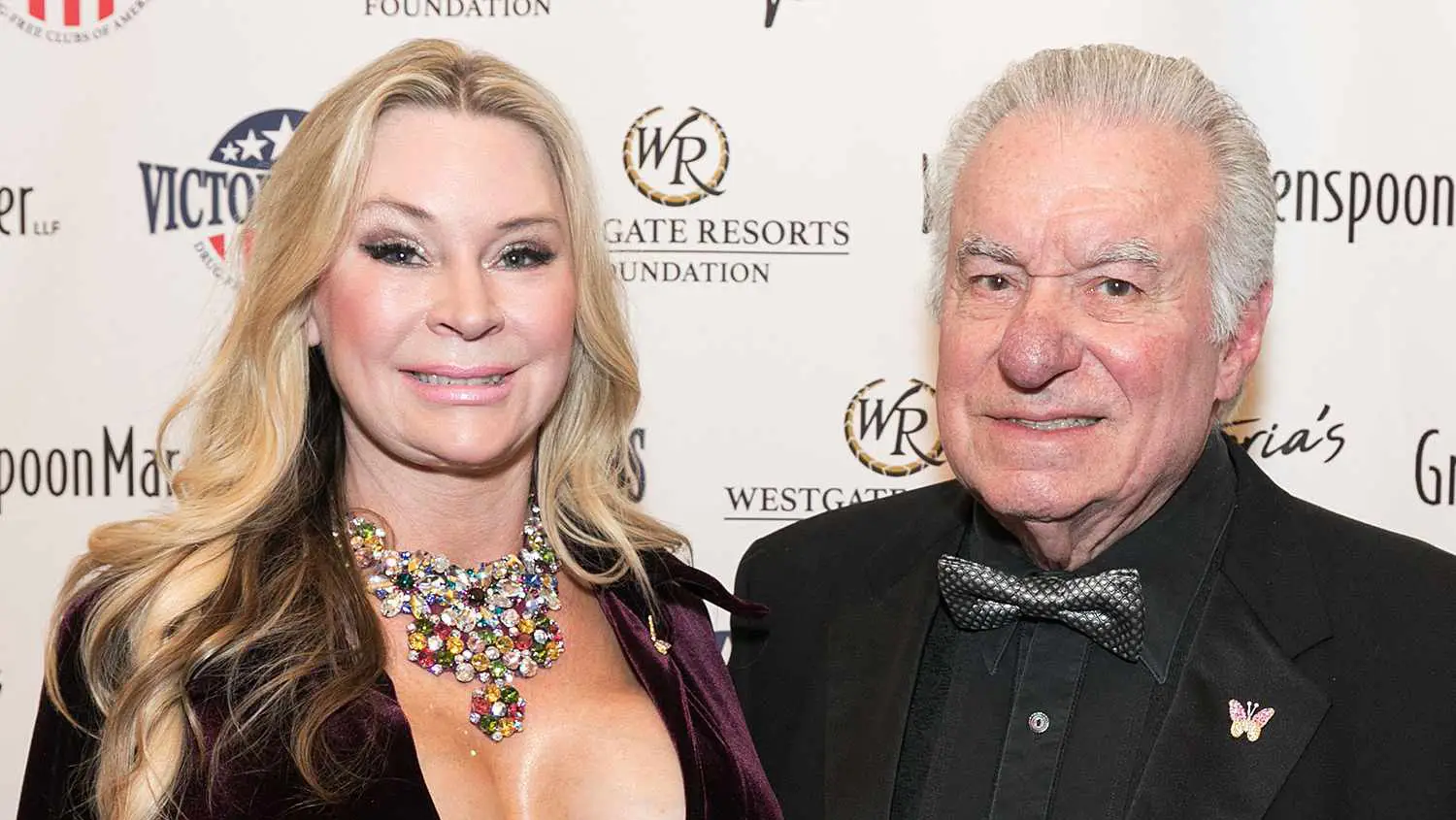
Some houses are just houses. But one Florida mansion tells the story of a man’s entire life — his rise, his fall, and his refusal to quit.
That mansion is called Versailles, and it belongs to the Siegel family. What started as a giant trophy home turned into a symbol of the 2008 financial crash, then a hit documentary, then a Broadway musical. And somehow, more than 20 years later, it’s still not finished.
Here’s the full story of David and Jackie Siegel, the timeshare empire they built, and the house that just wouldn’t quit.
From a TV Repair Shop to a Timeshare Empire
David Siegel wasn’t born rich. He grew up in Chicago, born back in 1935, and his family later moved to Miami to run a small grocery store.
After finishing high school and spending time at the University of Miami, David served in the Air Force. Once he came back home, he opened a small shop in Coconut Grove that fixed up used television sets.
That little TV shop didn’t stay his life’s work for long. David eventually shifted into real estate and land sales around Central Florida, and that’s where things really took off.
The Big Idea That Started It All
In 1982, David planted the seed for what would become a business empire. He took an orange grove he owned near Walt Disney World in Kissimmee and turned it into a 16-unit vacation resort.
His idea was simple but brilliant: not every family could afford a vacation home. But plenty of them could afford to pay for the right to stay at a resort for a week or two every year.
That idea became Westgate Resorts — and it grew into the largest privately owned timeshare company on the planet.
How Big Did Westgate Get?
Over the next few decades, Westgate spread far beyond that orange grove. The company opened locations in Orlando, Las Vegas, Park City, Myrtle Beach, and Gatlinburg, just to name a few.
Westgate wasn’t just about timeshares anymore, either. The business grew to include hotels, casinos, restaurants, spas, water parks, apartments, and even insurance and transportation services.
By the time David passed away in 2025, Westgate had grown to more than 13,500 rooms across 22 resorts. It had also become the biggest private employer in all of Central Florida. Shortly after, the company expanded even further, adding VI Resorts and pushing its full portfolio to almost 60 properties spread across the U.S., Canada, and Mexico.
At his peak, David’s fortune was estimated at around $1 billion. He flew on a private jet, hosted celebrities, and ran one of the biggest hospitality companies in the country.
So naturally, he decided it was time to build a house that matched all that success.
A Beauty Queen and a Business Mogul
Before we get to the mansion, it’s worth talking about the woman at the center of this whole story: Jackie Siegel.
Jackie had worked as a model and a computer engineer before winning the Mrs. Florida America pageant title in 1993. She later stayed involved in the pageant world long after her crown.
David, who loved beauty pageants and often sponsored them, met Jackie at a pageant-related event in the late 1990s. The two married in 2000 and went on to raise a big blended family, with eight children living under one roof.
Their personalities couldn’t have been more different, and neither could their ages. But together, they became one of the most recognizable couples in Florida high society.
Building the Biggest House in America
The Siegels bought the land for their dream home in 2000, and construction kicked off in 2004. The property sits on about 10 acres overlooking Lake Butler, right in the wealthy Orlando suburb of Windermere.
You’ll often see Versailles described as a 90,000-square-foot mansion. In reality, public records show roughly 66,800 square feet of actual living space, with 90,000 total square feet once you count the garage, porches, and everything else under the roof.
Either way, this thing was designed to be one of the largest private homes in the entire United States.
What Inspired the Design?
The name gives it away — the house drew inspiration from the real Palace of Versailles in France. But it also borrowed heavily from the over-the-top style of the Paris Las Vegas resort.
The end result wasn’t really a copy of a French palace. It was more like an American fantasy version of royal living, packed with marble floors, gold trim, sweeping staircases, and massive entertainment areas.
The Jaw-Dropping Features on the Blueprint
The original plans for Versailles were almost impossible to believe. Here’s what was on the list:
- Roughly 90,000 total square feet
- Up to 14 bedrooms and as many as 30 bathrooms
- Five separate kitchens
- A garage big enough for 35 cars
- A two-lane bowling alley
- An indoor ice-skating rink
- A ballroom that could seat about 150 guests for dinner
- A full movie theater
- An imported British-style pub, shipped straight from England
- Several swimming pools
- A full fitness center and spa
- A private baseball field
This wasn’t meant to be just a family home. It was designed as a private resort, an event space, and a physical trophy for everything David had built through Westgate.
Unfortunately, the timing couldn’t have been worse.
When the 2008 Financial Crash Hit Home
Timeshare businesses run on credit. Companies like Westgate lend money to customers so they can buy their timeshares, then borrow against those future payments to keep the cash flowing.
That system works great — until credit dries up. And in 2008, it dried up fast.
Westgate’s sales crashed, financing disappeared overnight, and the heavily leveraged company had to make brutal cuts. More than 3,000 employees reportedly lost their jobs. The Siegels gave up their private jet, cut back their household staff, and eventually lost their beloved Las Vegas property, PH Towers, which was connected to Planet Hollywood.
Construction on Versailles stopped completely in 2009. At that point, the house was only about 60% finished. The Siegels even tried to sell the unfinished mansion for $65 million — but no buyer ever came forward.
Westgate never actually filed for bankruptcy. The company restructured its debt, gave up certain assets, and clawed its way through the crisis. But for a while, it looked entirely possible that David could lose both his company and his dream house at the same time.
That dramatic collapse changed the entire direction of a documentary that was already filming.
“The Queen of Versailles” Takes the World by Surprise
Filmmaker Lauren Greenfield had originally set out to document something completely different — the construction of America’s largest private home and the extravagant lifestyle around it.
Then the crash hit, and the whole project changed direction.
Released in 2012, “The Queen of Versailles” followed the Siegel family as they tried to adjust to a much smaller life while David fought to keep Westgate alive. Jackie went from luxury shopping trips to clipping coupons at Walmart. Her kids experienced commercial flights for the first time. In one now-famous scene, Jackie seems genuinely shocked that her rental car didn’t come with a driver.
The film was funny, awkward, and surprisingly honest all at once. Instead of just mocking rich people behaving badly, it used the Siegels’ story as a mirror for the entire housing crash. Their mistakes were bigger in scale, sure — but the same reckless borrowing that hurt them had also hurt millions of everyday Americans.
The documentary won the U.S. Documentary Directing Award at Sundance and became one of the most talked-about films of the year. Jackie became an overnight celebrity, earning the nickname that’s stuck with her ever since — the Queen of Versailles.
David, on the other hand, wasn’t thrilled with how the film portrayed Westgate, especially the hints that the company was headed toward bankruptcy. Whether he liked it or not, the documentary permanently tied his name, his business, and his half-built mansion together in the public eye.
Westgate Bounces Back
By the early 2010s, Westgate had clawed its way back to financial health. Credit opened back up, hiring picked up again, and the company returned to steady growth.
Construction on Versailles restarted in 2013. But finishing a custom mega-mansion turned out to be far harder the second time around. Plans kept changing, imported materials got delayed, and huge sections of the house needed to be redesigned from scratch.
Then, in 2022, Hurricane Ian slammed into Florida and damaged the mansion’s roof, ceilings, and interior. Jackie later estimated the storm caused more than $10 million in damage alone.
That same year, the family returned to TV screens with the Discovery+ series “Queen of Versailles Reigns Again,” which followed Jackie as she juggled contractors and tried to finally finish a house that had already eaten up nearly two decades of her life.
Every year, it seemed like Versailles was “almost done.” Yet more than 20 years after breaking ground, the mansion remained a work in progress.
The Tragedy That Changed Everything
Not every setback the Siegels faced was about money. Their most painful loss had nothing to do with real estate at all.
In June 2015, their 18-year-old daughter, Victoria, died from an accidental drug overdose. It was the kind of loss no amount of wealth could fix.
In her memory, David and Jackie founded the Victoria’s Voice Foundation, dedicated to raising awareness about opioid addiction. The foundation pushes for open conversations about addiction within families and fights for wider access to naloxone, the medication that can reverse an opioid overdose in an emergency.
David became a vocal advocate, meeting with lawmakers to push for stronger prevention programs. Jackie carried the mission forward through charity galas and fundraisers, sometimes even hosting events at the still-unfinished Versailles.
In a strange way, the foundation gave the mansion a deeper purpose. It stopped being just a symbol of luxury and became a place where Jackie could raise money and awareness for a cause born out of unimaginable grief.
From Documentary to Broadway Stage
The Siegels’ story kept growing long after the original documentary faded from headlines.
“The Queen of Versailles” was eventually turned into a full Broadway musical, with music written by Stephen Schwartz — the same composer behind Wicked. Kristin Chenoweth stepped into the role of Jackie, while F. Murray Abraham played David.
The musical first opened in Boston in 2024 before moving to Broadway’s St. James Theatre in 2025. Even though its Broadway run didn’t last long, it cemented the Siegels’ place in American pop culture history.
Think about that for a second. A real estate project turned into a documentary, then a reality show, then a Broadway musical. It’s a decades-long saga about money, ambition, and the belief that any setback can be beaten with enough stubbornness.
The End of an Era — and an Unfinished Dream
David Siegel passed away on April 5, 2025, at age 89, after battling cancer. He never got to see Versailles fully completed.
He did, however, live long enough to watch Westgate recover completely from the financial crisis and grow into a thriving hospitality giant once again. The business he started with just 16 timeshare units survived the worst crisis of its history and kept expanding across North America.
Jackie has promised to finish Versailles in David’s memory. Whether the mansion ends up remembered as a triumph, a cautionary tale, or simply the most over-the-top construction project in Florida history, one thing is certain — it has already become something far bigger than anyone originally planned.
Final Thoughts
Versailles was supposed to be a monument to one man’s fortune. Instead, it turned into something much bigger: a monument to his entire life story, packed with massive success, near-total collapse, heartbreaking loss, and a comeback nobody saw coming.
Twenty years later, the house is still standing — unfinished, but far from forgotten.
For more real-life stories of fortunes made, lost, and rebuilt, keep it locked to EarlyMagazine UK.
