

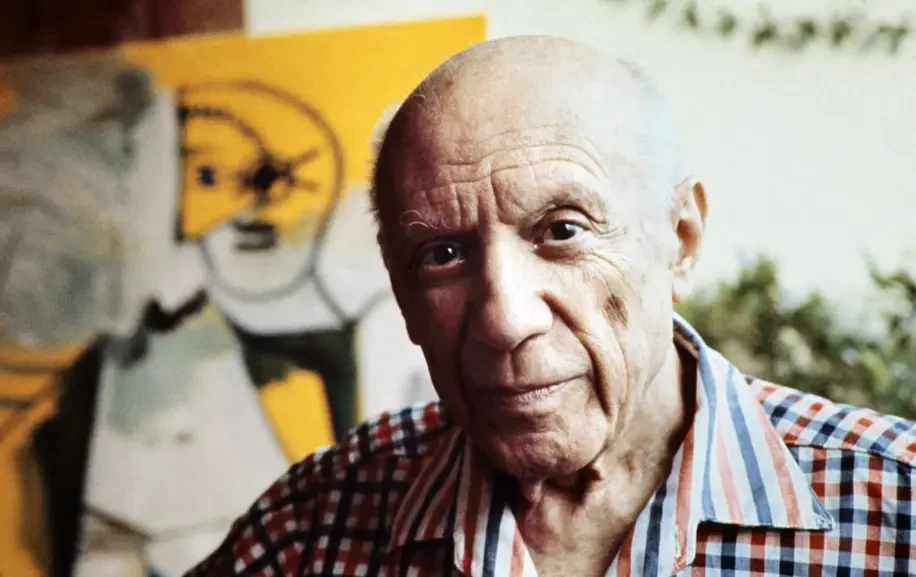
Pablo Picasso spent more than 70 years creating art. He painted, sculpted, and sketched almost every single day of his life. By the time he died in 1973, he was one of the richest and most famous artists who ever lived.
But Picasso made one huge mistake.
He never wrote a will.
No list of who should get which paintings. No plan for his houses, his cash, or his copyrights. Not even a full inventory of everything he owned. What came next was a six-year battle between his widow, his children, his grandchildren, and dozens of lawyers — all fighting over roughly 45,000 works of art worth a fortune.
Picasso isn’t alone in this. Prince, Howard Hughes, Bob Marley, and Martin Luther King Jr. all died without a will, too. Even Aretha Franklin left behind messy handwritten notes, including one found stuffed between couch cushions, sparking years of legal fighting over which version was real.
Here’s how Picasso’s family untangled one of the biggest art fortunes in history — and how it ended up creating one of France’s most famous museums.
Inside Picasso’s 45,000-Piece Collection
Picasso died at age 91 at his home in Mougins, France. He never really stopped working, and his properties were packed floor to ceiling with decades of art.
When officials finally finished counting everything, the estate reportedly included:
- 1,885 paintings
- 1,228 sculptures
- 7,089 drawings
- About 30,000 prints
- 3,222 ceramic pieces
- 150 sketchbooks
That’s not counting the illustrated books, tapestries, copperplates, personal letters, and artwork Picasso had collected from other famous artists, including Henri Matisse.
Picasso’s son Claude once joked that the family would need to rent out the entire Empire State Building just to store it all in one place.
The art wasn’t even the whole story. Picasso also left behind roughly $4.5 million in cash and $1.3 million in gold — worth tens of millions of dollars today. He owned five properties, including two châteaux, plus a portfolio of stocks and bonds.
Then there were the rights. Whoever inherited Picasso’s estate would also control the copyrights to his work — meaning they’d earn money every time his art was reproduced, licensed, or used commercially. Those rights alone would eventually turn into a business worth millions.
Before any of that could be divided up, though, the family first had to figure out who actually counted as an heir.
A Family Torn In Four Directions
Picasso married twice and had four children with three different women, which made things complicated fast.
His oldest son, Paulo, was born during Picasso’s marriage to Russian-Ukrainian ballet dancer Olga Khokhlova. The couple separated in the 1930s but never officially divorced — mainly because Picasso didn’t want to split his property with her.
He later had a daughter, Maya, with Marie-Thérèse Walter. Then came two more children, Claude and Paloma, with artist Françoise Gilot.
By the time Picasso died, he was married to his second wife, Jacqueline Roque.
Because Picasso never married the mothers of Maya, Claude, or Paloma, French law didn’t automatically recognize them as his legal heirs. Claude and Paloma had already started legal proceedings before Picasso’s death, and they were finally confirmed as his official children in 1974.
The tension wasn’t just legal — it was personal. At Picasso’s funeral, only Jacqueline and Paulo were reportedly allowed to attend. Several of his other children and grandchildren were shut out entirely.
Then things got even messier. Paulo died just two years after his father, in 1975, before the estate was even settled. His share then passed down to his own children, Marina and Bernard, adding yet another layer to an already complicated fight.
How Do You Split Up 45,000 Pieces Of Art?
Most estates get divided by selling a house or splitting a bank account. Picasso’s estate wasn’t most estates.
Every single painting, drawing, sculpture, and sketchbook had to be tracked down, catalogued, authenticated, and appraised. Experts needed to sort out which pieces were finished masterworks and which were just early sketches or unfinished studies.
More than 50 lawyers, appraisers, and government officials eventually got involved in the process.
Even after the full inventory was done, the family faced an almost impossible question: how do you split it fairly? One heir might walk away with dozens of drawings, while another got just a handful of paintings worth far more money. And a piece that seemed minor in the 1970s could become priceless decades later.
The family reportedly held around 60 separate meetings trying to reach an agreement. Some meetings turned into shouting matches. At one point, an heir reportedly said it was hard to believe they’d all come from the same father.
By the time it was all settled, the process had dragged on for six years and cost roughly $30 million in legal fees, appraisals, and administrative costs.
What Was Picasso’s Estate Actually Worth?
A court-appointed expert eventually valued Picasso’s full estate at around $250 million.
For comparison, Andy Warhol’s estate was valued at $220 million after he died in 1987 — meaning Picasso’s collection was worth even more, despite being appraised years earlier, before the global art market truly exploded.
Adjusted for inflation alone, that $250 million from 1980 would be worth close to $1 billion today. But that number barely scratches the surface of what the collection is actually worth now.
Picasso’s prices have skyrocketed since his death. In 2015, his painting Les Femmes d’Alger (Version O) sold for $179.4 million at auction. Several other Picasso paintings have crossed the $100 million mark, and dozens more have sold for tens of millions each.
That means a small handful of paintings from his original estate could now be worth more than the entire 1980 appraisal combined.
Add in the thousands of remaining drawings, prints, and ceramics — many of which still sell for serious money — and Picasso’s full collection would almost certainly be worth several billion dollars in today’s market.
How Unpaid Taxes Created A Famous Paris Museum
Once the art was divided, the family hit another wall: inheritance taxes.
You can’t pay a tax bill with a painting — at least, not directly. Selling off enough Picassos to cover the taxes risked flooding the market and crashing prices, while scattering the collection across private buyers forever.
Luckily, France had just introduced a solution.
A 1968 law let taxpayers settle inheritance debts by donating historically important artwork to the French government instead of cash. This process, called a “dation,” let Picasso’s heirs pay much of their tax bill in paintings rather than dollars.
French curators handpicked works spanning Picasso’s entire career, rather than accepting leftover pieces nobody wanted. The original transfer alone included:
- 203 paintings
- 158 sculptures
- 88 ceramic works
- Nearly 1,500 drawings
- More than 1,600 prints
- 33 sketchbooks
Those donated works became the foundation of the Musée Picasso in Paris, which opened its doors in 1985. The museum later grew even further through additional tax-related donations, including artwork from Jacqueline Picasso’s estate and Maya Ruiz-Picasso’s estate.
Today, the Musée Picasso holds more than 5,000 of his works, along with a massive archive of personal letters, photos, and documents. In a strange twist, the museum only exists because Picasso didn’t leave a will — and his family needed a way to pay the government.
Turning The Picasso Name Into A Business
Splitting up the physical art wasn’t the end of it. The family still jointly owned something arguably even more valuable: the Picasso name itself.
Companies, publishers, museums, and advertisers all needed permission before using Picasso’s artwork or signature for anything commercial. So in 1995, Claude Picasso founded the Picasso Administration to manage those rights for the whole family — approving licensing deals, authorizing exhibitions, and chasing down counterfeiters and forgers.
One of its most talked-about deals came from the car industry.
In the late 1990s, French automaker Citroën paid roughly $20 million for the rights to put the Picasso name and signature on a line of family cars, plus ongoing royalties after that. The Citroën Xsara Picasso went on to sell millions of units across Europe.
Not everyone in the family loved the idea. Picasso’s granddaughter Marina reportedly objected to slapping her grandfather’s name on an ordinary car — but other heirs backed the deal anyway.
The Picasso Administration still approves select licensing deals today, while spending serious money fighting fake merchandise and forged artwork. Claude Picasso ran the organization for decades until his death, and Paloma Picasso took over as administrator in 2023.
A Multibillion-Dollar Legacy — Built On Zero Planning
In the end, Picasso’s heirs became extraordinarily wealthy, inheriting both priceless artwork and a share of the ongoing business built around his name.
Some built entirely separate fortunes on top of it. Paloma Picasso became a globally successful jewelry and fashion designer, creating pieces for Tiffany & Co. and launching her own perfume and accessories line — making her one of the richest members of the family in her own right.
But the inheritance also came with decades of conflict. Family members clashed over licensing deals, art sales, museum loans, and how to protect Picasso’s legacy. Some branches held onto huge private collections. Others sold pieces off or donated them to museums.
Picasso spent his entire life deciding exactly what he created, who he painted, what he sold, and what he kept for himself. Yet when it came to his own estate — the biggest collection he ever built — he left absolutely no instructions behind.
The result: six years of family conflict, roughly $30 million spent just settling the estate, permanent rifts within one of art’s most famous families, and, unexpectedly, a tax deal that gave France one of its greatest museums.
Skipping a simple will turned out to be one of the most costly mistakes in art history — and, without meaning to, one of the most important.
For more real stories on celebrity fortunes, family feuds, and the money behind the world’s biggest names, keep it locked to EarlyMagazine UK.
