

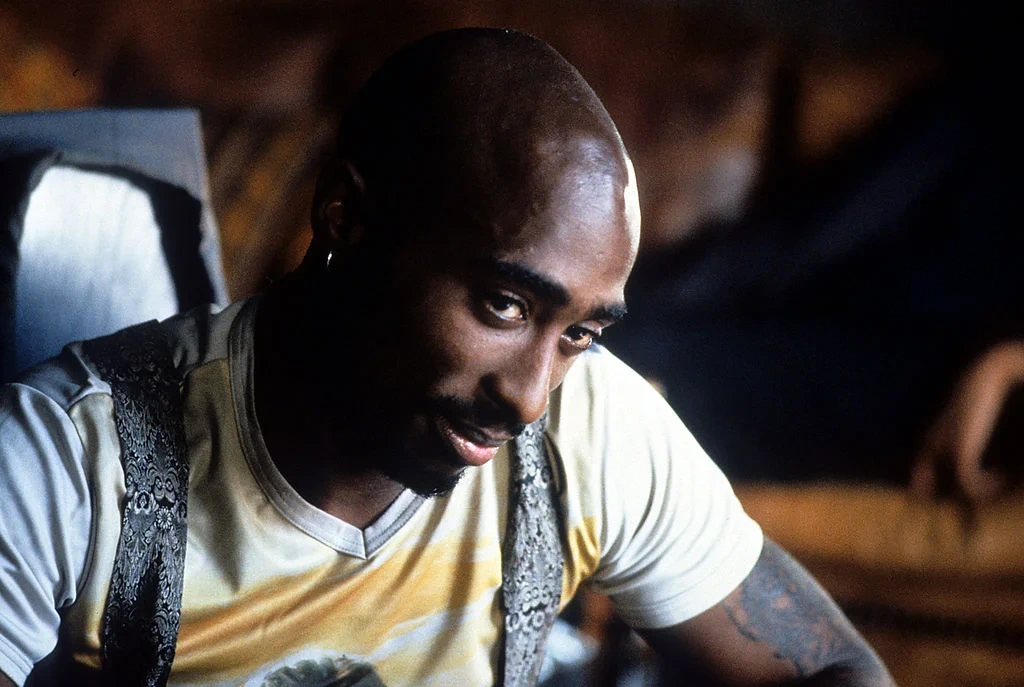
Tupac Shakur was one of the biggest names in music history. His albums sold in the millions, his face was everywhere, and his lifestyle looked like pure success — luxury cars, designer jewelry, five-star hotels, and a personal entourage.
So it comes as a shock to most people that when Tupac died on September 13, 1996, his personal bank account held roughly $150,000. He owned no house. He owned no stocks. He had no retirement savings. His only real assets were two cars and that single bank balance.
Even stranger, Death Row Records — the label behind his biggest hits — claimed that Tupac owed them millions of dollars. His mother, Afeni Shakur, looked at the same numbers and said the opposite was true.
This is the real story of Tupac’s finances: how a superstar who generated tens of millions of dollars in album sales could die with almost nothing in his name, and how his estate later turned that mess into one of the most successful posthumous music businesses ever built.
Tupac’s Money Problems Started Long Before Death Row
Tupac’s financial troubles didn’t begin when he signed with Suge Knight’s label. They started years earlier, while he was becoming one of the most talked-about young rappers in the country.
By the mid-1990s, Tupac was financially supporting a large circle of family members, friends, and people in his entourage. Reports from the time suggested he had roughly 20 people relying on him for money at any given point. On top of that, he was dealing with a string of arrests, lawsuits, and court appearances across several states, and legal fees ate through his income fast.
His spending habits didn’t help. According to a well-known 1997 magazine profile, Suge Knight once handed Tupac $200,000 upfront to record a single song, before Tupac had even signed with Death Row. Tupac reportedly used part of that money to buy a Mercedes, wrecked it within a day, bought a second one, and then gave that car away to a friend.
By early 1995, when Tupac went to prison following a sexual-abuse conviction, his money situation had already gotten shaky. Interscope Records reportedly advanced him around $600,000 while he was locked up, but between legal bills and the people depending on him, that money vanished quickly too.
Meanwhile, his career kept climbing. His album Me Against the World hit #1 on the charts while he was still behind bars — proof that his popularity and his bank account were moving in completely opposite directions.
The Three-Page Contract That Changed Everything
Tupac needed roughly $1.4 million to post bail while he appealed his conviction. The popular version of the story says Suge Knight simply paid it and Tupac signed with Death Row out of gratitude.
The real deal was more complicated — and far riskier for Tupac.
According to a lawsuit later filed by his estate, the bail money actually came from a mix of sources: an $850,000 corporate guarantee from Atlantic Records, a $250,000 contribution from Interscope, and a $300,000 bail bond. The estate claimed these were ultimately secured against Tupac’s future royalties. In plain terms, Tupac was borrowing against music he hadn’t even made yet just to walk out of prison.
While he was still incarcerated, Knight and attorney David Kenner brought him a contract to sign. It wasn’t a typical 40-page recording agreement. It was reportedly just three handwritten pages.
The terms included:
- A $1 million advance for his first album with the label
- $125,000 to buy a car
- A $120,000 annual expense allowance
- A $250,000 legal defense fund
- Royalty rates and future advances that could rise based on sales
Tupac signed. He was released in October 1995 and went straight into the studio, recording at a pace that stunned even his own producers.
“All Eyez on Me” Was a Smash Hit — But the Money Wasn’t Really His
Less than four months after his release, Death Row dropped All Eyez on Me, a sprawling double album that debuted at #1. It produced massive hits like “California Love” and “How Do U Want It” and went on to become one of the best-selling rap albums of all time.
From the outside, Tupac looked like a man who had made it. He had luxury cars, high-end jewelry, multiple rented homes, hotel suites, private security, and a growing entourage.
But here’s the part most fans never realized: almost all of that lifestyle was being funded through advances — money charged against his future royalties. Under his contract, Death Row didn’t have to pay him real profit until those advances were paid back first. This is a common structure in the music industry, and it explains exactly how an artist can sell millions of records while personally having very little cash to show for it.
Inside the $300,000 Hotel Bill
Death Row’s internal accounting painted a picture of massive spending during Tupac’s roughly 11 months with the label. The company said it covered:
- Lease payments on three separate residences, including a home for his mother, Afeni
- Jewelry, furniture, and luxury vehicles
- Private security and limousine services
- Over $2 million in recording and music video costs
One line item stood out above the rest: an accumulated bill of roughly $300,000 at the Peninsula Hotel in Beverly Hills. On top of that, Tupac had arranged for his mother to receive about $16,000 a month.
To Death Row, every one of these expenses was simply another debit against Tupac’s account, to be recouped from future record sales.
So What Was Tupac Actually Worth?
If you look only at conventional personal assets — cash, property, investments — Tupac’s estate looked surprisingly thin. Reporting from the time confirmed he:
- Owned no real estate
- Held no stocks or bonds
- Had roughly $150,000 in a personal bank account
- Owned two cars
- Carried a modest life insurance policy that named his half-sister as beneficiary
That’s an unusually bare financial picture for one of the top-selling recording artists in the country.
But it would also be misleading to call Tupac simply “millions of dollars in debt,” because that figure came entirely from Death Row’s own books. Shortly after his death, the label claimed his account was roughly $4.9 million in the red. Later, Death Row filed an even larger claim against his estate — approximately $7.1 million in advances and expenses.
Afeni Shakur and Tupac’s estate rejected that accounting completely.
Afeni Shakur Takes On Death Row Records
Tupac died without a will, which left his mother, Afeni, in charge of untangling a financial situation that made almost no sense on the surface. How could one of the best-selling artists in America have died with next to nothing?
Afeni and estate attorney Richard Fischbein demanded a full accounting from Death Row. When the numbers didn’t add up, they filed a federal lawsuit accusing the label, Suge Knight, and others of siphoning millions of dollars away from Tupac.
The lawsuit challenged specific charges on Tupac’s account, including:
- Child-support payments for a completely different Death Row artist
- Roughly $100,000 in jewelry
- Porsche repair bills for a car Tupac reportedly never owned
- Expenses tied to homes occupied by other people, not Tupac
Death Row denied any wrongdoing, and these claims were never proven in court. But they help explain why the label’s multimillion-dollar “debt” figure should never be treated as an accurate snapshot of Tupac’s real financial position.
When Afeni’s team ran their own numbers, they came to a wildly different conclusion. Even accepting most of Death Row’s claimed expenses, the estate argued the label still owed Tupac roughly $9.9 million in unpaid royalties and advances.
So according to Death Row, Tupac owed the label millions. According to Tupac’s estate, the label owed him nearly $10 million. Neither number was ever fully settled by a court — which tells you just how tangled his finances really were.
Afeni’s Secret Weapon: 150 Unreleased Songs
Cash wasn’t Tupac’s only valuable asset. He had left behind an enormous vault of unreleased music — roughly 150 recordings that had never been put out.
Afeni realized this archive gave her real leverage. She threatened to block the release of the posthumous album The Don Killuminati: The 7 Day Theory unless her son’s financial situation was addressed fairly.
Interscope, which distributed Death Row’s music, stepped in to resolve the standoff. The result:
- An immediate $3 million nonrefundable advance to the estate
- A second advance of $2 million
- Tupac’s royalty rate on past releases jumped from 12% to 18%
Estate representatives later said roughly half of Death Row’s original $4.9 million claim was forgiven as part of the negotiations, though Death Row disputed that description. Music executive Jimmy Iovine played a key role in getting both sides to an agreement.
Eventually, Death Row handed over the master recordings for those 150 unreleased songs. That archive would go on to fuel one of the most successful posthumous music catalogs in history.
From Financial Disaster to an $8–$10 Million Estate
The turnaround was remarkably fast. Tupac died in September 1996 with almost no conventional wealth and millions of dollars in disputed claims hanging over his name. By late 1998, after settling the major legal battles, his estate was not just stable — it was thriving.
Estate attorney Richard Fischbein estimated the estate held between $8 million and $10 million for Afeni at that point.
Afeni founded Amaru Entertainment to manage and release Tupac’s massive archive of recordings. The releases came steadily:
- R U Still Down? (Remember Me) — 1997
- Greatest Hits — 1998
- Until the End of Time — 2001
- Better Dayz — 2002
- Pac’s Life — 2006
Until the End of Time alone debuted at #1 in 2001, selling around 427,000 copies in its first week — proof that demand for Tupac’s music had only grown since his death.
Tupac Made More Money Dead Than He Ever Did Alive
By 2002, Forbes estimated that Tupac’s estate had generated approximately $40 million since 1998. In just one 12-month stretch, between June 2001 and June 2002, the estate reportedly earned more than $7 million after legal and administrative costs.
That’s the real irony of Tupac’s story. While he was alive, his music generated tens of millions of dollars at retail — yet he died with about $150,000 in the bank, two cars, no property, and a record label claiming he owed them money.
After his death, that same catalog of music — especially the huge stockpile of unreleased tracks — became the foundation for a genuinely valuable estate. Afeni Shakur took what initially looked like a financial catastrophe and rebuilt it into a business spanning albums, publishing rights, merchandise, licensing deals, documentaries, and control over Tupac’s name and image for decades to come.
The Bottom Line
Tupac Shakur’s story is a reminder that fame and record sales don’t automatically translate into personal wealth — especially under the kind of advance-heavy contracts common in the music industry in the 1990s. He lived like a star and generated star-level revenue, but almost none of that money legally belonged to him at the time of his death.
It took his mother’s persistence, a mountain of unreleased music, and years of legal battles to turn his legacy into the financial success story it eventually became. In the end, Tupac Shakur earned more in the years after his death than he ever did while he was alive.
For more insights into how music legends built (and sometimes lost) their fortunes, visit EarlyMagazine UK—where untold stories of fame, wealth, and legacy come together.
