

 Kris Jenner Relists Iconic KUWTK Mansion for $11.25 Million After $2M Price Cut
$170 million
 Kathryn Edwards
$2 million
 Courtney Hansen
$4 million
 Karen Huger
$10 million
 Nara Smith
$6 million
 Emma Hernan
$4 million
 Antonela Roccuzzo
$20 million
 Cindy Margolis
$5 million
 Dannielynn Birkhead
$3 million
 Amanda Cerny
$10 million
 Breckie Hill
$1.5 million
 Paige DeSorbo
$1 million
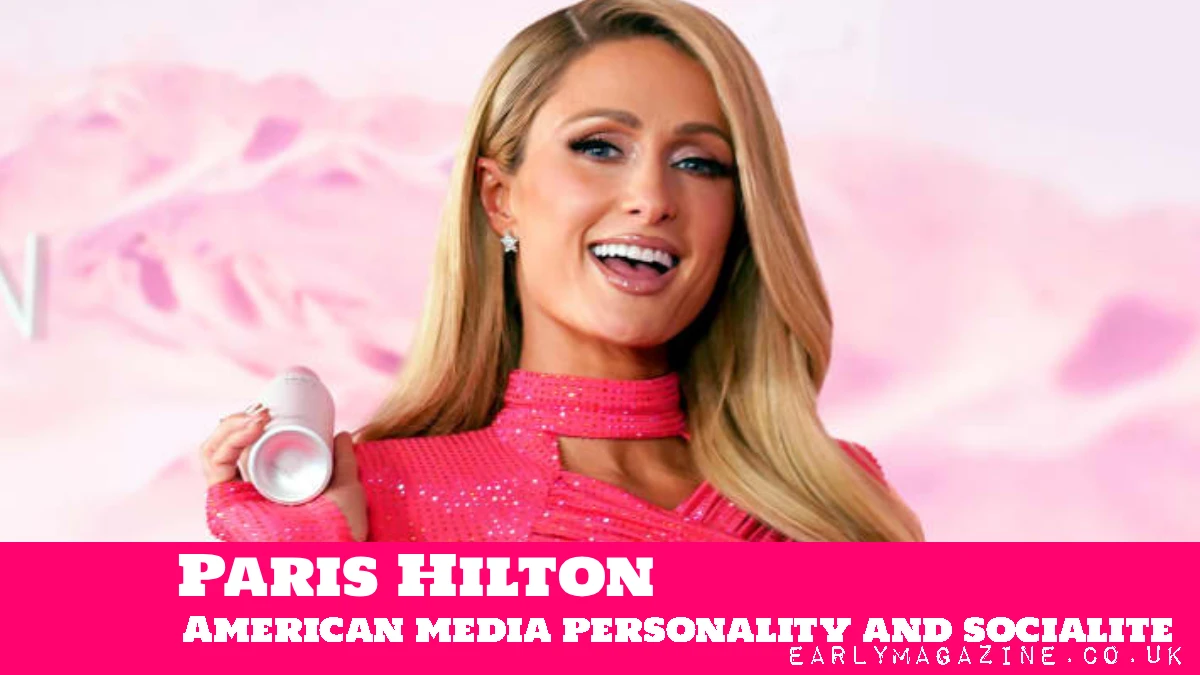
Paris Hilton Net Worth Paris Hilton net worth is estimated at $400 million as of 2026. She earned the majority through her fragrance empire (which has generated nearly $3 billion in sales), brand licensing, DJ performances earning up to $1 million per set, real estate, and her media company 11:11 Media.
Paris Hilton net worth tells a story that most people get completely wrong. The number — widely estimated at $400 million as of 2026 — is striking on its own. But the more interesting question is how she got there. Because the simple answer of “she inherited it from a hotel empire” turns out to be largely false.
Her grandfather, Barron Hilton, announced in 2007 that 97% of his $4.5 billion fortune would go to charity, not the family. When he died in 2019, each relative reportedly received around $5.6 million — a sum that wouldn’t even cover one year of Paris’s DJ earnings. Whatever she has today, she largely built herself. And she started building before most people took her seriously.
This article covers where her $400 million actually comes from, how her fragrance business became one of the most lucrative celebrity brand plays ever made, what her real estate portfolio looks like after a devastating 2025 wildfire, and why financial analysts now study her early 2000s branding strategy in business school.
What Is Paris Hilton Net Worth in 2026?
Most major financial outlets put Paris Hilton net worth at $400 million as of 2026. Celebrity Net Worth and Parade both cite this figure. Forbes places the estimate slightly lower, around $300 million, citing differences in how her licensing income and real estate are valued.
The range — $300 million to $400 million — reflects a real challenge: much of her wealth comes through licensing deals and royalties, which are notoriously difficult to value from the outside. What every analyst agrees on is the direction: up.
Her overall brand company has surpassed $4 billion in total global revenue over its lifetime. That number includes retail sales, licensing, and brand partnerships across roughly 50 stores worldwide.
How Her Wealth Compares to Other Celebrity Entrepreneurs
| Celebrity | Estimated Net Worth (2026) | Primary Wealth Source |
|---|---|---|
| Paris Hilton | $400 million | Fragrance, licensing, media |
| Kim Kardashian | $1.7 billion | SKIMS, beauty, media |
| Kylie Jenner | $700 million | Beauty brand, media |
| Nicole Richie | $10 million | Fashion, TV |
| Lindsay Lohan | $35 million | Acting, endorsements |
Paris sits in a strong position relative to her early 2000s peers. She was the blueprint — and the blueprint aged well.
The Fragrance Empire: Her Biggest Money-Maker
No part of Paris Hilton’s business has generated more money than her perfume line. Launched in 2004, the fragrance collection now spans 30 scents for men and women and has reportedly generated close to $3 billion in cumulative retail sales.
That number is not a typo. Some estimates push it even higher — toward $4 billion when international licensing is fully counted.
Standard celebrity licensing deals typically return 10–15% of retail sales to the licensor. Run the math, and Paris’s personal take from fragrances alone likely sits in the $150–$300 million range over two decades. It is the single largest driver of her fortune, and it continues generating royalties today.
The genius of it was timing. In 2004, celebrity fragrances were not the crowded market they became. She entered early, priced accessibly, marketed aggressively, and built a following — especially in Asia and the Middle East — that American press almost entirely ignored.
Why the Fragrance Business Worked So Well
The perfumes were priced for the mass market, not the luxury tier. This was a deliberate call. Most consumers who bought a Paris Hilton perfume in 2005 could not afford a Chanel bag. They could afford a $30 bottle of “Paris Hilton.” That accessible price point drove volume, and volume drove revenue. A $30 bottle sold to 100 million people beats a $300 bottle sold to 1 million people almost every time.
How She Makes Money Today
DJ Career: $1 Million Per Set
Paris Hilton launched her DJ career in 2012 and was widely mocked for it. She is now reported to be one of the highest-paid celebrity DJs in the world, consistently commanding fees of up to $1 million per gig. She has performed at Ibiza, Las Vegas residencies, and major international festivals.
Whether she is technically skilled or not is a separate debate. The business outcome is not: a million dollars per performance, multiple times per year, adds up fast.
11:11 Media: Her Production and Brand Company
In recent years, Paris founded 11:11 Media, a production and brand management company that coordinates her content, licensing, and partnerships. The company produces original shows like “Cooking with Paris” and “Paris in Love,” manages podcast partnerships with iHeartMedia, and oversees all consumer product licensing.
This structure matters. Instead of collecting individual cheques from one-off deals, 11:11 Media acts as a centralised machine that keeps all revenue streams organized and growing together.
Reality TV and The Simple Life Origins
“The Simple Life” — the 2003 reality series she co-starred in with Nicole Richie — was the launchpad. At its peak, Paris was reportedly earning $5 million per season. The show defined a media era and turned her into a global name. Without it, none of the rest would have been possible.
She later starred in her 2020 documentary “This Is Paris,” which completely reframed public perception of her. The film revealed childhood trauma she experienced at a residential treatment facility, and it earned her significant credibility as a real person rather than a performance.
Brand Licensing: 19 Product Lines Worldwide
Beyond perfume, Paris has at least 19 separate product lines earning an estimated $10 million per year combined. Products include handbags, footwear, skincare, cookware, supplements, flowers, and drinkware. Her name appears on roughly 50 retail stores worldwide, with particularly strong penetration in Asia and the Middle East.
The licensing model is important here. Paris does not manufacture products. She licenses her name and image to companies that handle production and distribution, and she collects royalties. It is one of the most capital-efficient business models in celebrity commerce.
Real Estate: Wins, Losses, and a $63 Million Purchase
Paris Hilton’s real estate portfolio has had major moves recently — and a significant loss.
In January 2025, the Palisades Fire in Los Angeles destroyed her Malibu oceanfront estate, which she and husband Carter Reum had purchased for $8.4 million in 2021. It was a genuine loss, though insurance and land value complicate the final financial picture.
She responded by leaning in harder. In June 2025, Paris and Carter purchased Mark Wahlberg’s former Beverly Park mansion for approximately $63 million. The 30,000-square-foot property includes 12 bedrooms, 20 bathrooms, a skate park, a five-hole golf course, a movie theater, and a resort-style pool. It is the largest real estate purchase of her career.
She also holds additional properties in Sherman Oaks, Manhattan, and Las Vegas, though exact valuations are not publicly confirmed.
Digital Assets and Social Media Income
Paris Hilton has been investing in digital assets since 2016 — earlier than most celebrities. She holds Bitcoin and Ethereum positions, and was one of the first major celebrities to sell an NFT, earning $1.1 million for her “Iconic Crypto Queen” token.
Her social media following sits at over 40 million across Instagram, YouTube, and TikTok. Estimates for her social media and endorsement income range from $3.5 million to $4.8 million annually from those platforms alone, though this is a relatively small slice of her total income.
Was It All Self-Made? The Honest Answer
The honest answer: partially.
Her surname opened doors. Being born Paris Hilton means publicists return your calls, venues book you, and press covers you — without any effort on your part. That is real inherited advantage and it is worth acknowledging.
But the Hilton family money largely did not follow. Her grandfather’s estate left roughly $5.6 million per heir. That is not nothing, but it would not fund a $400 million fortune. The fragrance deals, the licensing machine, the DJ residencies, the production company — those came from decisions she made and executed herself.
As Paris told Refinery29: “Yes, I came from Hilton hotels, but I’ve parlayed it into such a huge business that even my grandfather said to me, ‘I used to be known as Barron Hilton. Now I’m known as Paris Hilton’s grandfather.'”
FAQs About Paris Hilton Net Worth
What is Paris Hilton net worth in 2026?
Most estimates place it between $300 million and $400 million. Parade and Celebrity Net Worth cite $400 million. Forbes estimates closer to $300 million. The difference comes from how licensing income is calculated.
How much does Paris Hilton make per year?
Estimates vary, but between DJ fees (up to $1 million per set), licensing royalties, brand deals, and media income, she likely earns $15–$30 million annually.
Did Paris Hilton inherit her wealth from the Hilton hotel family?
Largely no. Her grandfather donated 97% of his fortune to charity. Each heir reportedly received around $5.6 million. Paris built the bulk of her fortune through her own business ventures.
How much has Paris Hilton’s perfume made?
Her fragrance line has generated close to $3 billion in retail sales since 2004, spanning over 30 scents. It remains her single largest source of wealth.
How much did Paris Hilton pay for her new house?
In June 2025, she and husband Carter Reum purchased Mark Wahlberg’s former Beverly Park estate for approximately $63 million.
Paris Hilton Proved the Formula Before Anyone Else Had It
Paris Hilton net worth is the financial record of a strategy that everyone now takes for granted: turn fame into a brand, turn a brand into products, and build enough product lines that income keeps flowing whether you are in the headlines or not. She did it before influencer marketing had a name.
The $400 million figure is the outcome. But the process started in 2003 with a reality TV show, followed in 2004 by a perfume, followed by two decades of deals that most of the financial press barely tracked because they were too busy writing about her nightlife.
She is one of the earliest examples of a celebrity successfully treating herself as a company. The next time you read that a celebrity is “launching a brand,” you are watching someone follow a playbook Paris Hilton wrote before smartphones existed. That is worth more than the $400 million headline — it is a permanent entry in the history of how modern celebrity commerce works.
For more insights into how modern icons navigate fame and fortune, visit EarlyMagazine UK — where boundary-breaking careers and financial wisdom come together.
