

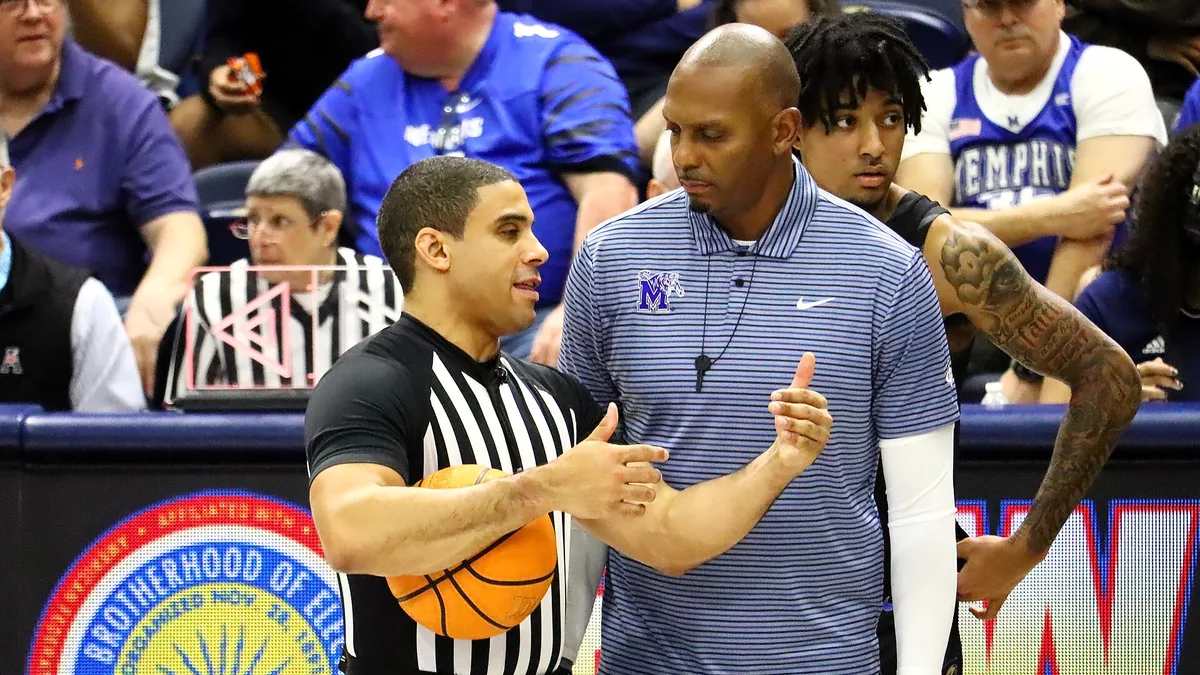
College basketball’s new economics have produced some strange arrangements, but Memphis may have the strangest: the head coach is personally underwriting the roster. After a losing season, Penny Hardaway has agreed to raise the money Memphis needs to compete — and to personally pay any shortfall, up to $2.6 million. That is almost his entire salary.
The $2.6 Million Gap
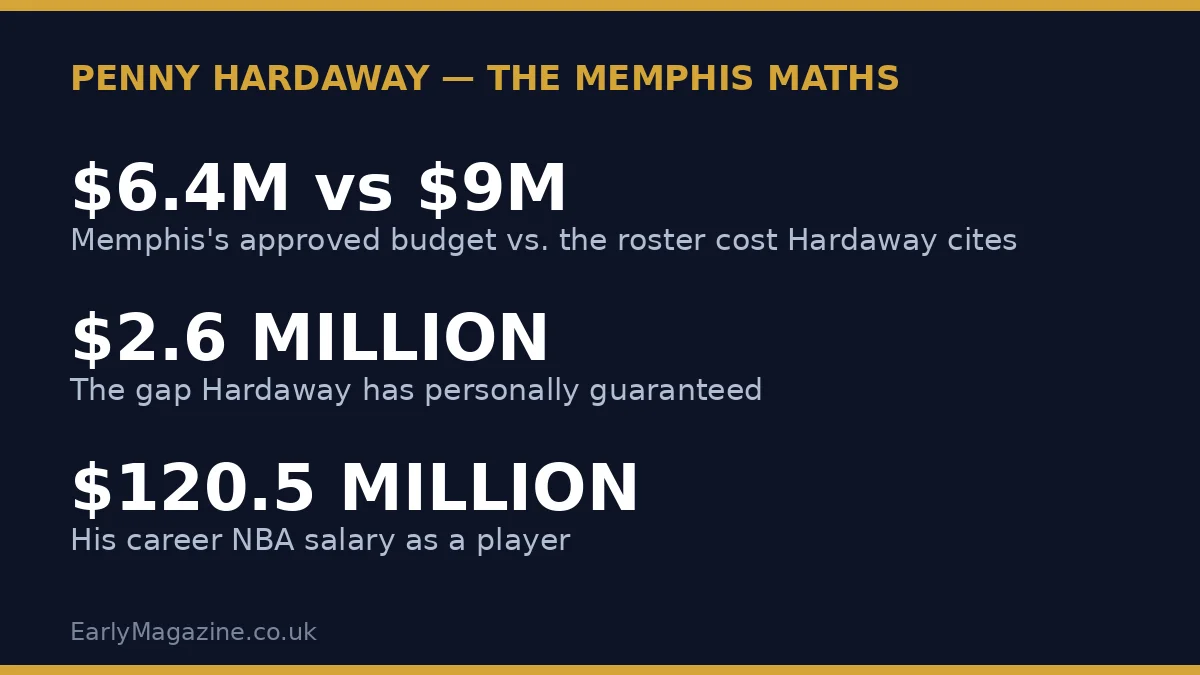
The maths, as laid out by Memphis athletic director Ed Scott, is stark. The university approved a basketball revenue-sharing budget of $6.4 million for 2026–27 — itself a $1.4 million increase on the year before. Hardaway’s assessment was that the roster he needs costs $9 million. The difference, $2.6 million, is now his problem: Hardaway has taken responsibility for raising it from donors and guarantees to cover personally whatever fundraising does not.
For context, Hardaway’s total compensation for 2026–27 is $2.9 million — and only $200,000 of that is classified as base salary, the rest being media, PR and speaking obligations. His guarantee therefore equals about 90% of a full year’s pay. His contract, which pays $3 million in its final year of 2027–28, effectively now comes with a condition no other major coach has accepted: fund the team, or fund it yourself.
Why He Felt He Had To
The desperation has a record behind it. In 2024–25 Hardaway’s Tigers went 29–6, won the American Athletic Conference regular-season and tournament titles and reached the NCAA Tournament. Last season they collapsed to 13–19 — the programme’s first losing record in more than 25 years. Memphis confirmed in March that Hardaway would return, while several assistants and the strength coach were let go.
Hardaway has pointed to losing recruiting battles — including Oklahoma State transfer Andrija Vuković, who chose George Washington — as proof that Memphis was simply being outbid. The expanded budget has already been put to work, on Serbian center Nemanja Popović and FAU transfer Maxim Logue among others. Whether the guarantee produces a roster that wins is, for now, an open question; how much of the $2.6 million Hardaway raises versus pays himself will only become clear as the season approaches.
He Can Afford It — Just
Hardaway’s willingness rests on one of the great playing fortunes of his era. Drafted third overall in 1993, he became a four-time All-Star alongside Shaquille O’Neal in Orlando, reached the 1995 NBA Finals, and earned roughly $120.5 million in career NBA salary, plus an estimated $20 million in endorsements from the “Lil Penny” Nike years. He is not in the billionaire bracket of his contemporary LeBron James — but his fortune is more than enough to make a $2.6 million pledge credible. Even his final two seasons with the Knicks, long after injuries had diminished him, paid $30.4 million combined. His is the classic veteran’s fortune — comparable to Sam Hornish Jr.’s from IndyCar: earned in full view, and finite. His net worth is estimated at about $50 million.
The $2.6 million guarantee is more than 5% of that fortune, pledged to his employer’s payroll. In the revenue-sharing era, coaches have become recruiters, general managers and fundraisers. Hardaway, uniquely, has also become the backstop. Plenty of athletes fund second acts from playing fortunes — Harry Kane’s wealth is still growing in Munich — but none has volunteered to bankroll his own employer’s payroll.
Sources and notes: Budget figures and the guarantee arrangement as reported by CNW (October 2026) from Memphis’s stated 2026–27 revenue-sharing budget ($6.4 million) and Hardaway’s contract terms ($2.9 million total compensation for 2026–27). Career NBA salary (~$120.5 million) per standard salary databases; net worth estimate ($50 million) per CNW. The fundraising outcome is still pending.
