

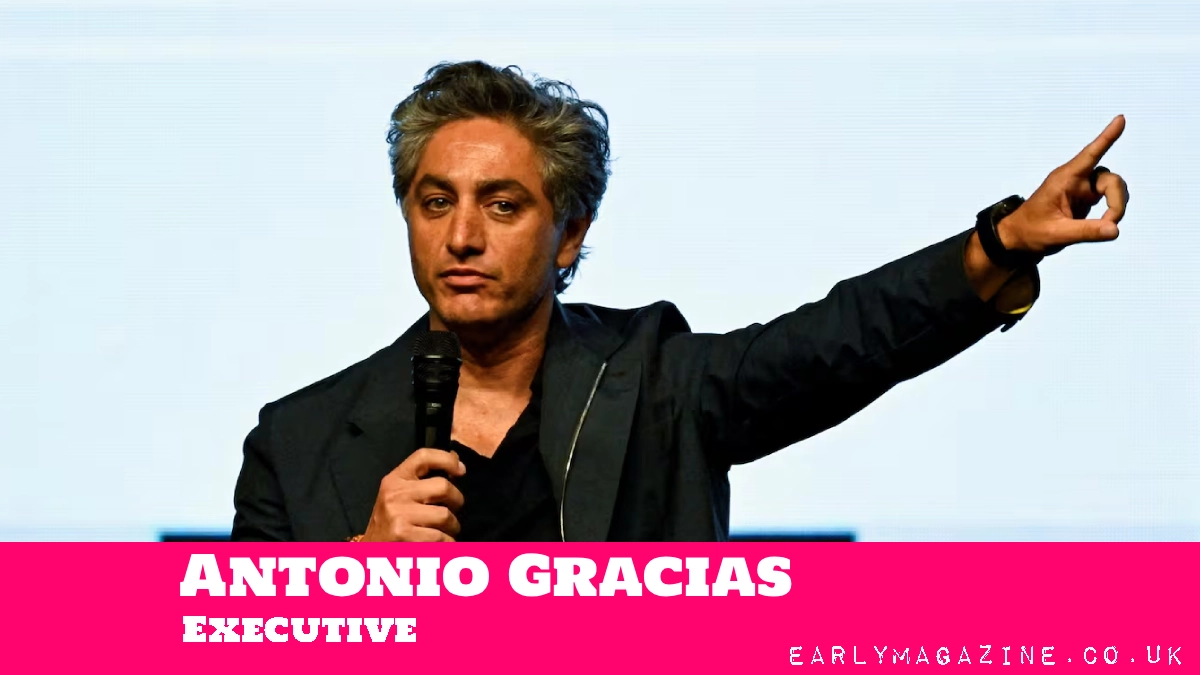
While the world watches Elon Musk inch toward becoming the first trillionaire in history, a quiet Chicago investor named Antonio Gracias — one of Musk’s oldest friends — is quietly positioned to pocket a personal fortune worth roughly $20 billion from the same IPO.
SpaceX’s long-awaited IPO is now closer than ever. The company dropped its SEC S-1 filing recently — a dense, 400-page document making the case that SpaceX deserves a $2 trillion valuation when it begins trading next month. The filing was packed with numbers most people expected. But buried deep inside was a name that almost nobody recognized: Antonio Gracias.
What the S-1 Filing Actually Revealed
Most of the headlines focused on Musk — understandably. The filing confirmed he holds roughly 849 million Class A shares and 5.57 billion Class B shares, giving him a commanding 85.1% of voting power before the IPO goes live.
The Wall Street Journal estimates his real economic stake sits slightly above 40%, which at a $2 trillion valuation translates to over $800 billion — enough to make Musk the world’s first trillionaire.
| Stakeholder | Ownership / Shares | Estimated Value at $2T Valuation |
|---|---|---|
| Musk’s stake (economic) | ~40% | ~$800B |
| Shotwell’s shares | 12.57M shares | ~$2B |
| Valor / Gracias stake | 7.3% | ~$146B |
The filing also confirmed that Gwynne Shotwell, SpaceX’s longtime president and COO, holds about 12.57 million shares in total — worth roughly $2 billion at that valuation. Elon’s name appears 174 times in the document. Gwynne’s appears 38 times.
Antonio Gracias? His name shows up just twice. But the firm he built — Valor Equity Partners — is mentioned 68 times. Through a web of Valor-linked entities, Gracias controls more than 503 million Class A shares, making Valor the single largest non-Musk ownership block in all of SpaceX.
By the numbers: Valor’s combined stake equals about 7.3% of SpaceX. If the company goes public at $2 trillion, that position would be worth roughly $146 billion — before the carry math even begins.
Who Is Antonio Gracias? The Investor Who Believed First
Gracias is not a late arrival who stumbled into SpaceX at a convenient moment. He is one of the earliest, most loyal believers in the entire Musk universe — and that loyalty started nearly three decades ago.
The two reportedly met around 26 years ago through a shared contact in Silicon Valley. At the time, Musk had just sold Zip2 and was building what would become PayPal. SpaceX didn’t exist. Tesla barely existed. Starlink, Neuralink, and xAI were pure science fiction.
Gracias was born around 1970 in Detroit, Michigan, to immigrant parents. His father was a neurosurgeon who emigrated from India; his mother, originally from Spain, ran her own pharmacy. His interest in investing reportedly started early — in middle school, his mother helped him buy $300 worth of Apple stock, shares he reportedly still holds today.
A Quietly Impressive Education
Gracias attended Georgetown University, where he completed a dual-degree program through the Walsh School of Foreign Service, graduating in 1993 with both a BSFS and an MSFS focused on international economics. He studied abroad at Waseda University in Tokyo, completed a fellowship with Nikko Securities in Japan, and went on to earn a JD from the University of Chicago Law School in 1998.
But he never took the corporate law route. While still in law school, he launched his first private equity firm, MG Capital, in 1995. That team would eventually evolve into Valor Equity Partners — a Chicago-based powerhouse known for backing complex, operationally demanding, high-growth companies. In other words, exactly the kind Elon Musk builds.
The Timeline: A Friendship Built Into a Fortune
How the $20 Billion Math Actually Works
Here’s where things get interesting. Valor’s 7.3% stake in SpaceX is worth roughly $146 billion at a $2 trillion IPO valuation. But Gracias doesn’t own all of Valor — he manages it for outside investors. The firm earns its payout through a mechanism called carried interest, which is the investment manager’s share of profits.
A standard carry arrangement gives the firm 20% of the profits after returning investor capital and clearing any performance hurdles. Here’s how the numbers break down:
