

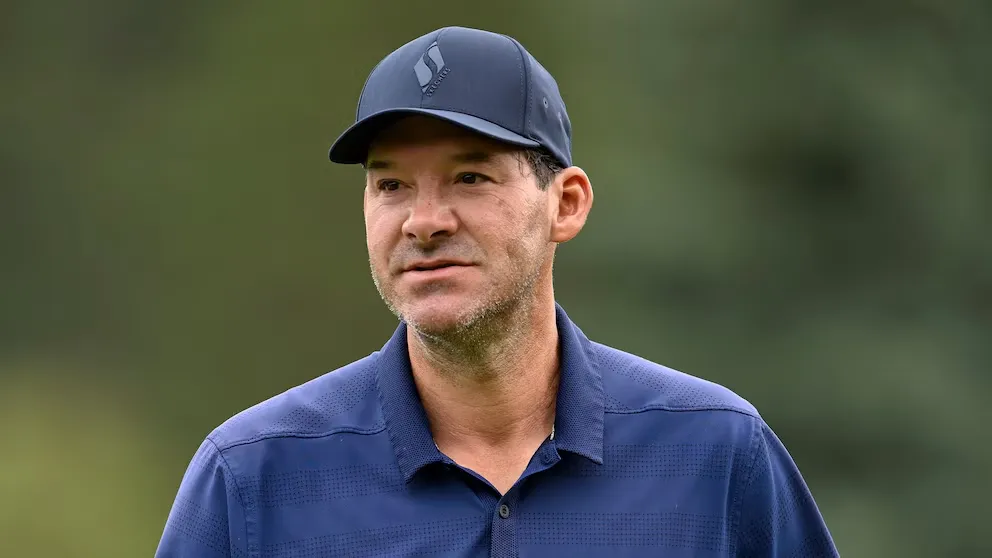
Tony Romo was once the biggest name in football broadcasting. Just three years after hanging up his cleats, the former Dallas Cowboys quarterback was being talked about in the same breath as legends like John Madden. Fans loved his energy, his sharp read of defenses, and his uncanny knack for calling plays before the snap even happened.
That reputation earned him a record-breaking paycheck. Now, after a drunk-driving arrest, it could cost him — and CBS — a whole lot more than pride.
CBS has pulled Romo off the air following his arrest for operating a vehicle while intoxicated (OWI). If the network ultimately decides to part ways with him for good, it may still owe him as much as $72 million in remaining salary. Here’s how things got here, and what could happen next.
CBS Places Romo on Indefinite Leave
On July 31, CBS Sports confirmed that Romo had been placed on leave “until further notice.” The network didn’t say how long the leave will last, whether Romo will keep getting paid during it, or what he needs to do to earn his spot back.
In his absence, CBS moved J.J. Watt into the booth alongside Jim Nantz and sideline reporter Tracy Wolfson for its top NFL broadcast team. Putting Romo on leave — instead of firing him outright — gives CBS breathing room. The network can keep him off its biggest games while it figures out what to do about his contract.
The timing couldn’t be worse for Romo. The NFL season is right around the corner, which is exactly when networks lean hardest into promoting their star broadcast teams. Romo was also set to appear at CBS’s annual seminar for NFL production staff and on-air talent. Now, instead of prepping for kickoff, he’s preparing for a September 21 court date.
What Happened in Milwaukee
Romo was arrested on July 23 in Milwaukee after attending a golf tournament. Police pulled him over after he reportedly passed traffic on the right and drove through a restricted highway section.
Body-camera footage showed Romo telling officers he hadn’t had any alcohol. He struggled through field sobriety tests, talked over officers as they gave instructions, and refused a preliminary breath test. He also told police that past back surgeries made some of the physical tests hard to complete.
Officers later found an open alcoholic beverage on the passenger side of his Jeep. Romo was cited for OWI along with an additional traffic violation. In Wisconsin, a first-offense OWI is usually treated as a civil matter rather than a criminal one — but it can still bring fines, a license suspension, and other penalties.
For CBS, the arrest created an instant public-relations headache. But it also handed the network a convenient opening to reconsider a relationship that had already grown a little uncomfortable behind the scenes.
Why CBS Paid Romo $180 Million in the First Place
When Romo retired from the NFL in 2017, CBS wasted no time putting him next to Nantz in its lead broadcast booth. It was a huge gamble — Romo had zero broadcasting experience, and he was stepping into the shoes of longtime analyst Phil Simms on the network’s most-watched NFL crew.
At first, the bet paid off in a big way. Romo called games like a quarterback still standing behind center. He picked apart blitzes, broke down coverages, and regularly predicted a play before the ball was even snapped. His excitement was contagious, and it made complex football strategy easy for casual fans to follow.
His original CBS deal paid him $3 million to $4 million a year. When that contract neared its end, ESPN came calling, reportedly ready to offer him up to $14 million a season for “Monday Night Football.” CBS wasn’t willing to let that happen. The network countered with a massive 10-year, $180 million contract — about $18 million per year — making Romo the highest-paid analyst in sports television history.
That deal wasn’t just about keeping a fan favorite. CBS was also gearing up for future NFL broadcast-rights negotiations and didn’t want to lose one of its biggest names to a competitor. At the time, letting Romo walk to ESPN looked like the riskier move.
Romo’s On-Air Reputation Had Already Taken a Hit
Here’s the part that matters for what happens next: Romo’s popularity had been fading well before his arrest.
The pre-snap predictions that made him famous became rarer over time. Critics started pointing out that he talked too much, made odd noises on air, missed key details, and sometimes sounded unprepared. During recent playoff broadcasts, he drew criticism for mixing up players, misstating the game situation, and offering commentary that felt obvious rather than insightful.
Some of that criticism was amplified by social media, where every slip-up gets clipped and replayed thousands of times. Still, by the time of his arrest, Romo had already become a divisive figure among football fans.
That distinction matters. CBS isn’t weighing what to do with an irreplaceable star at the top of his game. It’s deciding the fate of the highest-paid broadcaster in sports television — one whose performance was already drawing criticism long before this incident.
In other words, the arrest didn’t create CBS’s Romo problem. It just gave the network a reason to finally deal with it.
Can CBS Actually Get Out of the Contract?
Romo’s full contract has never been made public, so no one outside the organization knows for certain whether CBS can cut ties without paying the remaining $72 million. Like most major TV talent deals, his contract likely includes a morals clause — language that lets a network discipline or terminate a broadcaster if their conduct damages the company’s reputation.
Everything comes down to the exact wording. The clause might let CBS act on an arrest alone, or it might require an actual conviction first. It could allow anything from a short unpaid suspension to full termination for cause — or it might only permit limited discipline. There’s also a big difference between having $72 million left on paper and having every dollar of it guaranteed.
Here are the paths CBS could take:
- Bring Romo back after a suspension. A public apology and a return to the booth would let CBS keep its investment without a costly legal fight. This likely depends on how his court case unfolds — and how well Watt performs in his place.
- Demote him to a smaller role. Romo could shift to CBS’s second NFL broadcast team, take on fewer marquee games, or move into the studio. This option is financially awkward, though, since CBS would still owe him $18 million a year for a reduced job.
- Negotiate a buyout. CBS could pay Romo a portion of the remaining $72 million in exchange for ending the contract quietly, without arbitration or a lawsuit.
- Terminate for cause. If CBS tries to cut Romo off entirely and stop paying him, he would almost certainly fight the decision. That could turn a broadcasting controversy into a courtroom battle over what his morals clause actually allows.
Romo already earned more than $127 million during his NFL playing career — more than any undrafted player in league history at the time he retired. But that track record gives him little reason to walk away from tens of millions of dollars still owed to him.
What Happens Next
For now, all eyes are on two things: Romo’s September 21 court appearance and how J.J. Watt performs as his temporary replacement. If Watt thrives, CBS may feel less pressure to bring Romo back at all. If he struggles, the network may be more willing to smooth things over and get its highest-paid analyst back in the booth.
Either way, this situation is bigger than one arrest. It’s a test of how far a $180 million contract — and the morals clause buried inside it — can really be pushed.
Stay with EarlyMagazine UK for the latest updates on this developing story.
