

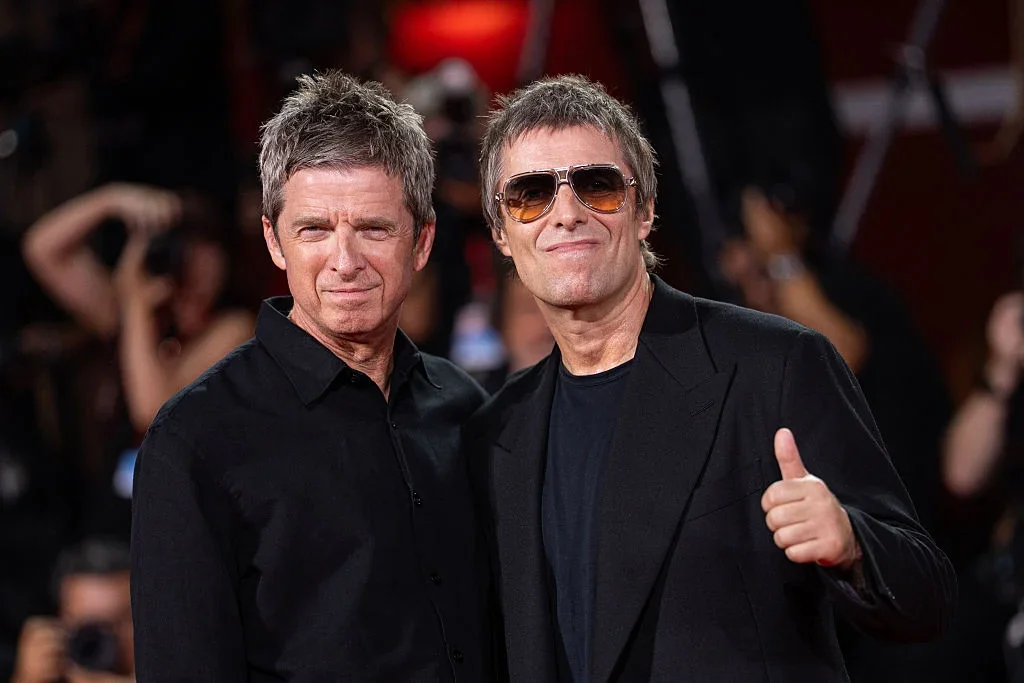
In July 2025, Liam and Noel Gallagher stood on the same stage for the first time in 16 years. The moment the brothers reunited, one question was on everyone’s mind: how much money were they about to make?
Back then, we put Noel Gallagher’s net worth at roughly $70 million. Liam’s, by comparison, sat at just $6 million. That’s a massive gap for two men who fronted the same band, sang the same songs, and split the same fame. We’ll get into why that gap existed later in this article — but first, let’s talk about what changed.
At the time of the announcement, Oasis had 41 stadium shows booked across the globe. Ticket demand was off the charts. Seats vanished within minutes of going on sale. And somehow, against all odds, Liam and Noel made it through the early shows without a single guitar-smashing incident, blowout fight, or surprise breakup announcement.
Using early data, we projected “Oasis Live ’25” would pull in somewhere between $400 million and $450 million in ticket sales, with $425 million as our best working estimate. After accounting for tour costs, merchandise, and a possible documentary deal, we figured each brother could walk away with as much as $173 million.
A few months later, with 25 shows already done, it was clear this wasn’t just a successful comeback tour — it was a phenomenon. By September 2025, we estimated the reunion had already generated around $100 million for each Gallagher brother, with plenty more still coming in.
Now the tour is officially over. The real numbers are in. We also have far better comparisons from other major tours, plus a brand-new documentary that dives into just how big this reunion really was.
That documentary, “Oasis: Don’t Look Back In Anger,” premiered at the Venice Film Festival and chronicles both the brothers’ reconciliation and the massive success of “Oasis Live ’25.” It hits IMAX and theaters on September 9 before heading to Disney+ internationally, and Hulu and Disney+ in the U.S. The film features rehearsal footage, backstage moments, live performances, and the first joint interview Liam and Noel have given in over two decades.
So now that most of the numbers are public, let’s answer the big question properly: how much did Liam and Noel Gallagher actually earn from the Oasis reunion?
The short answer: about $125 million per brother.
We now estimate Noel’s net worth at $150 million. Liam’s net worth is now estimated at $60 million.
Here’s exactly how we got there.
The Tour Grossed Roughly $443 Million
Let’s start with the figure we can now calculate with real confidence.
According to Pollstar’s year-end touring report, “Oasis Live ’25” brought in $405.4 million in ticket sales across 36 shows. Those concerts sold 2.23 million tickets at an average price of $181.93 each — enough to make Oasis the second-highest-grossing touring act of 2025, trailing only Beyoncé.
But that $405.4 million doesn’t tell the whole story.
Pollstar’s number only covers 36 of the tour’s 41 total concerts. It leaves out the final five South American dates — two nights in Buenos Aires, one in Santiago, and two in São Paulo.
Those five shows brought in an additional $37.2 million:
- Buenos Aires: $18.3 million
- Santiago: $6.6 million
- São Paulo (two shows): $12.4 million
Add it all up:
$405.4 million + $37.2 million = $442.6 million, or roughly $443 million in total ticket sales.
Worth noting: our original July 2025 prediction of $400–450 million (with $425 million as our midpoint) landed remarkably close to the real number. We had also modeled an average ticket price of around $140 — well below the actual average of nearly $182. If anything, our early estimate was conservative.
How Much of That $443 Million Did They Actually Pocket?
This is where our original methodology needed an upgrade.
Before the tour, we assumed an 85/15 artist-promoter split and simply took a slice of the total box office. That kind of arrangement does exist in live entertainment, especially for superstar acts — but treating 85% of gross ticket revenue as pure profit oversimplifies things dramatically.
Stadium tours come with enormous overhead: venue rental, local labor, staging, sound, lighting, security, insurance, transportation, crew salaries, agent fees, and management cuts. A long list of people get paid before the headliner sees a dollar.
Thankfully, we now have solid real-world comparisons for what top-tier artists actually keep after expenses.
| Artist | Tour Gross | Estimated Take-Home | Percentage Kept |
|---|---|---|---|
| Ed Sheeran (2023) | $240 million | $110 million | ~46% |
| Coldplay (2024) | $302 million | $131 million | ~43% |
| Bruce Springsteen | $250 million | $101 million | ~40% |
| Taylor Swift | $1.15 billion | $400 million | ~35% |
Sheeran’s numbers stand out because his stripped-down stage setup let him keep a bigger share of the gross than artists running elaborate stadium productions.
That comparison matters here, because Oasis ran a surprisingly lean show.
There was no army of backup dancers, no rotating stage, no chrome horse flying over the crowd. Live Nation’s global touring chairman, Arthur Fogel, who promoted the tour, described the production as minimal by modern stadium standards. The draw wasn’t spectacle — it was Liam, Noel, the songs, and 80,000 fans singing every word.
Given that lean setup, it’s reasonable to estimate Oasis kept around 45% of the $443 million gross after paying promoters, crew, agents, and management.
$443 million × 45% = $199 million, or roughly $200 million.
Split evenly between the brothers, that works out to:
$100 million each — just from the concerts themselves.
Then There’s the Merchandise
Oasis merch was always going to be huge business, and it didn’t disappoint.
Official pop-up shops opened in Manchester, Cardiff, London, Edinburgh, and Dublin. There were Adidas collaborations, football-style jerseys, bucket hats, scarves, posters, and vinyl — basically anything that could carry the Oasis logo sold out fast.
Before the tour even started, UK press pegged the value of the merchandise deal at around £20 million. At MetLife Stadium alone, Pollstar reported merch lines wrapping around the venue, with several items selling out before the opening act even took the stage.
Back in July, we estimated Oasis could clear around $25 million in merchandise profit. Nothing that’s happened since gives us reason to lower that number — if anything, it looks about right.
Split two ways, that’s another $12.5 million per brother.
“Don’t Look Back in Anger”: The Documentary Payday
Few stories in music history write themselves quite like this one.
Two brothers build one of the biggest bands on the planet. They become rich and famous beyond belief — and they also can’t stand each other. A vicious backstage fight ends with one brother quitting minutes before a show. For 15 years, they trade insults in the press and insist a reunion will never, ever happen.
Then, somehow, they patch things up.
A stadium tour gets announced. Fans scramble for tickets. The brothers walk out together in Cardiff for the first time in 16 years, and grown adults cry in the crowd. The tour becomes one of the biggest live-music events of the decade.
Naturally, someone was filming the whole thing.
“Oasis: Don’t Look Back In Anger” was created by “Peaky Blinders” mastermind Steven Knight and directed by Dylan Southern and Will Lovelace. The film had rare access to rehearsals, backstage moments, and live shows, tracking not just the tour but the slow thaw in Liam and Noel’s relationship. It premiered at Venice on September 5 and opens theatrically on September 9 before streaming on Disney’s platforms.
The financial terms of the deal haven’t been made public, so once again, we’re working from informed estimates.
For context: Disney reportedly paid $75 million for streaming rights to “Taylor Swift: The Eras Tour” — and that concert film had already made over $260 million in theaters.
The Oasis documentary is a different animal. It involves Magna Studios and Sony Music Vision, and the brothers aren’t simply handing Disney a finished film they financed themselves. Still, factoring in their participation, music rights, archival footage, the theatrical run, and worldwide streaming value, assigning roughly $25 million in economic benefit to the Gallagher/Oasis side seems fair.
That’s another $12.5 million each.
Our Final Estimate: $125 Million Per Brother
Here’s the complete breakdown:
| Revenue Source | Estimated Total |
|---|---|
| Tour box office (actual) | $443 million |
| Oasis earnings after expenses | $200 million |
| Merchandise profit | $25 million |
| Documentary/film deal | $25 million |
| Total Gallagher/Oasis earnings | $250 million |
Split evenly:
- Liam Gallagher: ~$125 million
- Noel Gallagher: ~$125 million
And that’s likely a conservative floor — there may be additional income streams we haven’t fully accounted for.
The Reunion Also Reignited the Oasis Catalog
After the opening Cardiff shows, global Oasis streams on Spotify jumped nearly 320%. When the reunion was first announced months earlier, streams had already spiked by 750%.
That surge means extra revenue from Spotify, Apple Music, YouTube, vinyl sales, radio play, licensing deals, and everything else tied to the band’s back catalog.
This is where the brothers’ earnings stop being equal.
Noel wrote nearly every classic Oasis song, and he owns the songwriting and publishing rights behind them. That means every time the catalog spikes in popularity, Noel benefits far more than Liam does — regardless of who’s actually singing on stage.
This imbalance didn’t happen overnight. Noel’s songwriting royalties, combined with Liam’s costlier lifestyle and personal financial setbacks, explain why the gap between the brothers’ fortunes grew so wide over the years.
At his peak, Liam was reportedly worth around $50 million. But by his own admission, building wealth was never his top priority on tour. In a 2013 interview, he put it simply: he went on the road for the experience, the shows, and the lifestyle — not to stockpile cash.
Then came the divorces. During Liam’s split from Nicole Appleton, court filings revealed his fortune had dropped to around $15 million after legal fees and the division of assets.
So think about what this reunion means for him specifically.
He spent decades as the voice of one of the most recognizable bands on the planet. He sang “Wonderwall” and “Champagne Supernova.” His voice is inseparable from the Oasis sound. And yet, for years, his songwriter brother was worth more than ten times as much as he was.
Now, after 16 years apart, the brothers reconciled, played 41 stadium shows together, and the reunion likely generated somewhere around $125 million in pre-tax earnings for Liam alone.
Beyond the Money: What This Reunion Really Meant
Set the dollar figures aside for a moment and consider what this experience must have actually felt like for the two brothers.
During their years apart, both stayed famous. Both kept releasing music. Both could still sell respectable numbers of tickets on their own. Noel toured with Noel Gallagher’s High Flying Birds. Liam released solo albums and later teamed up with John Squire. They played theaters, arenas, and festival slots — solid crowds, but nothing close to their old scale.
Then they got back together, and suddenly they were Oasis again.
Not 3,000 fans. Not 6,000. 80,000 people, night after night.
Five nights in Manchester. Five nights at Wembley. Two sold-out nights at the Rose Bowl. Stadium after stadium packed with fans who had spent 16 years assuming they’d never again hear Liam sing Noel’s songs with Noel standing just a few feet away.
And the tour seemed to change something between them, too.
The documentary crew captured a relationship that visibly softened over the course of the run. The brothers’ kids reportedly became close during the tour, the tension between Liam and Noel eased noticeably, and Noel eventually described his notoriously unpredictable younger brother as “delightful” — a word few people ever expected to hear him use.
Just a year earlier, these were two men who’d spent most of the past 16 years publicly insisting they were perfectly happy never speaking again.
Instead, they got back together. They toured the world. They played for millions of fans. They generated nearly half a billion dollars at the box office. And by our best estimate, they each walked away with around $125 million.
Not bad for two brothers from Manchester who once couldn’t stand being in the same room.
