

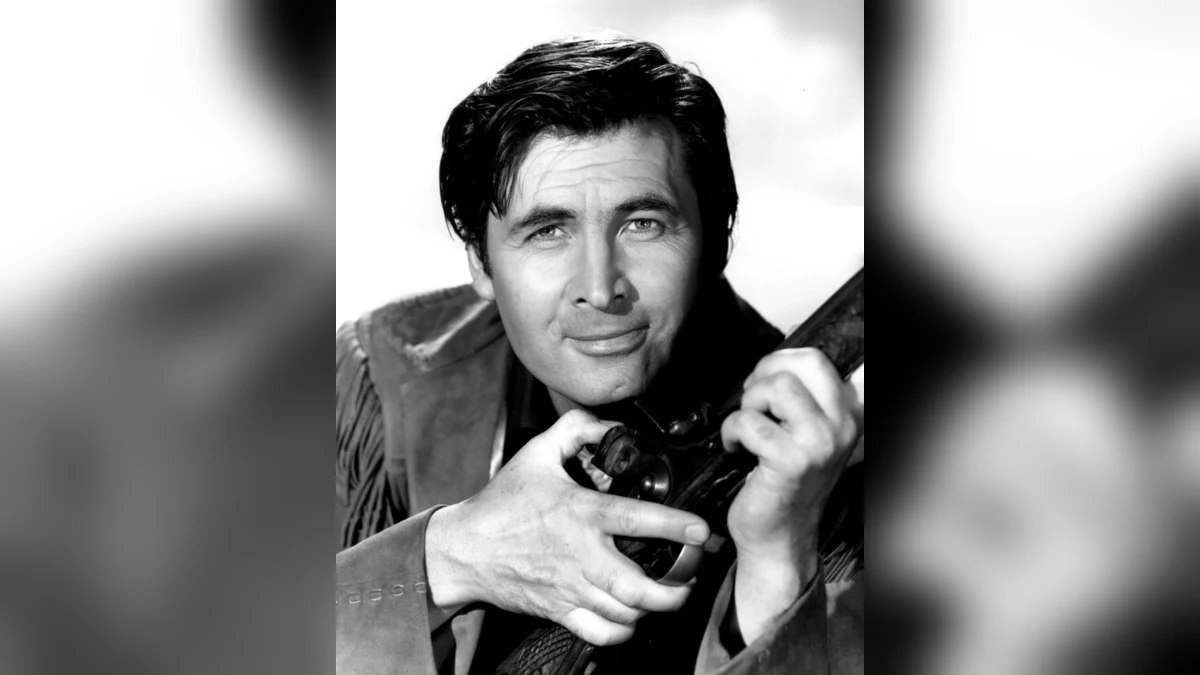
Fess Parker was one of the most famous men in America in the mid-1950s — then he walked away from Hollywood and built a second fortune. By the time he died in 2010 at age 85, his net worth was estimated at $100 million, per CelebrityNetWorth, built on wine, hotels and thousands of acres of California ranchland.
| Quick Facts | |
|---|---|
| Actor | Fess Parker (1924–2010) |
| Famous roles | Davy Crockett, Daniel Boone |
| Daniel Boone | NBC, 1964–1970, 165 episodes |
| Net worth at death | $100 million (2010) |
| Businesses | Fess Parker Winery, Santa Barbara resort, Wine Country Inn |
| Died | 18 March 2010, age 85 |
The $300 Million Davy Crockett Craze
Parker’s journey began in 1954, when Walt Disney selected the 6-foot-6 Texas native to play Davy Crockett in a series of television adventures for ABC. The first instalment aired in December 1954, and the response was almost immediate. Parker became a national sensation, and Davy Crockett merchandise began flying off store shelves.
The numbers were astonishing. According to Disney’s own historical records, the Crockett craze generated more than $300 million in merchandise sales, including roughly 10 million coonskin caps — an extraordinary amount of money for the mid-1950s.
Parker negotiated a deal giving him a 10% share of Crockett merchandise sales, but his big payday never materialised. In a 2002 interview with the Los Angeles Times, Parker explained that litigation over the merchandising rights had reduced his eventual proceeds to just a couple hundred thousand dollars. It was still a meaningful amount of money for a young actor in the 1950s, and Parker put some of it to work in real estate.
His relationship with Disney eventually soured. Parker wanted more challenging film roles, but Disney preferred keeping him in familiar, family-friendly Westerns. When director John Ford wanted to cast Parker in “The Searchers” alongside John Wayne, Disney refused to release him. Parker eventually left Disney and returned to television in 1964 as the star of NBC’s “Daniel Boone,” which ran for six seasons and 165 episodes.
Parker had learned something from his earlier experiences. Rather than simply collecting an acting salary, he negotiated an ownership arrangement entitling him to 40% of the program’s net profits. Unfortunately, that arrangement also led to a legal battle. Parker and his producing partners sued 20th Century Fox over the studio’s accounting practices, arguing that the enormously successful series had been made to appear unprofitable.
The Silicon Valley Deal That Could Have Made Him Hundreds Of Millions More
Long before Silicon Valley became synonymous with technology billionaires, Parker acquired roughly 350 acres in Santa Clara, California. At one point, he envisioned using some of the land for a Western-themed amusement park.
The amusement park never materialised under Parker’s ownership. Instead, he eventually sold land to Marriott, which developed the Great America theme park in Santa Clara. Parker made a substantial profit on the transaction, but years later, after the surrounding region had become one of the world’s most valuable concentrations of corporate real estate, he realised just how much money he might have made by holding onto the property.
In his 2002 Los Angeles Times interview, Parker said he had “probably left hundreds of millions of dollars on the table” by selling too early.
From Hollywood Cowboy To Santa Barbara Hotel Mogul
While still working in entertainment, Parker had begun acquiring real estate around Santa Barbara, including investments in mobile home parks and commercial property. His most ambitious project involved a substantial stretch of waterfront land that had once belonged to the Southern Pacific Railroad.
Parker acquired more than 30 acres along Santa Barbara’s Cabrillo Boulevard and spent years working through the planning and approval process for a major hotel and conference complex. In 1986, he opened the 360-room Fess Parker’s Red Lion Resort on 23.5 acres of prime waterfront property.
The resort later became Fess Parker’s DoubleTree Resort, operating under the Hilton umbrella. Crucially, Parker retained a 50% ownership interest in the property rather than simply licensing his name to a hotel company. The property eventually became the Hilton Santa Barbara Beachfront Resort. In 2018, eight years after Parker’s death, Park Hotels & Resorts announced a $14 million renovation of the 360-room hotel and confirmed that it remained a 50-50 joint venture with the Parker family.
In 1988, He Bought 714 Acres And Started Making Wine
In 1988, Parker purchased a 714-acre ranch near Los Olivos in California’s Santa Ynez Valley. The original plan was relatively modest: raise cattle, plant a few acres of grapes, and perhaps eventually open a small winery. He also wanted to build a business that his children and grandchildren could inherit.
The following year, he established Fess Parker Winery & Vineyard, beginning with plantings of Riesling grapes. The first wines were bottled at Wente Brothers, and the family gradually expanded into Chardonnay, Pinot Noir, Syrah, and other varieties. Parker’s children, Eli and Ashley, became deeply involved in the operation. Eli eventually took over winemaking, while Ashley concentrated on marketing and business development.
Interestingly, the family initially resisted using Fess Parker’s name to sell the wine. They worried that serious wine enthusiasts would dismiss a winery associated with a television cowboy, so their initial bottles carried the simpler Parker name. But with hundreds of wineries competing for attention, the family eventually recognised the commercial value of having a famous name on the label. The wines were rebranded as Fess Parker, complete with a small image of the coonskin cap that had made their founder famous decades earlier.
The winery expanded rapidly during the 1990s. The family acquired additional vineyard property, opened a permanent tasting room in 1994, and developed a growing portfolio of award-winning wines. By the final years of Parker’s life, the winery was producing between 60,000 and 70,000 cases annually. The family’s vineyards covered more than 300 acres across several Santa Barbara County properties.
The wines also found their way to some unusual places. According to the winery’s official history, Fess Parker wines were served at Elizabeth Taylor’s eighth wedding reception in 1991 and at the opening of the Ronald Reagan Presidential Library that same year. In the acclaimed 2004 film “Sideways,” the Fess Parker Winery appeared under the fictional name “Frass Canyon.”
The $40 Million Ranch Transaction
Parker’s winemaking operation represented only part of his Santa Ynez Valley real estate portfolio. At one point, he and his family controlled as much as 5,000 acres in the region.
One of his largest holdings was a ranch known as Camp Four. Parker purchased the property in 1998 for a reported $6 million. It encompassed more than 1,400 acres near the intersection of Highways 154 and 246 in Santa Ynez. In 2003, Parker listed the ranch for $28 million.
He also explored a partnership with the Santa Ynez Band of Chumash Indians to develop a luxury residential and resort community. The proposal encountered significant resistance from local residents and officials, and the ambitious development plans never materialised.
But the land itself remained extremely valuable. On April 2, 2010, just two weeks after Parker’s death, the Chumash tribe announced that it had purchased the 1,390-acre Camp Four property from Fess Parker Enterprises. The parties did not disclose the final purchase price, but Santa Barbara County records showed a recorded transaction value of $40 million — used for property tax purposes, not necessarily the exact sale price.
A $100 Million Fortune And A Family Empire That Still Exists
Parker also expanded his hospitality interests into wine country. In 1998, he and his wife Marcella purchased a boutique hotel in downtown Los Olivos, which became the Fess Parker Wine Country Inn & Spa.
When Parker died on March 18, 2010, his net worth was at least $100 million — the same as around $150 million in today’s dollars, per CelebrityNetWorth. Unlike many celebrity fortunes built primarily around a performer’s continuing popularity, Parker’s wealth was tied to tangible assets and operating businesses that could be passed down through generations.
His son Eli and daughter Ashley Parker Snider continued running the family’s wine interests, working alongside Ashley’s husband, Tim Snider, who became president of the winery. Several grandchildren eventually joined the business as well. In 2010, the same year Parker died, Wine Enthusiast ranked the family’s 2008 Bien Nacido Vineyard Chardonnay second on its list of the year’s 100 best wines.
Parker was not the only television star to turn fame into a business empire — Merv Griffin turned a 30-second song into an $80 million fortune — but few second acts were as complete as his. The Hollywood career lasted roughly two decades, while the business empire he built afterward has endured for more than half a century. Other stars have earned enormous paydays from a single role — Daniel Craig made $110 million playing James Bond — yet Parker’s most lucrative adventure was the one he embarked upon after he stopped pretending to be a frontiersman and started buying real estate on the actual California frontier. Like Michael Andretti, who built a racing business empire, Parker proved that the smartest move after fame can be owning the business, not just starring in it.
Sources: CelebrityNetWorth; Los Angeles Times (via CNW).
