

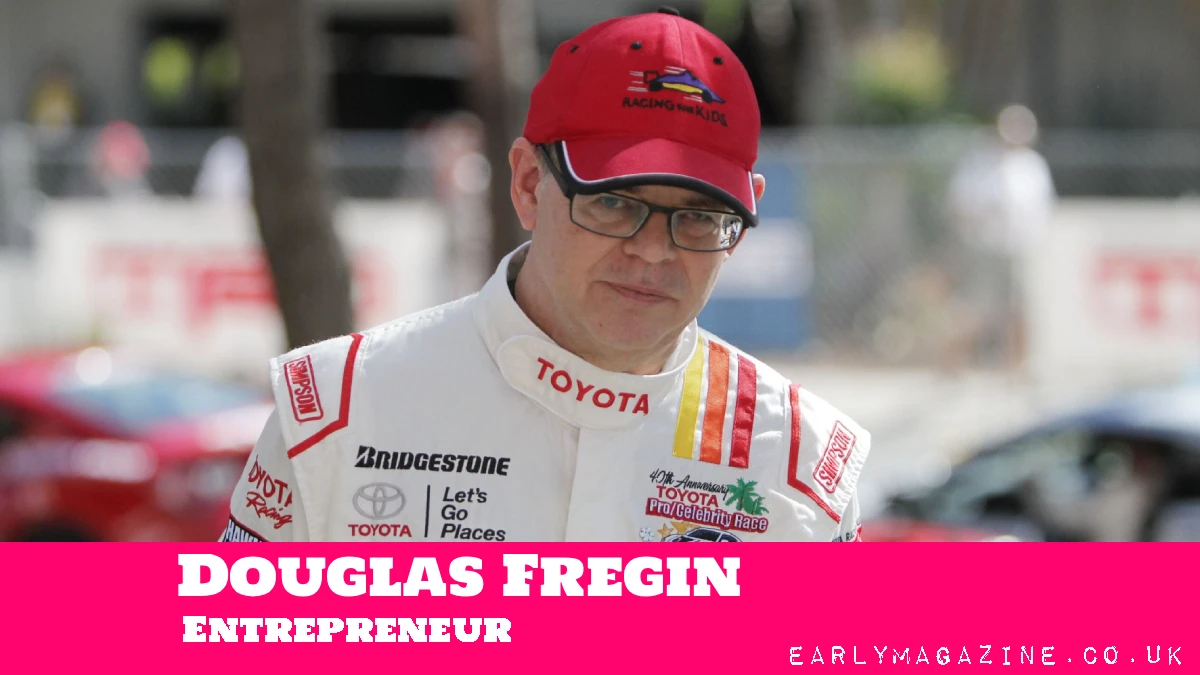
Douglas Fregin net worth is estimated at approximately $1 billion as of 2025. The Canadian engineer co-founded Research In Motion (RIM) in 1984, the company behind BlackBerry. He retired in 2007, selling his RIM shares at near-peak valuation and walking away with an estimated $1.3 billion to $1.7 billion in liquid wealth.
Most people have never heard of Douglas Fregin. That is exactly how he likes it. While his co-founder Mike Lazaridis gave speeches and Jim Balsillie fought boardroom battles, Fregin quietly built the hardware that powered one of the most iconic devices in tech history. Today, Douglas Fregin net worth sits at an estimated $1 billion, a figure that tells only half the story of a man who made one of the best financial exits in Canadian business history.
His story is not about flashy headlines or startup mythology. It is about a kid from Ontario who loved circuit boards, built a global company from $15,000 in savings, and had the rare wisdom to walk away before the storm hit. For anyone curious about how real wealth gets built and preserved, Fregin’s story is worth your full attention.
This article covers how Fregin built his fortune at RIM, the exact timing of his exit, what his wealth looks like today, and what he has done since leaving BlackBerry behind.
Who Is Douglas Fregin?
Douglas Fregin is a Canadian engineer and entrepreneur best known as the co-founder of Research In Motion (RIM), the company behind the BlackBerry smartphone, which he established in 1984 alongside Mike Lazaridis. Born in 1960 in Windsor, Ontario, Fregin earned a bachelor’s degree in electrical engineering from the University of Windsor.
He was never the public face of RIM. He did not do press tours or keynote speeches. The 2023 biographical film “BlackBerry” highlights Fregin as the eccentric, headband-wearing, morale-boosting heart of the early RIM engineering team, standing in stark contrast to the aggressive corporate tactics of Jim Balsillie.
That portrayal is surprisingly accurate. Fregin was the engineer’s engineer. He cared about building things that worked, not about building a personal brand.
From Grade School to $15,000 and a Dream
As teenagers in the 1970s, Fregin and Lazaridis were already experimenting with electronics, winning a science fair with a working solar-powered water heater. A decade later, they reunited with just $15,000 and a shared belief that wireless communication was going to change everything.
In 1984, Fregin and Lazaridis founded Research In Motion in Waterloo, Canada. The company began with the goal of developing wireless data communication systems, and they quickly became pioneers in the mobile technology industry.
At first, RIM was not building phones. It was essentially a high-end engineering shop taking on whatever advanced wireless or electronics projects it could land. Fregin handled the hardware side. He designed circuit boards, managed power constraints, and turned ambitious ideas into physical products that actually functioned.
The Emmy Award Nobody Talks About
Before BlackBerry became a household name, Fregin earned recognition in an entirely different field. Early in RIM’s history, he played a key role in developing the DigiSync film and soundtrack reader, a high-speed barcode system that synchronized audio with visual film elements, dramatically reducing editing time from hours to minutes. This invention earned a Technology and Engineering Emmy Award in 1994 for its impact on film production workflows. Additionally, it received a Technical Achievement Award from the Academy of Motion Picture Arts and Sciences.
An Emmy and an Oscar-adjacent award. Most tech billionaires cannot say that.
How Douglas Fregin Built His Fortune at RIM
RIM’s path from engineering shop to global smartphone giant took about two decades. Fregin was present and essential for all of it.
In 1992, the company took on its first major outside investor. Fregin and Lazaridis accepted a $125,000 investment from Jim Balsillie, who then became co-CEO alongside Lazaridis. Balsillie famously mortgaged his home to fund the investment.
That move changed RIM’s trajectory completely. Balsillie brought the aggressive sales and business development instincts the company needed. Lazaridis had the product vision. And Fregin kept the engineering running.
The BlackBerry device, launched in its email-capable form in 1999, became essential for business professionals worldwide. Politicians, lawyers, and executives could not put it down. At its peak, RIM had tens of millions of subscribers and commanded serious Wall Street attention.
RIM’s Peak Value and Fregin’s Stake
Here is where the numbers get interesting.
When RIM went public in 1997, Doug Fregin owned 5% of the company. At the company’s IPO, those shares were worth $23.6 million. By December 2005, share sales reduced his stake to 2.7%. At that point, Fregin was worth $400 million. At the company’s all-time peak market cap, RIM was worth $85 billion. That gave Doug a net worth of $2 billion and Mike Lazaridis a net worth of $3.8 billion.
From $15,000 to $2 billion. That is what twenty-three years of focused engineering work looks like.
The Perfect Exit: Timing That Wall Street Envies
January 9, 2007. Steve Jobs walked onto a stage in San Francisco and announced the iPhone.
Most people in the BlackBerry camp dismissed it. The phone had no physical keyboard. It lacked enterprise security. It would never replace BlackBerry for serious users. That was the prevailing opinion inside RIM.
Douglas Fregin did not share that confidence. Or perhaps he simply recognized it was the right time to go regardless.
Recognizing the changing tides, Fregin officially retired from his role as Vice President of Operations at RIM in May 2007. At the time of his retirement, he held a 2% ownership stake in the company. He subsequently liquidated his remaining stock just as RIM was approaching its all-time peak market cap of $85 billion.
By selling his shares in 2007, Fregin walked away with an estimated $1.3 billion to $1.7 billion in liquid wealth.
His partners stayed. They fought the iPhone. They tried pivoting. RIM’s stock eventually collapsed by more than 95% from its peak. Lazaridis and Balsillie both lost billions on paper trying to save a company that the market had already moved past.
Fregin left with cash in hand. That is arguably the most underrated financial decision in Canadian business history.
Douglas Fregin Net Worth Today
| Time Period | Estimated Net Worth | Key Driver |
|---|---|---|
| RIM IPO (1997) | ~$23.6 million | 5% stake at IPO price |
| December 2005 | ~$400 million | Partial share sales, rising stock |
| RIM Peak (2008) | ~$2 billion | Retained stake near market high |
| Post-exit (2007–2010) | ~$1.3–1.7 billion | Share liquidation proceeds |
| 2024–2025 (current) | ~$1 billion | Investments, real estate, QVI |
Douglas Fregin is a Canadian billionaire entrepreneur who has a net worth of $1 billion. The slight decrease from his exit valuation reflects investment activity, philanthropic giving, and the general absence of a major new liquidity event since 2007.
Fregin’s primary sources of wealth include his contributions to the tech industry, real estate investments, and his post-RIM ventures including Quantum Valley Investments. Fregin’s real estate portfolio includes properties in Canada and the United States. His tech investments span across various sectors, including cybersecurity, artificial intelligence, and quantum computing.
What Fregin Has Done Since BlackBerry
Fregin did not retire to a beach. He stayed curious and stayed active.
Quantum Valley Investments
In 2013, he partnered with Lazaridis to establish Quantum Valley Investments, a $100 million fund supporting the development and commercialization of quantum technologies. This fund aims to transform ideas from quantum information science into commercially viable technologies.
The bet on quantum computing is a long one. But given Fregin’s track record of spotting technology before the mainstream catches on, it is not a bet many analysts are laughing at.
Philanthropy and Recognition
Doug Fregin donated $10 million to help found the Perimeter Institute for Theoretical Physics. That institution has become one of the world’s leading centres for fundamental physics research.
Fregin retired in 2007 and maintains a low profile, enjoying car racing and receiving an Honorary Doctorate of Engineering from the University of Waterloo in 2022.
Car racing, quantum physics, and occasional film appearances. Not a bad second act.
Fregin vs. His RIM Partners: A Wealth Comparison
Fregin’s exit strategy stands out sharply when you compare outcomes.
Mike Lazaridis stayed at RIM through its decline. While he remains a billionaire today, his net worth dropped substantially from its peak of $3.8 billion. Jim Balsillie also held on, and his fortune suffered similar damage.
Fregin, by walking away in 2007, converted peak paper wealth into actual liquid assets. His $1 billion today represents real, preserved wealth rather than a fraction of what once existed on a brokerage statement.
The lesson is straightforward: knowing when to exit is as valuable as knowing how to build.
FAQs About Douglas Fregin Net Worth
What is Douglas Fregin net worth in 2025?
Estimates place his net worth at approximately $1 billion, derived from his BlackBerry share sale, real estate holdings, and Quantum Valley Investments.
How did Douglas Fregin make his money?
He co-founded Research In Motion in 1984, grew it into the company behind BlackBerry, and sold his shares in 2007 near the company’s peak valuation.
Did Douglas Fregin make more money than Mike Lazaridis?
No. At peak, Lazaridis was worth $3.8 billion vs. Fregin’s $2 billion. But Fregin exited earlier and preserved more of his wealth as the company declined.
What is Quantum Valley Investments?
It is a $100 million venture fund Fregin co-founded with Lazaridis in 2013 to commercialize quantum computing breakthroughs.
Why is Douglas Fregin so unknown despite being a billionaire?
He has always preferred working behind the scenes. He gave no press interviews, avoided social media, and let his engineering work speak for itself.
The Quiet Billionaire’s Real Legacy
Douglas Fregin never wanted to be famous. He wanted to build things that worked. He co-founded a company that fundamentally changed how humans communicate, won an Emmy, helped fund a physics institute, and bet early on quantum computing. He also made one of the most strategically perfect exits in tech history.
His net worth of approximately $1 billion reflects a life of serious engineering work, disciplined financial decisions, and a clear-eyed understanding of when to hold on and when to let go. That combination is rarer than any single invention.
The next time someone asks you to name the smartest person in a room full of billionaires, consider the one who already left.
For more insights into how modern tech pioneers build and preserve their fortunes, visit EarlyMagazine UK — where boundary-breaking careers and financial wisdom come together.
