

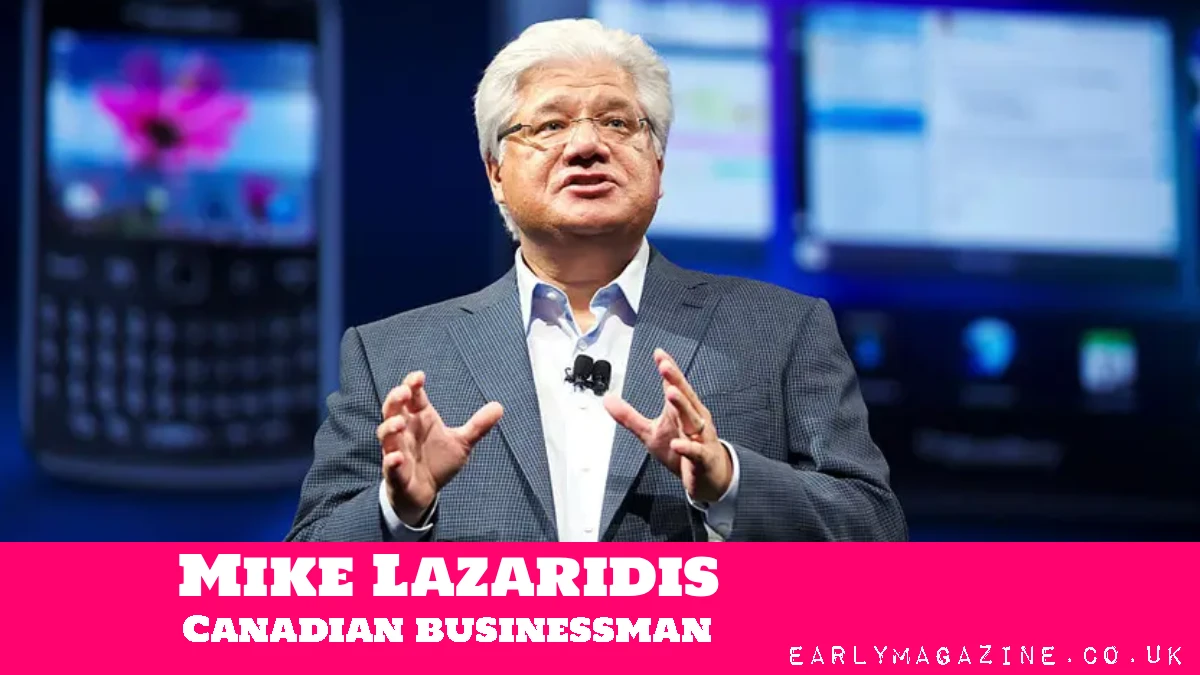







Mike Lazaridis has a net worth of $600 million, according to Celebrity Net Worth. The BlackBerry co-founder once sat on a $4 billion fortune — then watched the iPhone take it apart, gave more than $400 million of what remained to science, and placed his second act on quantum computing.
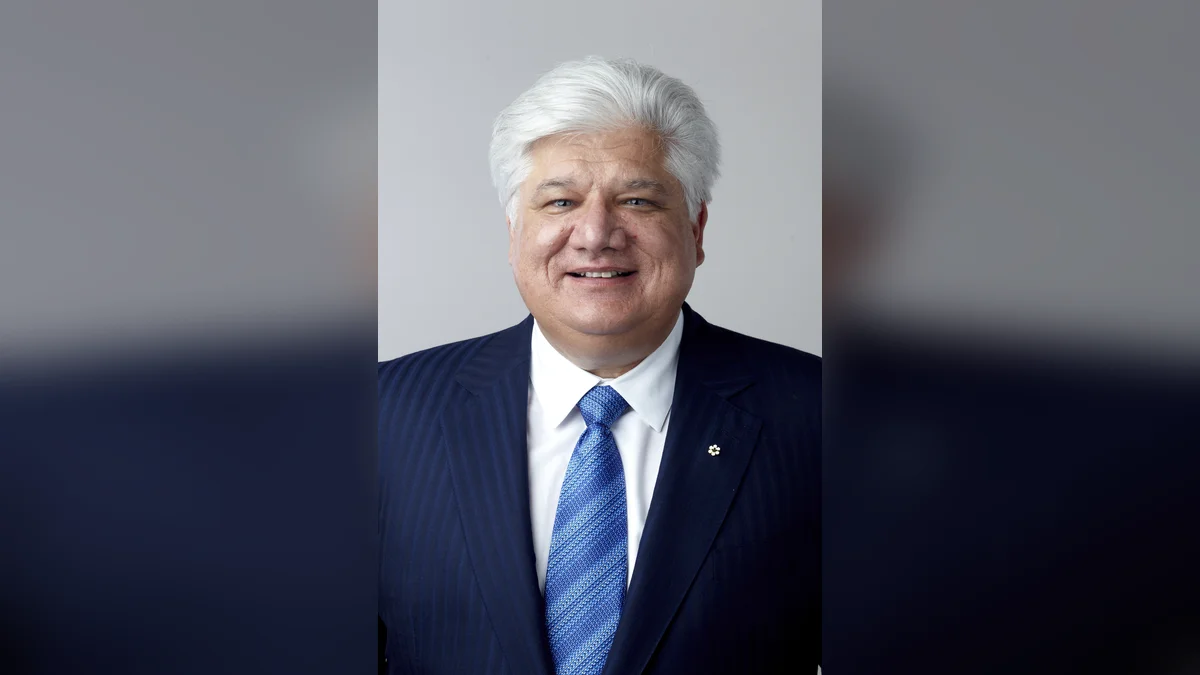
Quick Facts
| Born | 14 March 1961, Istanbul, Turkey (to Greek parents) |
| Raised | Windsor, Ontario, Canada (from age 5) |
| Education | University of Waterloo, electrical engineering (left 1984, two months before graduating) |
| Co-founded | Research In Motion (BlackBerry), 1984, with Douglas Fregin |
| Peak net worth | ~$4 billion (2008) |
| Current net worth | $600 million (Celebrity Net Worth) |
| Philanthropy | $400 million-plus to science, education and the arts |
| Current role | Managing partner and co-founder, Quantum Valley Investments |
Early Life: The Boy Who Read the Whole Library
Lazaridis was born in Istanbul to Greek parents; his family moved to Windsor, Ontario, when he was five. By twelve, he had read every science book in the Windsor Public Library and won a prize for it. That obsession never left him.
In 1984, just two months before graduating from the University of Waterloo’s electrical engineering program, he left school. He had landed a contract with General Motors to develop a network control display system, and that was enough to launch Research In Motion (RIM) with his childhood friend Douglas Fregin, using $15,000 in startup capital.
Career: Building BlackBerry, Then Watching It Fall
RIM stayed relatively small through the late 1980s and early 1990s, building wireless data systems for businesses. The turning point came in 1999 with the BlackBerry 850, a two-way pager with email capability. Corporate America was immediately hooked.
By the mid-2000s, BlackBerry was the dominant smartphone for professionals — encrypted email, a physical keyboard and long battery life made it the phone of Wall Street bankers, Washington politicians and Fortune 500 executives. At its peak, BlackBerry held over 20% of the global smartphone market, RIM’s market capitalisation reached about $85 billion, and Lazaridis’s personal fortune peaked at an estimated $4 billion in 2008, making him one of Canada’s wealthiest people.
Apple launched the iPhone in June 2007. Lazaridis famously dismissed it: no physical keyboard, questionable battery life, no enterprise security. He believed corporations would never trust it with sensitive communications. He was wrong. Within three years the iPhone had reshaped what consumers expected from a phone, Google’s Android followed, and BlackBerry’s once-prized features felt outdated. RIM’s market value cratered from $85 billion to less than $4 billion over roughly five years. Lazaridis stepped down as co-CEO in January 2012 and left the board entirely in 2013.
The pattern — a founder’s fortune made and unmade by a platform shift — is the same one that built and broke other tech fortunes, from Apple early investor Mike Markkula to OnlyFans owner Leonid Radvinsky, whose wealth rides on a single platform’s fate.
The Money He Gave Away
A significant part of Lazaridis’s fortune was not destroyed by the market. He gave it away. In 1999, at the height of BlackBerry’s rise, he donated CA$100 million — roughly one-third of his personal fortune at the time — to found the Perimeter Institute for Theoretical Physics in Waterloo. He followed it with $50 million in 2004 and $50 million toward a new research facility in 2008; his total donations to Perimeter now exceed $170 million, one of the largest private contributions to science in Canadian history.
In 2002, Lazaridis and his wife Ophelia helped establish the Institute for Quantum Computing (IQC) at the University of Waterloo; their personal donations to IQC exceed $120 million. He also helped found the university’s Quantum-Nano Centre and donated $20 million to Wilfrid Laurier University in 2015 to create the Lazaridis Institute for the Management of Technology Enterprises. The family has supported cultural institutions as well, including a major gift to the Stratford Festival for the Tom Patterson Theatre. Across all institutions, his giving exceeds $400 million.
Quantum Valley: The Second Act
After leaving BlackBerry, Lazaridis turned to what he believes is the next frontier of computing. In March 2013, he and Fregin launched Quantum Valley Investments (QVI) from Waterloo with $100 million to fund quantum technology startups. QVI has backed companies including High Q Technologies, which develops quantum-enabled systems for drug discovery and materials science. The broader vision is to turn Waterloo into a global hub for quantum research and commercialisation.
Lazaridis remains managing partner of QVI and chairs the boards of both the Perimeter Institute and the Institute for Quantum Computing. In September 2025, during Perimeter’s 25th anniversary celebration, he announced the creation of the Ray Laflamme Early Career Chair to support emerging researchers in quantum information — a sign that the philanthropy, like the quantum bet, is still growing.
His contributions have earned rare cross-disciplinary recognition: an Academy Award for developing a high-speed barcode reader used in film editing, an Emmy Award for technical achievement, Officer of the Order of Canada, and Fellow of the Royal Society. The 2023 biographical film “BlackBerry,” directed by Matt Johnson with Jay Baruchel as Lazaridis, brought his story to a new audience. Some estimates place his current wealth higher — up to around $2 billion depending on how private investments are valued — but $600 million remains the most widely cited figure.
Sources and notes: Net worth per Celebrity Net Worth; company history, market capitalisation and philanthropy figures per Perimeter Institute, University of Waterloo and contemporary reporting; September 2025 chair announcement per Perimeter Institute. Net worth figures are estimates; private investment values are not publicly disclosed.
