

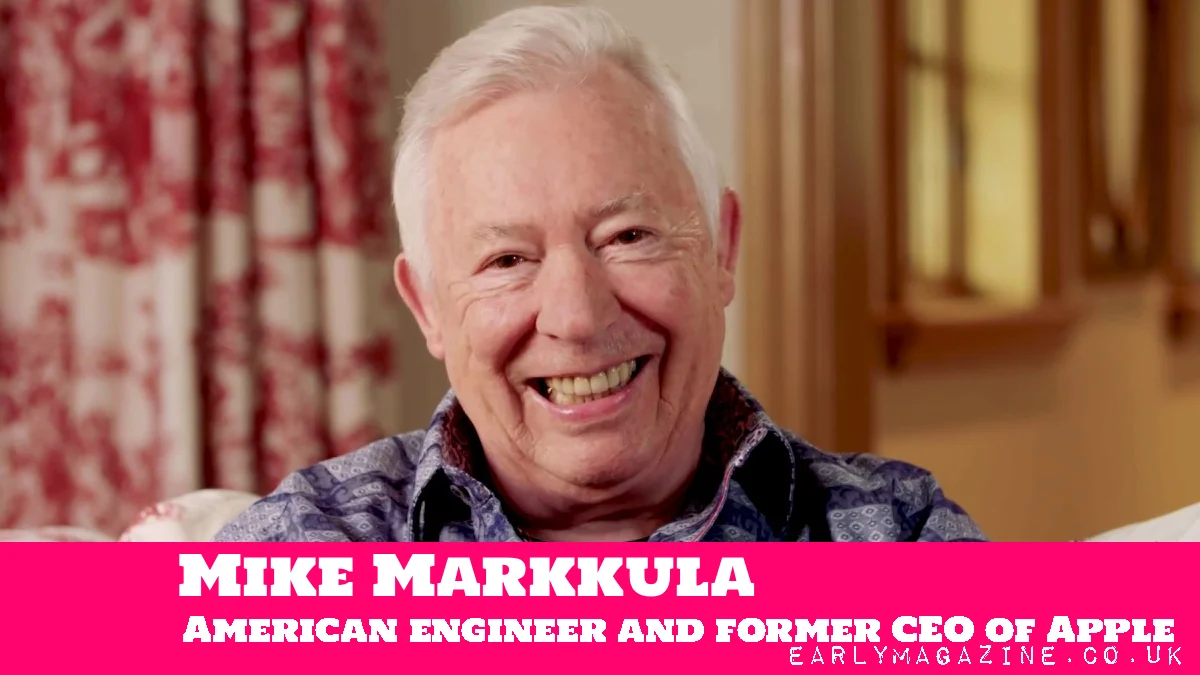







Mike Markkula net worth is estimated at $1.2 billion. He built his fortune through early stock options at Intel and Fairchild Semiconductor, then invested $250,000 in Apple in 1976. That stake made him an equal partner with Steve Jobs and Steve Wozniak and turned him into a billionaire.
Most people who follow tech history know Steve Jobs. Fewer know the man who wrote Apple’s first business plan, secured its first line of credit, and owned the same percentage of the company as Jobs himself. Mike Markkula net worth tells the story of a quiet, methodical investor who helped create one of the most valuable companies on Earth, then walked away before Apple reached its peak. His $1.2 billion fortune is the result of smart bets made decades before Silicon Valley became a household term.
He never chased the spotlight. He never wrote a memoir. Yet Steve Wozniak, the man who literally built the first Apple computers, has said publicly that Markkula deserves more credit for Apple’s success than either he or Jobs. That is a remarkable statement. Understanding how Markkula accumulated his wealth, and what he did with it, gives you a clear picture of what disciplined, early-stage investing actually looks like.
This article covers how Markkula built his pre-Apple fortune, the full story of his $250,000 investment, what his Apple stake was worth at the IPO, his business ventures after Apple, his real estate holdings, and his philanthropic legacy.
How Markkula Built His Fortune Before Apple
Before Markkula ever met Steve Jobs, he was already wealthy.
Born on February 11, 1942, in Los Angeles, Markkula earned bachelor’s and master’s degrees in electrical engineering from the University of Southern California. He went to work at two of the most important semiconductor companies of the 1960s and 1970s: Fairchild Semiconductor and Intel.
His compensation was tied to stock options, a common practice at those companies. It turned out to be enormously lucrative. Markkula made millions from stock options he earned as a marketing manager for Fairchild Semiconductor and Intel, reaching financial independence and early retirement at 33.
That is a key number. He was a millionaire, effectively retired, before the personal computer industry even existed. He did not need Apple. That is precisely why his decision to invest in it carries so much weight.
After stepping back from the corporate world, he became a startup consultant and mentored dozens of entrepreneurs, working only every Monday. He was not looking for the next big thing. The next big thing found him.
The $250,000 Apple Bet That Changed Everything
How the Meeting Happened
Markkula was introduced by Regis McKenna and venture capitalist Don Valentine to Steve Jobs and Steve Wozniak while they were looking for funding to manufacture the Apple II personal computer. Valentine had famously declined to invest himself, but forwarded their contact information to Markkula. Markkula came out of retirement to look at what they had built.
He liked what he saw.
What the Investment Looked Like
In 1976, Mike gave Steve Jobs and Steve Wozniak $250,000 to incorporate into a formal company called Apple at a valuation of $750,000. Markkula’s investment was to be used to mass manufacture the Apple II computer.
The structure of the deal matters. This initial investment secured him a 26% ownership stake in Apple, making him an equal partner with Jobs and Wozniak. He was not a passive check-writer. With his guidance and funding, Apple ceased to be a partnership between Jobs and Wozniak and was incorporated as a company on January 3, 1977.
Markkula also brought in his friend Michael Scott as Apple’s first CEO, wrote the company’s founding business plan, and helped secure a line of credit from Bank of America. He was, functionally, a co-founder in everything but name.
His Role Beyond Money
Markkula gave Apple something money alone could not buy: credibility and operational structure. He wrote what became known as the “Markkula Axioms,” a set of business principles centered on simplicity, focus, and the user experience. Those principles became embedded in Apple’s culture and are visible in its products to this day.
As chairman, Markkula approved Jef Raskin’s 1979 plan to start designing what would become the Macintosh, then prevented Jobs from killing the project in favor of his own Lisa. Without that decision, the Mac might never have existed.
Mike Markkula Net Worth at Apple’s IPO and After
When Apple went public in December 1980, it was one of the largest IPOs in American history up to that point. Markkula’s stake was worth over $200 million on the first day of trading. He reportedly held about 7 million shares, making him one of the wealthiest early stakeholders.
He did not hold all of those shares forever. Over time, he sold off many of those shares, securing a comfortable fortune well before Apple became the $3 trillion company it is today. That is actually a sign of smart wealth management, not a missed opportunity. He locked in real, permanent gains rather than riding a volatile stock for decades.
Mike retired officially from Apple upon Jobs’s return in 1997. By that point, he had served for two decades. Mike Markkula was the longest-serving board member in the company’s history, having served for 20 years, between 1977 and 1997.
Mike Markkula’s Key Financial Milestones
| Year | Event | Financial Impact |
|---|---|---|
| Early 1970s | Stock options at Intel and Fairchild Semiconductor | Became a millionaire; retired at 33 |
| 1976 | Invested $250,000 in Apple | Received ~26% equity stake |
| 1980 | Apple IPO | Stake valued at over $200 million |
| 1981–1983 | Served as Apple CEO | Deepened operational role, no direct pay data |
| 1982 | Purchased Rana Creek Ranch, Carmel Valley | $8 million (roughly $20 million in today’s dollars) |
| 1990 | Purchased Woodside estate | $17.5 million; now worth an estimated $50 million |
| 1997 | Left Apple’s board | Estimated net worth begins consolidating at ~$1.2 billion |
| 2023 | Sold Rana Creek Ranch | $35 million to The Wildlands Conservancy |
Business Ventures After Apple
Markkula did not stop working after leaving Apple’s board. He invested in and founded several companies across different sectors.
Besides Apple, Markkula has also ventured into other businesses like Crowd Technologies and RunRev. He is also the founder of ACM Aviation, Rana Creek Habitat Restoration, San Jose Jet Center, and Echelon Corporation.
Echelon Corporation was a networking technology company that he helped build in the 1990s. San Jose Jet Center reflects his long-standing interest in aviation. These ventures add diversification to a portfolio that was already anchored by Apple gains.
He also invested in LiveCode Ltd., a software development platform. While none of these ventures reached Apple-level scale, they demonstrate a consistent pattern: Markkula puts money and time into companies he actually understands, in fields where he has technical or operational knowledge.
Real Estate Holdings and Personal Wealth
The Rana Creek Ranch
In 1982, Mike and his wife Linda paid $8 million for a sprawling 14,000 square-foot ranch called Rana Creek Ranch in Carmel Valley, California. The property combined a main house, guest houses, and thousands of acres of land. In 2023, he sold his sprawling 14,000-acre Rana Creek Ranch in Carmel Valley to The Wildlands Conservancy for $35 million, further demonstrating his commitment to preserving natural landscapes.
That sale alone netted more than four times the original purchase price.
The Woodside Estate
In 1990, they paid $17.5 million for a 50-acre estate in Woodside, one of the most expensive zip codes in the world. The property is now estimated to be worth around $50 million, according to Celebrity Net Worth. They also own a home in Hawaii.
Real estate has been a significant component of Markkula’s overall wealth strategy, and his properties have appreciated substantially alongside Silicon Valley land values.
Philanthropy: Where His Money Goes
Markkula has given away tens of millions of dollars, most of it quietly and without fanfare.
Over the years, he and Linda have given millions of dollars to Santa Clara University, which is now home to the Markkula Center for Applied Ethics. The center focuses on ethical decision-making across business, law, medicine, and public policy. It is a working institution with active research programs, not just a name on a building.
He also served on the board of trustees at Santa Clara University from 2003 to 2009, contributing time as well as money.
The sale of Rana Creek Ranch to a conservation organization rather than a developer points to the same value set. He has consistently used his wealth to preserve and build things rather than simply accumulate.
What His Net Worth Looks Like Today
The most widely cited estimate for Mike Markkula net worth is $1.2 billion, sourced from Celebrity Net Worth and multiple financial biography sites. Some more recent estimates put the figure closer to $1.5 to $2 billion when accounting for real estate appreciation and post-Apple investment returns.
The core of his wealth remains tied to the Apple investment and the gains he locked in over two decades on the board. His subsequent real estate portfolio, private investments, and the 2023 ranch sale have added to that base. Philanthropy has reduced it, but not dramatically.
What makes his financial story interesting is not just the size of the number. It is how he got there. He did not found Apple. He was not a visionary product designer. He was the person who believed in the product before anyone else with money did, wrote the plan that made it a real business, and then stayed long enough to make sure it survived its most turbulent years.
Frequently Asked Questions
What is Mike Markkula net worth in 2025?
His net worth is estimated at $1.2 billion, with some sources citing figures up to $2 billion when accounting for real estate and private investments.
How much did Markkula invest in Apple?
He invested $250,000 in 1976, comprising an $80,000 equity stake and a $170,000 loan, which gave him roughly 26% ownership.
Did Markkula sell his Apple stock?
Yes. He sold much of his Apple stake over the years, securing his fortune before Apple became a multi-trillion-dollar company.
What did Markkula do after leaving Apple?
He founded and invested in companies including Echelon Corporation, ACM Aviation, and San Jose Jet Center, and focused on philanthropy through Santa Clara University.
What is the Markkula Center for Applied Ethics?
It is a research and teaching center at Santa Clara University funded by Mike and Linda Markkula. It promotes ethical decision-making across professional fields.
The Quiet Billionaire’s Lasting Lesson
Mike Markkula built his $1.2 billion fortune through two clear acts of discipline. First, he earned stock options at the right companies and held them long enough to matter. Second, he invested in Apple at a moment when almost no one else would, brought real skills to the table, and stayed for two decades.
He is not a figure who sought attention. Fortune magazine once called him “the reclusive chairman who has always been the real power at Apple.” That description fits. The people who actually build and preserve institutional wealth rarely make the covers of magazines. They show up, do the unglamorous structural work, and let the results speak over time.
If you are studying how early-stage tech investment creates generational wealth, Markkula’s story is one of the clearest examples in Silicon Valley history. The bet was $250,000. The result was a billion-dollar legacy and the foundations of a company now worth $3 trillion. The next time you hear someone dismiss a boring-looking investment in a nascent sector, remember that story.
For more insights into how visionary investors and tech pioneers build lasting wealth, visit EarlyMagazine UK — where bold financial stories and boundary-breaking careers come together.
