

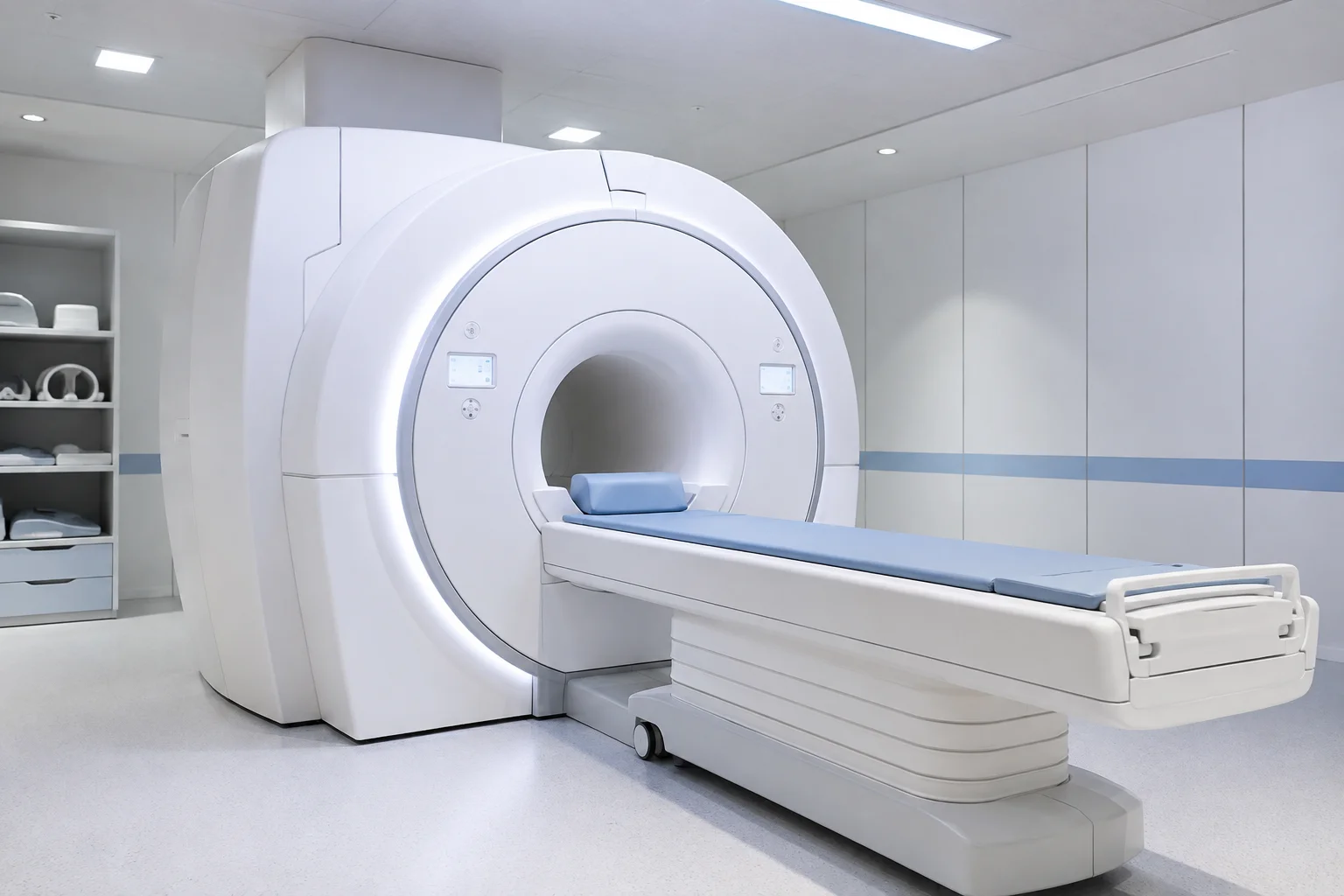
You leave the scanner with a disc or a download link, several hundred images and very little idea what any of it means. The scan itself takes half an hour. The waiting, the guessing and the late-night searching can stretch into weeks. That gap between having your images and understanding them is exactly where an MRI report online changes things for the better.
Images are data, a report is an answer
MRI produces an extraordinary amount of detail about soft tissue, joints, the brain and internal organs. Detail, however, is not the same as meaning. Someone has to review every sequence, compare what is visible against what is expected in that anatomy, and decide what is clinically relevant and what is simply normal variation. That work is what turns a folder of files into a document you and your doctor can genuinely use, whether the result confirms that everything looks fine or points to something worth following up.
What a genuinely useful interpretation contains
Not every report is written to the same standard, so it helps to know what you should be receiving:
- a complete description of the images, including the size, location and character of any findings
- an independent interpretation rather than a restatement of an earlier opinion
- possible diagnoses arranged according to how likely they are
- suggested next steps wherever they are medically justified
- wording a patient can follow, while remaining clinically useful to the treating physician
One question matters more than any other: who is actually reading your scan? At Eurodiagnosis each study is reviewed by an actively practising radiologist, matched to the region examined, so a brain study reaches a neuroradiologist and a knee reaches a musculoskeletal specialist. Reports are written by doctors, not generated by an algorithm.
Why searching for answers yourself rarely works
Looking up terms from an old MRI report online or comparing your images with pictures found online is a very human reaction, and almost always a frustrating one. Radiological findings only make sense in context: your symptoms, your history, the sequences used, the comparison with previous examinations. The same descriptive phrase can be entirely unremarkable in one patient and important in another. A specialist review gives you that context, and usually far more reassurance than an evening spent reading forums. It also removes the risk of worrying about something that turns out to be irrelevant, or overlooking a detail that genuinely deserves attention.
Getting your interpretation quickly
The practical part is simple. You order the report, receive instructions on how to upload your study securely, and the radiologist begins work in dedicated diagnostic software. Standard medical file formats are supported, transfer is encrypted, and you are notified when the finished document is ready to download. No appointment, no travel, no repeating the scan. Upload in the evening and the report can be with you the next day, which is often exactly what you need before a specialist consultation.
In short
An MRI is only as valuable as its interpretation. A clear, complete and independent report replaces uncertainty with information you can act on, and it gives your doctor a reliable starting point for the conversation about what comes next. If you already have your images, the fastest route to understanding them is a specialist who reads scans like yours every day.
