

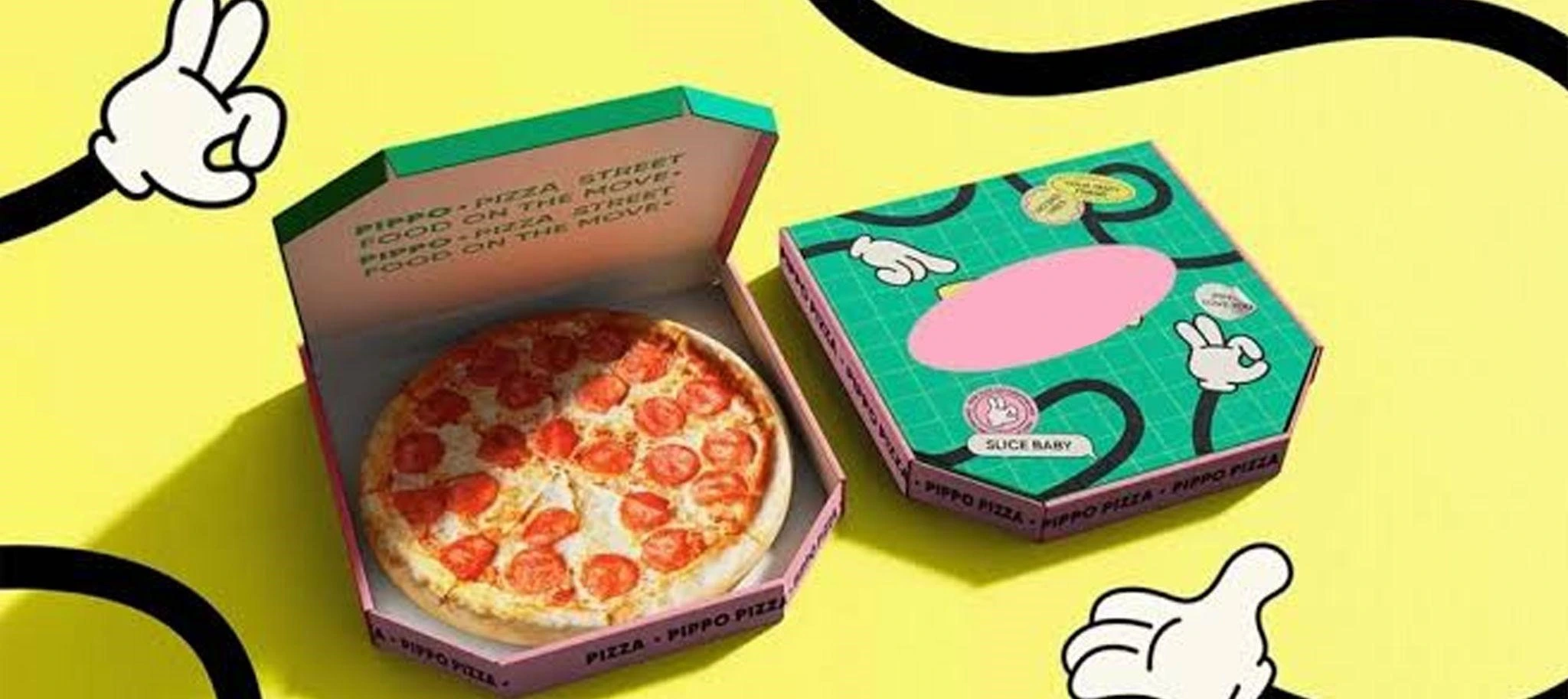
Most customers expect pizza to arrive in a familiar square cardboard box. That standard shape is practical, easy to manufacture, simple to store, and efficient to stack. Because it is so common, however, it can also be difficult for one restaurant’s packaging to look different from another’s.
Unconventional pizza box shapes offer restaurants an opportunity to break this visual pattern. Angled corners, octagonal structures, asymmetrical lids, rectangular formats, or boxes designed around a specific pizza style can make an order feel more memorable before the customer even takes the first bite.
Distinctive packaging can attract attention, reinforce a restaurant’s personality, and encourage customers to photograph or discuss the order. Research into food packaging suggests that unusual shapes can stimulate curiosity and influence how consumers respond to a product. However, visual originality must be balanced with structural strength, efficient storage, food protection, and reasonable production costs.
An unconventional box is therefore not automatically a better box. It creates value only when the shape supports the product, brand, and delivery process.
Why Square Pizza Boxes Remain the Standard
Pizza is usually round, yet the box used to transport it is typically square. This apparent mismatch exists for practical reasons.
Square and rectangular blanks are comparatively straightforward to cut, print, fold, store, and assemble. Flat boxes can be transported to restaurants in compact bundles, then formed as needed. Their straight sides also make them easier to arrange on shelves, counters, delivery racks, and inside insulated bags.
Square boxes offer practical stacking advantages as well. Their corners provide structural support, and their flat edges align predictably when several orders are carried together. Alternative shapes may introduce unused space or increase the complexity of transportation.
For these reasons, restaurants considering a different shape need a clear purpose. Novelty alone may not justify higher costs or operational inconvenience.
Distinctive Shapes Can Capture Attention
Customers are surrounded by familiar packaging designs. When an order arrives in a box that looks noticeably different, it can interrupt expectations and create immediate interest.
Packaging-shape research indicates that unique forms can attract curiosity and help products appeal to particular consumer groups. Shape also interacts with graphics, imagery, and information placement, meaning the box must be designed as a complete visual system rather than as an unusual outline with standard artwork added later.
A distinctive box may help a restaurant:
- Create a stronger first impression
- Make takeaway orders more recognizable
- Reinforce a playful or innovative identity
- Support a product launch
- Differentiate a specialty pizza
- Generate customer conversations
- Improve visual impact at events
- Encourage social media sharing
The design should still make the restaurant name and logo easy to identify. An unusual structure is less valuable when customers remember the box but cannot remember which business supplied it.
Packaging Shape Can Reinforce Brand Personality
A box shape can communicate more than novelty. It can express the personality and positioning of the restaurant.
For example, a bold asymmetrical shape may suit an experimental, youth-focused pizza brand. An octagonal box may create a crafted or premium impression. A long rectangular box may complement a restaurant specializing in Roman-style pizza, while a deeper square format may suit thick-crust products.
Packaging studies consistently treat visual design as an important part of brand communication because consumers use packaging cues to form impressions about quality, style, and product identity.
The strongest designs connect the box shape to a genuine aspect of the business. A random shape can feel like a temporary gimmick, while a structure related to the pizza, restaurant story, or serving experience can become a recognizable brand asset.
Unconventional Packaging Can Encourage Social Sharing
Takeaway packaging now appears in customer photographs, videos, unboxing clips, reviews, and social media posts. A box with an unexpected structure can make this content more visually interesting.
Creative packaging can give customers a reason to pause before opening the order. They may photograph the unusual shape, demonstrate how it unfolds, or show how the box converts into serving sections.
The trend sometimes described as “chaos packaging” shows how unexpected formats can create attention and online conversation. However, such packaging can also create confusion or safety concerns when the design makes the product difficult to identify.
Pizza restaurants should therefore pursue recognizably different packaging rather than packaging that disguises its purpose. The box can be surprising while still clearly communicating that it contains hot food.
The Shape Should Match the Pizza
A major advantage of custom structural packaging is the ability to design the box around the product rather than forcing every pizza into the same format.
Different pizza styles have different dimensions, crust heights, weights, and topping arrangements. A thick rectangular pizza does not necessarily perform well in a shallow square box, while a folded or unusually shaped product may move excessively inside a standard container.
Restaurants exploring Custom Crooked Pizza Boxes can use an intentionally angled or asymmetrical structure to reflect a playful brand identity or accommodate a distinctive pizza format. The design could feature an offset lid, irregular corners, diagonal opening, or visually “crooked” printed elements.
However, the shape should not create internal pressure points. Every edge must provide enough clearance for the crust, and the lid should remain safely above the cheese and toppings.
A practical custom design should address:
- Finished pizza dimensions
- Product thickness
- Total weight
- Crust shape
- Topping height
- Movement during delivery
- Ventilation needs
- Stackability
- Opening convenience
When the structure closely fits the food, it can improve both presentation and protection.
Product Fit Can Improve Presentation
A box that fits the pizza properly helps it arrive in a more organized condition.
Excess internal space allows a pizza to slide when a driver turns, brakes, or carries the order at an angle. A box that is too small may press against the crust or cause the lid to touch the toppings.
An unconventional shape may provide a better fit for certain specialty products. For instance, clipped corners can reduce unnecessary empty areas around a round pizza, while a long rectangular structure can support pizzas sold by length.
Improved fit may provide several benefits:
- Less movement during delivery
- Better topping placement
- Reduced edge damage
- Cleaner presentation
- Less unnecessary cardboard
- Easier portion organization
The restaurant should test the design with actual finished pizzas because dough expansion and topping weight may differ from planned dimensions.
Structural Strength Must Remain a Priority
Pizza boxes are commonly made from corrugated cardboard because it offers a useful combination of low weight, stiffness, absorbency, insulation, and cost efficiency. The stability of a box depends on its geometry as well as the type, weight, and construction of the paperboard.
Changing the shape can alter how pressure moves through the package. An unusual corner, curved panel, cutout, or fold may create a weak area that bends during stacking.
Before approving a custom shape, restaurants should test:
- Lid rigidity
- Base strength
- Corner resistance
- Compression under stacked boxes
- Tab security
- Handle strength, when included
- Grease resistance
- Performance in humid conditions
The box should remain stable when held with one hand and when placed below several other orders.
A Shape Must Work With Ventilation
A pizza continues releasing heat and moisture after it leaves the oven. If steam remains trapped inside the box, it may soften the crust and create condensation. If too much heat escapes, the pizza may become cold.
Alternative structures may change airflow inside the box. Angled corners, raised panels, locking tabs, or irregular lids can either improve or restrict ventilation depending on their design.
Vents should be positioned according to the pizza style and delivery duration. They must not be accidentally covered when boxes are stacked or carried inside an insulated bag.
A restaurant should avoid assuming that a visually creative structure will perform like its existing packaging. Real delivery testing is essential.
Specialty Shapes Can Support Sicilian Pizza
Sicilian pizza typically requires packaging that accommodates a thick, rectangular product with substantial crust and toppings. Placing it in a poorly fitted box can waste space or compromise its edges.
Restaurants using Custom Sicilian Pizza Boxes can develop packaging specifically around the pizza’s rectangular dimensions, increased depth, and heavier construction. The box can provide stronger sidewalls, additional lid clearance, and secure corners suited to the product’s weight.
Custom dimensions can also improve visual presentation by framing the pizza neatly rather than leaving excessive empty space.
The packaging might include:
- Reinforced corners
- A deeper lid
- Stronger corrugated board
- Rectangular ventilation placement
- Grease-resistant surfaces
- Portion guides
- Reheating instructions
- Branded side panels
In this case, the unconventional format is not merely decorative. It solves a practical product-fit problem while strengthening brand recognition.
Unusual Shapes Can Increase Production Costs
Custom structures usually require more development than standard square boxes.
Expenses may include structural design, prototypes, cutting dies, printing setup, testing, and higher minimum order quantities. Complicated folds may also require more material or slower production.
Restaurants should calculate the complete cost per usable box, including:
- Design fees
- Tooling
- Samples
- Printing
- Assembly labor
- Shipping
- Storage
- Damaged inventory
- Minimum order requirements
A shape that gains attention but significantly reduces profit on every order may not be sustainable for daily use.
Some restaurants introduce unconventional boxes only for premium products, special events, influencer campaigns, or limited editions. This allows the brand to benefit from novelty without replacing all standard packaging.
Assembly Time Can Affect Kitchen Efficiency
Standard pizza boxes are familiar to restaurant employees and can usually be assembled quickly. A complicated custom structure may require additional folds, tabs, or locking steps.
During busy periods, even a small increase in assembly time can slow order preparation.
Before ordering in bulk, managers should ask several staff members to assemble sample boxes. The restaurant should measure:
- Average assembly time
- Number of steps
- Frequency of mistakes
- Training requirements
- Ease of closing
- Ease of reopening
- Risk of torn tabs
A distinctive box should not create frustration at the packing station.
Storage Efficiency Matters
Pizza boxes usually arrive as flat blanks, but unconventional shapes may occupy more warehouse space if their outlines do not align efficiently.
Irregular blanks can create material offcuts during manufacturing and may be harder to stack neatly. Once assembled, the boxes may also fit poorly on shelves or inside delivery bags.
Non-rectangular packaging creates broader loading and space-utilization challenges because irregular shapes are more complicated to arrange efficiently than standard rectangular units.
Restaurants should confirm:
- Flat-packed carton dimensions
- Quantity per shipping bundle
- Required storage area
- Compatibility with shelving
- Fit inside delivery bags
- Stability in delivery vehicles
A visually impressive box may become impractical if it disrupts the restaurant’s existing workflow.
Branding Must Remain Clear
An unconventional shape naturally attracts attention, but clear brand identification remains essential.
Research into packaging visibility shows that logo placement, orientation, surrounding imagery, and visual salience affect how effectively consumers notice branding.
Restaurants should position the logo where it remains visible:
- When the box is carried
- When boxes are stacked
- In customer photographs
- Before the package is opened
- After it is placed on a table
Important information should not be placed across complicated folds or narrow angled panels where it becomes difficult to read.
A clean design often performs better than filling every unusual surface with text and graphics.
The Box Can Offer a Functional Surprise
Unconventional packaging becomes more valuable when it provides a useful function.
A custom pizza box might:
- Open into serving plates
- Include a separate sauce compartment
- Hold slices in defined sections
- Convert into a smaller leftovers box
- Support the lid without a plastic pizza saver
- Include tear-away portion guides
- Provide a stable carrying handle
Functional innovation gives customers a reason to remember the package beyond its appearance.
The feature should be intuitive. If customers need complicated instructions to open or use the box, the design may create inconvenience rather than delight.
Sustainability Must Be Evaluated Carefully
A unique shape may use less material when it fits the pizza more closely, but it may also create additional manufacturing waste or require extra coatings and reinforcements.
Paper-based food packaging can still contain barrier layers or treatments that complicate recycling. Businesses should assess the complete structure instead of assuming that every cardboard box has the same environmental performance.
Restaurants should ask suppliers about:
- Material efficiency
- Manufacturing offcuts
- Recycled content
- Fibre sourcing
- Food-contact coatings
- Recyclability
- Disposal instructions
- Ink and adhesive choices
Environmental claims should be specific and supported. A distinctive shape should not be marketed as sustainable solely because it looks smaller or uses brown cardboard.
Customer Understanding Is Important
Customers are familiar with opening a standard pizza box. An unconventional package may require a different opening motion or orientation.
If the closure is not obvious, customers may tear the box, tilt the pizza, or accidentally touch the food while trying to open it.
Good structural design uses visual cues to guide the user. These may include:
- Clearly marked opening tabs
- Printed arrows
- Short instructions
- Contrasting fold lines
- Intuitive handles
- Easy-release locks
The package should be distinctive without becoming confusing.
Prototype Testing Reduces Risk
Restaurants should never approve a large order based only on a digital mockup.
A physical prototype allows the business to check fit, strength, visual impact, assembly, delivery performance, and customer response.
A thorough test should include the following steps:
- Assemble the box during a simulated busy period.
- Place a freshly prepared pizza inside.
- Carry it in the usual delivery bag.
- Stack it with other orders.
- Transport it for the average delivery time.
- Inspect the crust, toppings, and box structure.
- Measure heat and condensation.
- Ask customers to open it without instructions.
- Gather feedback from drivers and kitchen staff.
- Compare the total cost with a standard box.
Testing may reveal that a dramatic concept needs only small adjustments to become practical.
When an Unconventional Shape Makes Sense
A nonstandard pizza box is most likely to create value when:
- The restaurant has a distinctive brand personality
- The pizza has an unusual shape or thickness
- The packaging solves a product-fit problem
- Customers frequently share orders online
- The restaurant sells premium or specialty products
- The box supports a launch or limited promotion
- The business can handle the additional cost
- The design has been tested under real conditions
It may be less suitable when the restaurant has limited storage, relies on extremely fast assembly, uses standardized delivery bags, or competes primarily on low price.
Conclusion
Unconventional pizza box shapes can help a restaurant stand out by attracting attention, reinforcing brand personality, improving product fit, and creating a more memorable takeaway experience.
A distinctive structure can encourage conversation and social sharing, particularly when it relates to the restaurant’s identity or a specific pizza style. However, originality should never compromise food protection, ventilation, stackability, storage efficiency, or ease of use.
The most successful custom box is not simply the strangest shape. It is a carefully developed package that customers recognize, employees can handle efficiently, and delivery drivers can transport safely.
Restaurants should begin with a clear objective, work with an experienced packaging supplier, test physical prototypes, and calculate the complete operational cost. When creative design is supported by practical engineering, an unconventional pizza box can become a valuable point of difference rather than an expensive novelty.
