

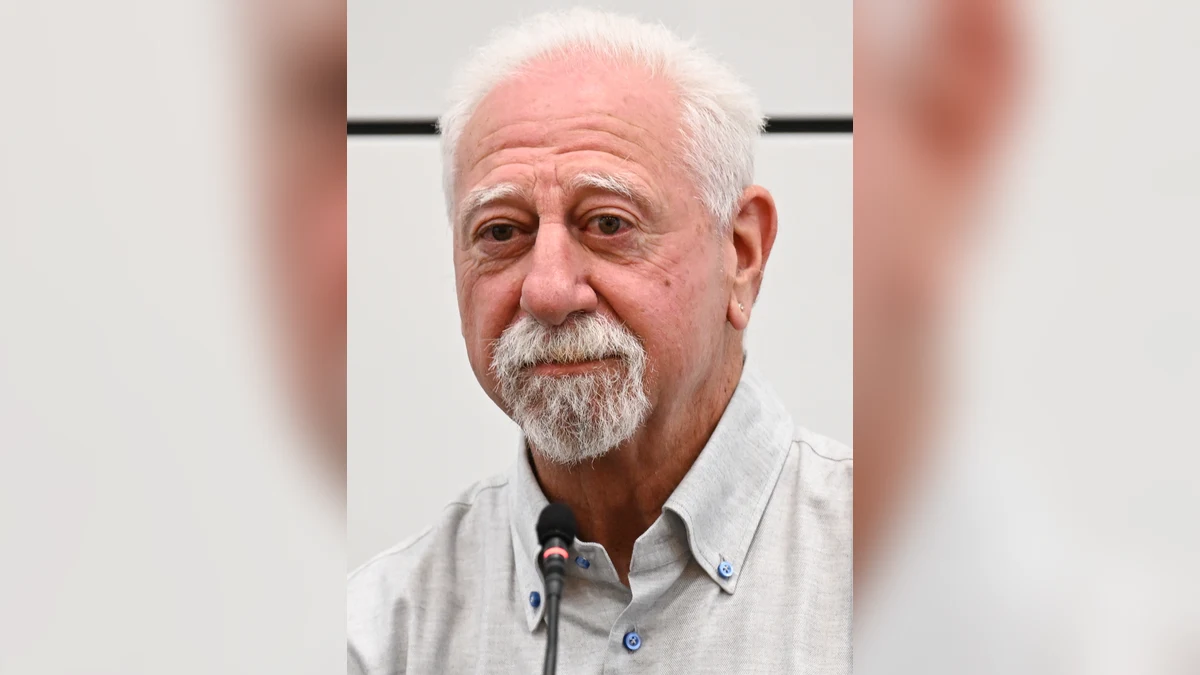
| Quick Facts | NVIDIA’s Other Co-Founders |
|---|---|
| Founded NVIDIA | 5 April 1993, San Jose (with Jensen Huang) |
| IPO | January 1999, $12 per share |
| Curtis Priem — role | First chief technology officer |
| Priem — stake at IPO | 3 million shares, 12.8% of the company |
| Priem — hypothetical fortune | $768 billion* (if he had kept 12.8% to NVIDIA’s $6 trillion peak) |
| Priem — actual net worth | $30 million (Celebrity Net Worth / Forbes 2023) |
| Priem — left NVIDIA | Retired 2003; sold remaining shares by 2006 |
| Chris Malachowsky — role | Vice president of engineering; now NVIDIA Fellow |
| Malachowsky — net worth | Hundreds of millions (CNW; most recent estimate $400 million) |
| Malachowsky — still at NVIDIA | Yes — 33+ years and counting |
Jensen Huang was not NVIDIA’s only founder — and his two co-founders took almost exactly opposite paths. One of them, Curtis Priem, gave away a fortune that hypothetically could have been worth $768 billion and walked away from the company more than two decades ago. The other, Chris Malachowsky, quietly stayed at NVIDIA for more than 33 years and still works there today. With Jensen Huang’s resignation as CEO in November 2026, Malachowsky is now the last founder standing at the company the three men sketched out at a Denny’s restaurant in San Jose.
Three Engineers Walk Into a Denny’s
The NVIDIA origin story begins in 1993, when Jensen Huang, Chris Malachowsky and Curtis Priem began meeting at a Denny’s in San Jose to discuss the future of computing. At the time, Huang was working at semiconductor company LSI Logic, while Malachowsky and Priem were engineers at Sun Microsystems. The three shared a belief that increasingly sophisticated computer graphics would require processors designed specifically for that purpose.
Priem was already an accomplished inventor. Earlier in his career, he had helped design pioneering graphics hardware for IBM personal computers. At Sun, he worked on the GX graphics architecture alongside Malachowsky, who had extensive experience designing integrated circuits and managing complex engineering projects.
On 5 April 1993, they officially founded NVIDIA. Huang became CEO, Priem took the position of chief technology officer, and Malachowsky became vice president of engineering. Success was hardly guaranteed. NVIDIA’s first major product, the NV1, failed to catch on, and the company nearly went bankrupt. But its fortunes changed with the release of the RIVA 128 graphics chip in 1997, which helped establish NVIDIA as a serious competitor in the rapidly growing PC gaming market.
In January 1999, NVIDIA went public at $12 per share. All three founders emerged from the IPO as multimillionaires. But their financial paths were about to diverge dramatically.
Curtis Priem: The Man Who Gave Away a Fortune
Of NVIDIA’s three founders, Curtis Priem has perhaps the most extraordinary financial story. Priem served as NVIDIA’s first chief technology officer, helping develop the underlying technologies that established the company as a leader in computer graphics. When the company went public in January 1999, he owned a substantial ownership stake: according to NVIDIA’s original IPO documents, Priem held 3 million shares, representing 12.8% of the company at that stage.
And then he did something almost unimaginable. He gave most of it away. In September 1999, just months after NVIDIA’s IPO, Priem transferred more than three-quarters of his holdings into the Priem Family Foundation, a charitable organisation he had established. As he later explained to Forbes, he simply did not feel comfortable possessing an “excessive amount of money.” He preferred directing his wealth toward education, scientific research and other philanthropic interests.
Priem did not immediately give away every share. He retained a smaller personal stake, but by 2006 he had sold the remainder. He had also retired from NVIDIA in 2003, a full two decades before the company’s spectacular artificial intelligence-driven explosion in value.
Just how much money did he give up? The hypothetical numbers are staggering. If Priem had somehow maintained his original 12.8% percentage ownership all the way to NVIDIA’s recent multitrillion-dollar valuation, that stake could be worth hundreds of billions of dollars. When the company briefly touched a $6 trillion market cap, that long-lost 12.8% stake would have been worth $768 billion — a hypothetical figure that assumes he maintained his percentage ownership despite subsequent share issuances and dilution. A more conservative calculation, following his original 3 million shares through NVIDIA’s six stock splits, gives 1.44 billion shares, worth around $230 billion at a $3.85 trillion company valuation. Either way, it is one of the largest fortunes in human history — given away. Instead, today Celebrity Net Worth estimates Curtis Priem’s actual net worth at $30 million.
Where Did Curtis Priem’s Money Go?
Priem’s foundation has spent decades distributing money to educational institutions, conservation organisations and scientific research initiatives. His largest and most sustained beneficiary has been his alma mater, Rensselaer Polytechnic Institute (RPI) in Troy, New York. Since 2001, Priem has committed more than $350 million to the university. One of his most visible contributions was a $40 million gift toward the Curtis R. Priem Experimental Media and Performing Arts Center, which opened in 2008. More recently, he pledged $95 million toward bringing an IBM quantum computer to the university and supporting a new quantum computing research initiative; the IBM Quantum System One was unveiled on campus in 2024.
Priem’s foundation has also supported organisations including The Nature Conservancy and the Monterey Bay Aquarium. Its financial filings show that it continues distributing millions of dollars annually, with plans to eventually wind down its operations.
As for Priem personally, he is hardly living in poverty. A 2023 Forbes profile described him living largely off the grid at a $6 million property near Fremont, California. He also purchased a Gulfstream G450 private jet, which he reportedly named “Snoopy.”
Curtis Priem’s Tumultuous Marriage and Divorce
Priem’s relatively quiet life has not been without controversy. In July 1999, just months after NVIDIA went public, Priem married a woman named Veronica. They had two sons, but their relationship eventually deteriorated into a bitter legal dispute involving allegations of domestic violence. The following account is drawn from court records as reported by Celebrity Net Worth; the allegations were contested in the proceedings.
Veronica filed for divorce in January 2010. Court records describe allegations of years of abusive behaviour, and Curtis claimed that their troubled marriage had generated numerous police reports, arrests and criminal proceedings. One particularly important detail was a May 2008 misdemeanor spousal battery conviction against Veronica, which resulted from a no-contest plea.
During the divorce proceedings, the court ordered Curtis to pay $14,602 per month in child support but denied Veronica’s request for temporary spousal support. The court relied on California law restricting support for spouses convicted of domestic violence, concluding that she had not overcome the relevant legal presumption. Veronica appealed, arguing in part that her no-contest plea should not have been used against her in determining spousal support. In March 2013, a California appellate court rejected her arguments and upheld the lower court’s decision.
The case became significant enough to influence California law. In 2015, lawmakers passed SB 28, clarifying that no-contest pleas in domestic violence cases must be considered as documented evidence when courts determine spousal support. Priem has since remarried. His wife, Cindi, is involved with the Priem Family Foundation, which continues its philanthropic activities.
Chris Malachowsky: The Co-Founder Who Never Left
The story of NVIDIA’s third founder, Chris Malachowsky, is almost the exact opposite. While Priem retired in 2003 and eventually sold every share he personally owned, Malachowsky stayed at NVIDIA. He has now been with the company for more than 33 years.
Malachowsky was born in New Jersey and earned an electrical engineering degree from the University of Florida in 1980. After working at Hewlett-Packard, he joined Sun Microsystems, where he helped develop graphics technology alongside Curtis Priem. When the three founders launched NVIDIA in 1993, Malachowsky became vice president of engineering. Over the following decades, he held numerous senior technical and operational positions, helping guide the company’s development from a graphics-chip startup into a global leader in accelerated computing.
Today, Malachowsky holds the title of NVIDIA Fellow, a senior technical position. NVIDIA continues to identify him as a member of its executive staff, although he is no longer involved in the company’s day-to-day operations. Unlike Jensen Huang, who became an internationally recognisable technology celebrity, Malachowsky has largely stayed out of the spotlight.
At the time of NVIDIA’s IPO, Malachowsky also owned millions of shares. A 2003 SEC filing showed him beneficially owning 4.8% of the company, including shares held through family entities and a charitable foundation. His ownership subsequently changed, and he eventually disappeared from NVIDIA’s regular major-shareholder disclosures. The full history of his later stock sales and transfers is not publicly documented, making his precise personal wealth difficult to determine. Celebrity Net Worth estimates Malachowsky’s fortune in the hundreds of millions of dollars — its most recent estimate, published 9 November 2026, puts it at $400 million — a considerable sum by any normal standard, but nowhere near the wealth Huang accumulated.
There is another fascinating detail about Malachowsky’s financial life. According to property records reviewed by Celebrity Net Worth, he still lives in the same Silicon Valley house he purchased in 1993, the very year NVIDIA was founded. He paid $735,000. Today, that property is worth around $8 million.
Malachowsky’s Philanthropy and His $150 Million Namesake Building
Malachowsky has also directed substantial portions of his wealth toward charitable causes, particularly at his alma mater, the University of Florida. In 2020, Malachowsky and NVIDIA helped launch a $70 million artificial intelligence initiative at the university. Malachowsky personally committed $25 million, NVIDIA contributed another $25 million in hardware, software and related support, and the university supplied the remaining $20 million. The initiative helped establish HiPerGator AI, a powerful university supercomputer designed to make advanced artificial intelligence tools available to students and researchers.
Malachowsky and his wife, Melody, also provided a $20 million lead gift toward a new campus building dedicated to data science and information technology. The resulting Malachowsky Hall for Data Science & Information Technology opened in November 2023. The seven-storey, 263,000-square-foot facility cost $150 million and houses research and educational programs spanning engineering, medicine, cybersecurity and other disciplines.
Outside NVIDIA, Malachowsky has served on the boards of the Computer History Museum and Hiller Aviation Museum. He also earned an executive producer credit on the Emmy-winning documentary “Inheritance.” In 2026, he received the prestigious IEEE Robert N. Noyce Medal for his contributions to semiconductor design and parallel computing.
The Last Man Standing
And that brings us back to the news of November 2026. With Jensen Huang’s resignation, NVIDIA has entered an entirely new era. Colette Kress is running the company on an interim basis, Harvey Jones has taken over as chairman, and the board is searching for someone who can replace one of the most influential executives in modern technology history.
Curtis Priem has been gone for more than two decades. He gave away the overwhelming majority of his NVIDIA holdings, sold the rest, and devoted much of his life to philanthropy. Jensen Huang stayed for 33 years, transforming NVIDIA into one of the most valuable companies in history and accumulating a personal fortune worth well over $100 billion. Now, following a deeply controversial scandal, his tenure has come to an abrupt end. And Chris Malachowsky? He is still there.
*The $768 billion figure is hypothetical — what Priem’s original 12.8% stake would have been worth had he kept it. His actual net worth is $30 million. Net worth figures are estimates only, based on public sources.
