
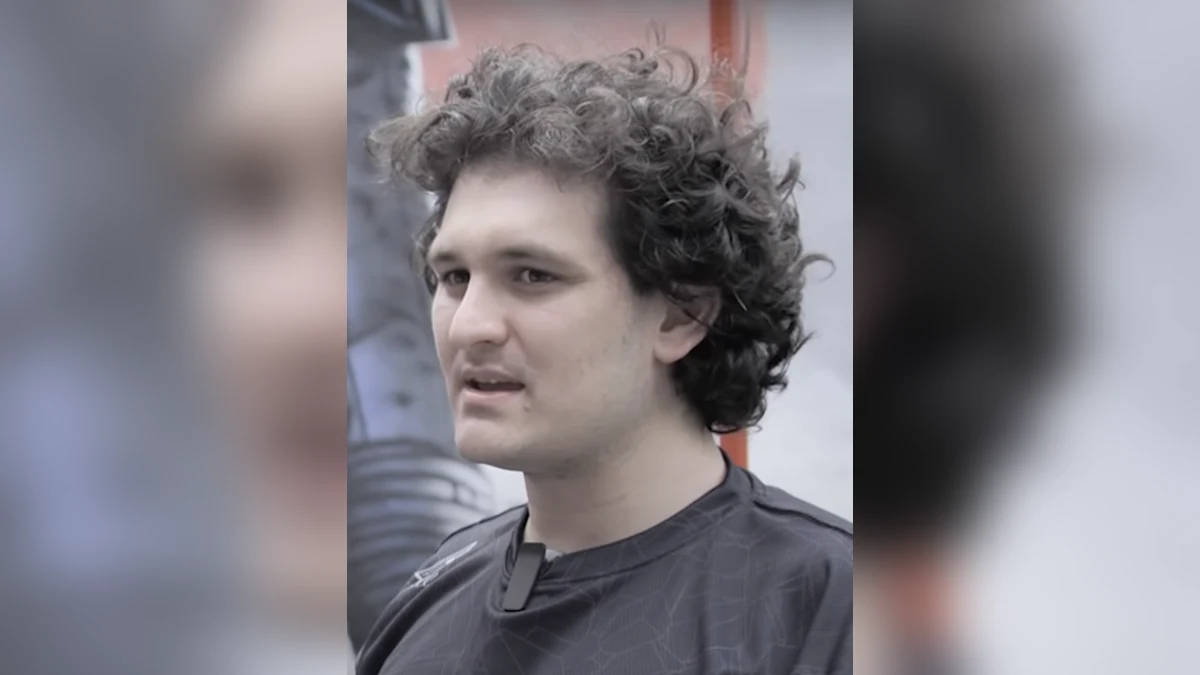
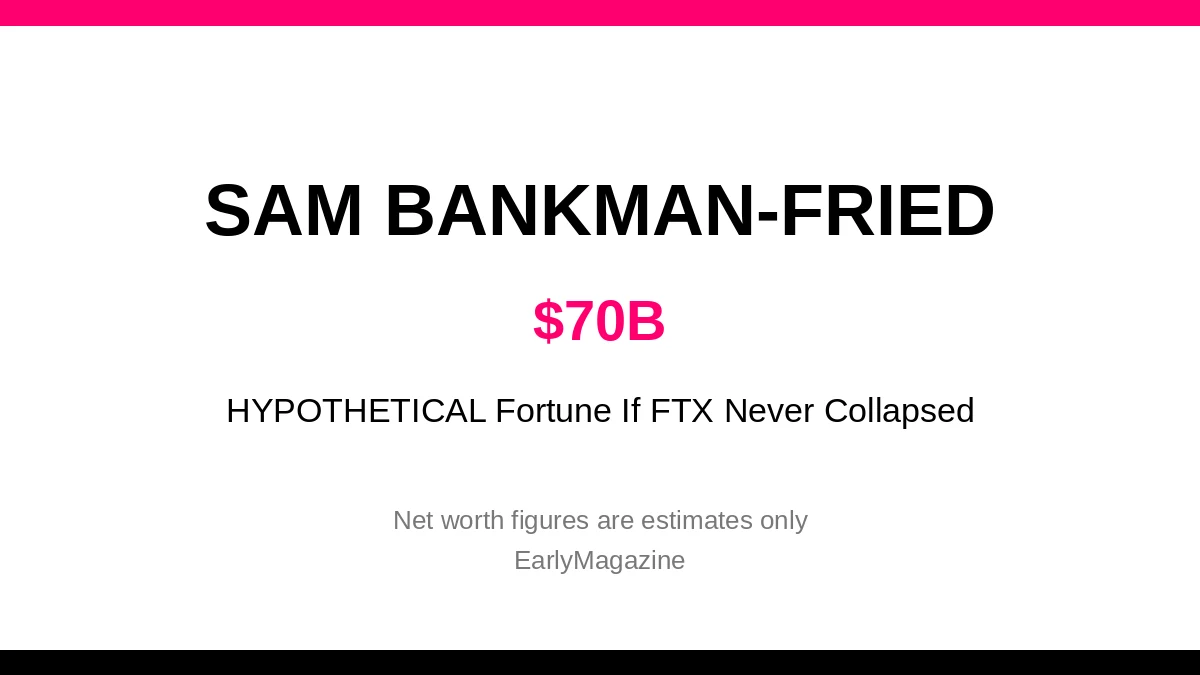
If FTX had never collapsed, Sam Bankman-Fried could hypothetically be worth around $70 billion today — because, by an almost unbelievable run of luck, he was one of the greatest venture capital investors of all time. The Sam Bankman-Fried hypothetical fortune is built on five spectacular early bets: Anthropic, Cursor, Robinhood, SpaceX and a vast crypto portfolio, all bought with money that, as a court later established, was not his to invest.
Quick Facts
| Hypothetical fortune | About $70 billion (CNW calculation: $71.58B) |
| Investment portfolio value | $48.15 billion (November 2026 values) |
| Biggest single bet | Anthropic — $35 billion hypothetical |
| Peak real net worth | About $25 billion (mid-2022) |
| Actual net worth today | Effectively zero |
| Current status | Serving a 25-year federal prison sentence |
The $35 Billion Anthropic Bet
The largest single piece of the hypothetical portfolio is Anthropic. In late 2021, Alameda Research invested $500 million in the AI startup founded by former OpenAI executives, buying a 13.5% stake when the company was valued at less than $4 billion. FTX’s bankruptcy administrators sold the stake for $1.34 billion in 2024. At Anthropic’s IPO on 19 November 2026 — priced at $70 to $78 per share, valuing the company at up to $1.4 trillion — the original position, after dilution and a 10-for-1 stock split, would be worth roughly $35 billion. More than half of the hypothetical portfolio’s value comes from this one bet.
Cursor: $200,000 That Became Billions
In April 2022, Alameda Research invested just $200,000 in Anysphere, the startup behind the AI coding platform Cursor, acquiring a stake believed to have represented roughly 5% of the fledgling company. The initial valuation was just $4 million. In April 2026, SpaceX revealed it had secured the right to acquire Cursor for $60 billion, and on 14 August 2026 the acquisition officially closed in an all-stock transaction.
Had Alameda’s original 5% ownership survived completely intact, it would have been worth $3 billion at the acquisition. Anysphere raised billions in subsequent financing rounds, diluting early investors; if the stake had declined to roughly 3%, the windfall would have been closer to $1.8 billion. The precise final ownership percentage has not been publicly established. Either way, it would have been an extraordinary return on $200,000 — except the bankruptcy estate sold the investment in April 2023 for exactly $200,000, its original cost, according to the estate’s own financial filings.
Robinhood, Sui and the Crypto Garage Sale
In early 2022, Bankman-Fried acquired roughly 55.3 million Robinhood shares for $648 million, a 7.6% stake held through Emergent Fidelity Technologies, a company he controlled alongside FTX co-founder Gary Wang. When FTX collapsed, the US Department of Justice seized the shares, and in August 2023 Robinhood repurchased the entire block from the US government for $605.7 million. At a November 2026 share price of roughly $72, those same shares would be worth about $4 billion.
In September 2022, FTX Ventures participated in a $300 million funding round for Mysten Labs, the company developing the Sui blockchain, investing roughly $101 million. The bankruptcy administrators sold the entire position back to Mysten Labs for $96.3 million in April 2023. The package included warrants to purchase 367.8 million SUI tokens, worth roughly $265 million gross at a November 2026 price near $0.72 — but that does not account for the cost of exercising the warrants or token sale restrictions, so Celebrity Net Worth leaves Sui out of the final calculation.
Then there is the crypto itself. The bankruptcy estate began liquidating substantial holdings, including roughly 41 million locked SOL tokens, 20,500 Bitcoin and 112,600 Ethereum. At November 2026 prices — Solana around $71, Bitcoin around $65,000, Ethereum around $1,800 — those positions would be worth roughly $2.91 billion, $1.33 billion and $203 million respectively, a hypothetical crypto portfolio of about $4.45 billion.
The $2.9 Billion SpaceX Connection
In 2022, Alameda transferred roughly $700 million to K5 Global and affiliated investment entities. One of K5’s funds used roughly $190 million to acquire SpaceX shares when the company was valued at around $125 billion. SpaceX subsequently held its IPO in June 2026 and, by November 2026, had a market capitalisation of roughly $1.9 trillion. On those valuations, the $190 million investment would have grown to roughly $2.9 billion, before accounting for possible dilution, fund expenses and the precise terms of Alameda’s indirect ownership.
Unlike the other investments, the bankruptcy estate did not simply dump the SpaceX exposure: in January 2025, it reached a settlement with K5 that preserved its limited-partner interests in the relevant funds, so the potential appreciation remains relevant to creditor recoveries. And because SpaceX acquired Cursor in an all-stock transaction, the spectacular growth of these two investments is now connected in a particularly unusual way.
The $70 Billion Calculation
Adding up the major investments at November 2026 values gives a portfolio of $48.15 billion — and that is before assigning a value to Sui or hundreds of smaller venture positions. But SBF did not own 100% of FTX, Alameda or every entity that held those investments, so Celebrity Net Worth applies the ownership stakes identified in bankruptcy court filings: roughly 90% of Alameda Research, roughly 75% of FTX Trading, and roughly 53% of West Realm, the holding company behind FTX’s US operations.
The calculation runs: 90% of the $48.15 billion portfolio is $43.34 billion; 75% of FTX Trading’s $32 billion valuation (from its January 2022 funding round) is $24 billion; 53% of FTX US’s $8 billion valuation is $4.24 billion. Combined: $71.58 billion, rounded to a hypothetical fortune of about $70 billion — which would have put Sam Bankman-Fried among the wealthiest people on the planet.
The calculation has clear limitations, which Celebrity Net Worth states openly: 90% is a simplifying proxy for SBF’s economic exposure across entities with different ownership structures, the historical FTX valuations are assumptions for this alternate timeline rather than appraisals of what the companies would be worth today, and it assumes those assets could have remained in place without the enormous liabilities and customer-fund misuse that actually brought the empire down.
None of It Changes the Crime
SBF was not simply a brilliant venture capitalist managing legitimately raised investment capital. He was using money misappropriated from customers who believed their assets were being safely held on the FTX exchange. That is why he was convicted of fraud and conspiracy and sentenced to 25 years in federal prison. At sentencing, Judge Lewis Kaplan rejected the argument that successful investments could somehow excuse the underlying theft, comparing SBF’s position to a thief who takes stolen money to Las Vegas and wins.
His real net worth peaked at roughly $25 billion in mid-2022 and is effectively zero today. Had he somehow avoided the collapse of FTX while retaining his investments, he might have been sitting on a fortune approaching $70 billion. Instead, he is serving his sentence at a federal prison complex in Lompoc, California, while the AI companies he backed prepare to generate fortunes for the investors who bought their shares out of bankruptcy. The man who threw hundreds of millions of dollars at startups with money that was not his somehow managed to hit several of the biggest financial bullseyes of the century. He just will not get to collect the winnings.
Net worth figures are estimates only, based on public sources.
Related: Jensen Huang Still Earns $811M a Year After Resigning, Curtis Priem Net Worth, Mikhail Prokhorov Net Worth
