

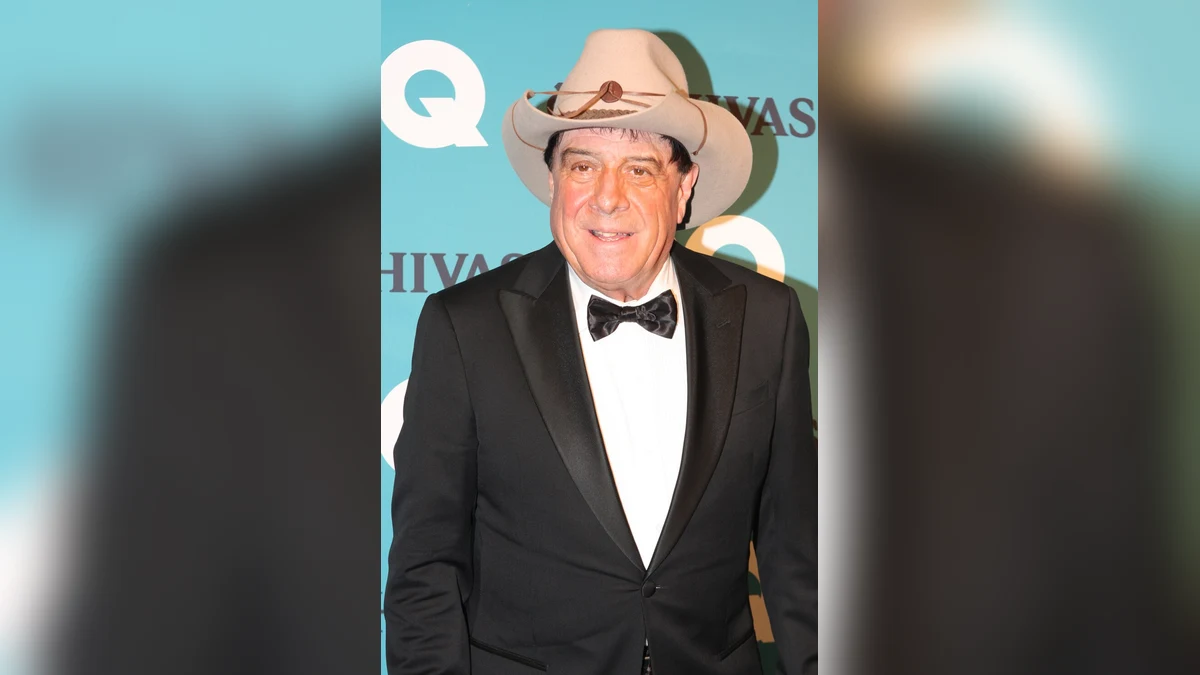






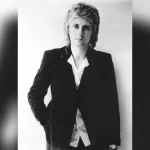

Molly Meldrum was an Australian music journalist, television personality, record producer and entrepreneur who had a net worth of $5 million at the time of his death, per CelebrityNetWorth. He was one of the most influential figures in Australian popular music, best known for his work on the groundbreaking television programme “Countdown.”
| Quick Facts | |
| Music journalist & TV host | Molly Meldrum (1943–2026) |
| Net worth at death | $5 million |
| Famous for | “Countdown” (1974–1987); “Hey Hey It’s Saturday” |
| Produced | “The Real Thing” — Russell Morris (1969) |
| Honours | ARIA Hall of Fame; Logies Hall of Fame; Member of the Order of Australia |
| Died | 23 November 2026, age 83 |
Early Life
Ian Alexander Meldrum was born on January 29, 1943, in Orbost, Victoria, Australia. His parents were Robert and Isobel Meldrum, and he grew up with two younger brothers, Brian and Robert.
His childhood involved frequent moves and an unconventional family life. He spent much of his early childhood in Quambatook, a small rural Victorian town, where he was particularly close to his grandmother. As a teenager, Meldrum moved between relatives before eventually settling in Melbourne, where he became close friends with aspiring singer Ronnie Burns and lived with Burns’s family for several years.
Meldrum developed an intense fascination with popular music, particularly after witnessing the extraordinary public excitement surrounding the Beatles’ 1964 Australian tour. That enthusiasm eventually led him into music journalism, television and record production.
Go-Set and Early Music Journalism
Meldrum began his professional career in 1966 as a writer for “Go-Set,” an influential Australian weekly music newspaper. His enthusiastic writing style and willingness to pursue interviews helped him establish relationships with musicians, record companies and promoters. He also became involved in local television programmes, including “Kommotion” and “Uptight.”
In 1968, Meldrum travelled to London, where he reported on the British music scene and developed contacts with people associated with the Beatles’ Apple organisation. He secured an interview with John Lennon during which Lennon discussed the breakup of the Beatles, providing Meldrum with one of the biggest stories of his early career.
Producing “The Real Thing”
Before becoming a national television celebrity, Meldrum established himself as an innovative record producer. His breakthrough came in 1969 with Russell Morris’s debut solo single, “The Real Thing.”
Written by Johnny Young, the song was originally conceived as a relatively straightforward pop ballad. Meldrum transformed it into an ambitious six-minute psychedelic production featuring layered instruments, vocal effects and experimental studio techniques. The recording became a major Australian hit, reaching number one and remaining on the charts for months. It subsequently became recognised as one of the most important singles in Australian pop history.
Meldrum also produced Ronnie Burns’s antiwar hit “Smiley,” Colleen Hewett’s “Day by Day” and The Ferrets’ “Don’t Fall in Love.” His recording work established his credibility among musicians and contributed to his reputation as an unusually perceptive talent scout.
Countdown and National Fame
Meldrum’s career changed dramatically in 1974 when he became involved in the creation of “Countdown,” a new music television programme developed for the Australian Broadcasting Corporation. Initially employed as talent coordinator, he soon became the show’s most recognisable personality through his weekly music news and review segment, “Humdrum.”
“Countdown” aired nationally on Sunday evenings and quickly became essential viewing for Australian teenagers. At a time when international music videos and interviews were difficult to access, the programme brought major international performers into Australian living rooms.
Meldrum became famous for his infectious enthusiasm, rambling explanations, occasional interviewing disasters and genuine affection for the artists he featured. Because ABC rules restricted direct product endorsements, he developed a memorable alternative recommendation: “Do yourself a favour.” When Meldrum enthusiastically promoted a new record, Australian music retailers often experienced an immediate surge in demand. “Countdown” continued until July 1987, helping define an entire generation of Australian popular culture.
ABBA, Kylie Minogue and International Stars
Meldrum’s influence was particularly significant in the early international success of ABBA. After the Swedish group won Eurovision in 1974, its subsequent recordings initially struggled to maintain momentum in several markets. Meldrum became an enthusiastic supporter of “Mamma Mia,” repeatedly featuring the song on “Countdown.” It became a major Australian hit, contributing to a resurgence of international interest in the group.
Meldrum also championed emerging Australian artists, including Skyhooks, Sherbet, INXS and Kylie Minogue. His support helped performers gain national exposure at a time when Australian artists often struggled to compete with British and American acts. Among his closest celebrity friends was Elton John, who credited Meldrum with making an extraordinary contribution to Australian popular music.
One of Meldrum’s most famous television moments came during a 1977 interview with Prince Charles. Overwhelmed by nervousness, he repeatedly stumbled over his words, creating an awkward but memorable exchange that Charles later recalled with affection.
Hey Hey It’s Saturday and Record Labels
After “Countdown” ended in 1987, Meldrum continued his television career on the popular variety programme “Hey Hey It’s Saturday.” His recurring segment, “Molly’s Melodrama,” allowed him to continue interviewing performers, reviewing new releases and providing music-industry news.
He also established the record label Melodian Records in 1988 alongside music-industry collaborators, working in association with Michael Gudinski’s Mushroom Records organisation. The label signed artists including Indecent Obsession, Roxus, Jo Beth Taylor and Peter Andre.
Meldrum remained active in television through appearances on “The Meldrum Tapes,” music specials, talent competitions and Channel Seven programmes. He also participated in the Australian Live Aid initiative, “Oz for Africa,” in 1985.
Books, Television Portrayal and Richmond Home
Meldrum documented his experiences in memoirs written with journalist Jeff Jenkins: “The Never, Um, Ever Ending Story” in 2014 and “Ah Well, Nobody’s Perfect: The Untold Stories” in 2016. That same year, Channel Seven broadcast “Molly,” a two-part biographical television drama starring Samuel Johnson as Meldrum. Johnson won a Logie Award for the portrayal in 2017.
Meldrum lived for decades in a distinctive property in the Melbourne suburb of Richmond, which he named “Luxor.” He purchased the house in the early 1980s and gradually transformed it into an elaborate tribute to ancient Egypt, a subject that fascinated him throughout his life. He travelled to Egypt more than 30 times and accumulated a substantial collection of objects and memorabilia reflecting his interests.
2011 Accident and Health Problems
On December 15, 2011, Meldrum suffered a catastrophic accident while decorating his Richmond home for Christmas. He fell from a ladder, sustaining serious head and spinal injuries, including a fractured skull. He was rushed to hospital and underwent emergency treatment before being placed in an induced coma.
The accident left him with an acquired brain injury and required extensive rehabilitation. Although he eventually recovered sufficiently to make public appearances, the injuries had a lasting effect on his physical and neurological health. He suffered another fall during a visit to Thailand in 2016 and experienced additional health difficulties during his later years. By the 2020s, he had largely withdrawn from regular public appearances.
Awards and Honours
Meldrum received numerous honours recognising his contribution to Australian music and television. In 1986, he was appointed a Member of the Order of Australia for his services to music and charitable causes. He received the ARIA Special Achievement Award in 1993.
In 2012, Meldrum was inducted into the Logies Hall of Fame. Two years later, he became the first person who was not a recording artist to enter the ARIA Hall of Fame, with “Countdown” also receiving recognition. In 2018, the City of Yarra unveiled a bronze statue of Meldrum in Richmond, depicting him alongside his beloved dog, Ziggy.
Personal Life
Meldrum was one of Australia’s earliest prominent openly gay television personalities, maintaining a colourful but generally private romantic life. His longtime partner was Yan Wongngam, a Thai businessman involved in the courier industry. The couple maintained a relationship spanning several decades, frequently dividing their time between Australia and Thailand.
Meldrum also helped raise Morgan Scholes, whom he regarded as his son. Morgan later married Crystal, and their son Jason became Meldrum’s grandson. Outside entertainment, Meldrum was a passionate sports supporter, particularly of the St Kilda Football Club and Melbourne Storm rugby league team.
Death
Molly Meldrum died peacefully on November 23, 2026, at Epworth Hospital in Melbourne following a prolonged illness. He was 83 years old. His family and management confirmed the news, prompting tributes from musicians, broadcasters, politicians and entertainment industry figures throughout Australia.
He was survived by his longtime partner Yan Wongngam, his brothers Brian and Robert, and Morgan Scholes, whom he regarded as his son, along with Morgan’s wife and their son. Tributes emphasised Meldrum’s generosity, infectious enthusiasm and extraordinary role in developing the Australian music industry — a legacy built not on performing, but on championing performers, from ABBA to INXS. Few behind-the-scenes figures ever shaped a nation’s taste as he did, and his influence runs through the best-selling albums of all time he helped promote. Like Phil Collins, who built a $350M fortune from drumming and solo stardom, Meldrum’s career spanned decades of music history, and like John Lennon, whose $200M fortune at death reflected a similar era-defining impact, his name is woven into the story of popular music itself.
Sources: CelebrityNetWorth.
