

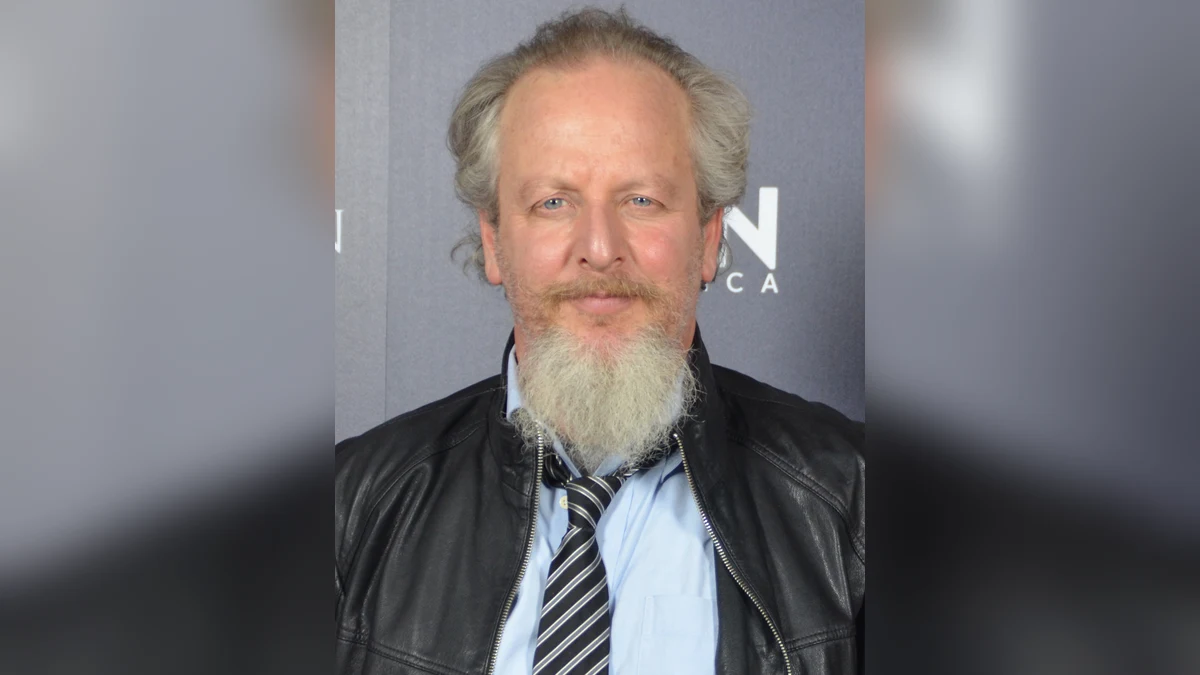
Daniel Stern fired his agent over an $800,000 salary offer for “Home Alone 2” — then negotiated the deal himself and walked away with $1.5 million upfront plus 1% of the movie’s gross, a payday worth more than $5 million by CelebrityNetWorth’s calculation. It was one of the boldest pieces of self-negotiation in Hollywood history, and it came from an actor who had already lost the role once over money.
| Quick Facts | |
| Actor | Daniel Stern (b. 28 Aug 1957) |
| Famous for | Marv in “Home Alone” (1990) and “Home Alone 2” (1992) |
| Home Alone salary | $300,000 |
| Fox’s first Home Alone 2 offer | $600,000, raised to $800,000 |
| Stern’s deal | $1.5M upfront + 1% of the gross |
| Home Alone 2 gross | $358,994,850 worldwide |
| Stern’s 1% | $3.59M (by CNW’s calculation) |
| Total payday | $5M+ (~$12M in today’s dollars) |
The First Home Alone Walkout
When “Home Alone,” written by John Hughes, was being developed in 1990, director Chris Columbus wanted Stern and Joe Pesci to play the two burglars, Marv and Harry. Fox, however, was not enthusiastic about paying both actors what they wanted.
Stern had initially agreed to a salary of $300,000 for six weeks of filming. But when the production schedule expanded to eight weeks, he asked whether his compensation would increase by the same 33%. The studio refused, and Stern decided to walk away — a decision he would later describe as one of the biggest mistakes of his career.
Fox subsequently hired another actor, Daniel Roebuck, to play Marv. Roebuck, who would go on to appear in “The Fugitive,” “Matlock” and dozens of other film and television projects, lasted just a few days before Columbus fired him and brought Stern back. Fox ultimately honoured Stern’s original $300,000 agreement and six-week schedule.
Released in November 1990, “Home Alone” became a box-office phenomenon. Produced for a budget of around $18 million, the movie earned $476.7 million worldwide, including $285.8 million domestically. It spent 12 consecutive weekends at number one and became the highest-grossing live-action comedy in history, a record it held for more than two decades.
The Other Daniel — A Dispute Revived in 2026
For decades, the story of Roebuck’s dismissal remained a relatively obscure piece of Hollywood trivia. Then, in November 2026, Columbus revisited the incident during an appearance on the “Wildmen” podcast.
According to Columbus, the replacement actor was simply terrible. He recalled conducting a screen test with Roebuck and Pesci, describing Roebuck’s performance as “just awful.” Columbus said it was the only time in his career that he had to fire an actor.
Roebuck was not amused. Speaking to Entertainment Weekly, he disputed Columbus’s version of events, particularly the claim that he had performed poorly in a screen test with Pesci.
“There was no screen test with Joe Pesci,” Roebuck insisted. “That never ever happened.”
Roebuck acknowledged that Columbus had told him the two actors lacked chemistry, but said they had never actually filmed together. He also said the director promised him a part in a future movie, an offer that never materialised. Speaking separately to Page Six, Roebuck said Columbus’s comments “hurt my heart,” particularly because he has spent decades being reminded of his brief involvement with the film.
Whatever the truth about Roebuck’s dismissal, one thing seems clear: Stern was born to play Marv. And when a sequel became inevitable, Fox was going to have to negotiate new contracts with both burglars.
Home Alone 2: The $800,000 Offer
In his 2024 memoir, “Home and Alone,” Stern revealed the remarkable behind-the-scenes financial negotiations that preceded “Home Alone 2: Lost in New York.” After the original movie’s extraordinary success, he assumed Fox would offer him a substantial raise to reprise Marv.
The studio’s initial offer was $600,000 — double what Stern had earned for the original movie, but considerably less than he had hoped. After further negotiations, Fox increased its offer to $800,000, an extraordinary amount of money for six or eight weeks of work, especially in 1992. But Stern had learned something that made the offer seem a lot less generous.
According to his memoir, Pesci had negotiated a deal worth somewhere between $2 million and $3 million upfront, plus a percentage of the movie’s gross. Pesci was admittedly the bigger star, having recently won an Academy Award for “Goodfellas.” But Stern felt the Wet Bandits were a package deal. Their chemistry, their physical comedy and their constant suffering at the hands of an eight-year-old were central to the success of the first movie.
He was not necessarily demanding the same salary as Pesci. He wanted something closer to half of what his co-star was making — a gap that puts his fight in context alongside the highest-paid actors in the world, where backend points routinely dwarf upfront salaries.
Stern’s agent disagreed and advised him to accept the $800,000 offer and move on. Stern’s response? He fired his agent.
Negotiating Directly With Fox
Rather than hire another representative, Stern decided to handle the negotiations himself. He went back to Fox with a very different proposal: $1.5 million upfront, plus 2% of the movie’s gross.
The negotiations dragged on. According to Stern, the impasse eventually reached Joe Roth, the chairman of 20th Century Fox, who personally called the actor and asked him to begin filming without a signed agreement. Stern refused to give up his leverage.
It was an audacious move, especially considering what had happened on the original film. The first time he challenged Fox over money, he actually lost his job, at least temporarily. If Roebuck had worked out, Stern might never have played Marv at all.
But the situation was very different this time. “Home Alone” had already earned nearly half a billion dollars, audiences loved Harry and Marv, and recasting one of the Wet Bandits for the sequel would have been a substantial creative risk.
Eventually, Fox agreed to a compromise. Stern would receive his full $1.5 million asking salary, plus a 1% gross participation point.
He had secured nearly twice the $800,000 his agent wanted him to accept, five times his original “Home Alone” salary, and a potentially lucrative piece of the sequel’s financial success. Not bad for someone negotiating his own Hollywood contract.
How Much Was That 1% Worth?
“Home Alone 2: Lost in New York” arrived in theatres in November 1992 and became another enormous hit. The sequel earned $358,994,850 worldwide, including $173.6 million in North America.
So what did Stern’s 1% actually mean? Well, 1% of $359 million is $3.59 million.
If Stern’s participation entitled him to a straightforward 1% of worldwide theatrical box-office receipts, his backend would have been worth $3.59 million. Add his $1.5 million upfront salary, and his total compensation would have exceeded $5 million. After adjusting for inflation, that is the same as earning around $12 million in today’s dollars, per CelebrityNetWorth’s calculation.
There was, however, one particularly amusing footnote to Stern’s financial triumph. Despite firing his agent and negotiating the deal himself, Stern revealed in his memoir that he still had to pay his former agent a 10% commission. He also owed 5% to his lawyer and 5% to his accountant.
Even after those cuts, the deal stands as one of the great self-negotiated paydays in Hollywood — a reminder that what actors are actually paid can be very different from the headline salary, as how much the original Star Wars cast was paid also shows.
What About Macaulay Culkin’s Salary?
So if Daniel Stern managed to negotiate himself a $1.5 million salary plus a percentage of the gross, what kind of deal did the actual star of “Home Alone” manage to get?
For the original “Home Alone,” Macaulay Culkin earned just $110,000. Not bad for a 10-year-old kid, but considering the movie went on to earn nearly half a billion dollars, it turned out to be one of the great bargains in Hollywood history.
By the time “Home Alone 2” came around, Culkin was the most famous child actor in the world, and his representatives made sure he was compensated accordingly. His base salary for the sequel was an extraordinary $4.5 million, making him the highest-paid child actor in Hollywood history at the time — the same as making around $11 million today.
But just like Stern, Culkin’s upfront salary was only part of the story. During an August 2025 appearance on “Hot Ones,” Culkin revealed that his sequel contract also included what he believed was 5% of the movie’s net profits and 15% of its merchandising revenue.
That second provision was especially interesting because of a little device called the Talkboy. In “Home Alone 2,” Kevin uses a handheld tape recorder to manipulate hotel employees, order room service and generally cause chaos throughout New York City. The fictional gadget became a real-life toy sensation.
Between his $4.5 million salary, backend participation and merchandise royalties, CelebrityNetWorth estimates that Culkin’s total “Home Alone 2” payday ultimately reached around $20 million, potentially more — the equivalent of nearly $50 million in today’s dollars. It is the kind of childhood fortune few child stars ever match, though Daniel Radcliffe, who built a $120M fortune from Harry Potter, came from the same world of franchise childhood stardom.
A New Home Alone on the Way
On November 20, 2026, news broke that Disney was actually developing a new “Home Alone” sequel, with Culkin attached to return. Seth Rogen and Evan Goldberg are working on the project as writers and producers. The movie is still in early development, and no financial terms have been announced.
But considering Culkin negotiated a deal potentially worth $20 million when he was 11 or 12 years old, it is hard to imagine what kind of payday he might command to return to the franchise more than three decades later.
Sources: CelebrityNetWorth; Daniel Stern, “Home and Alone” (2024).
