

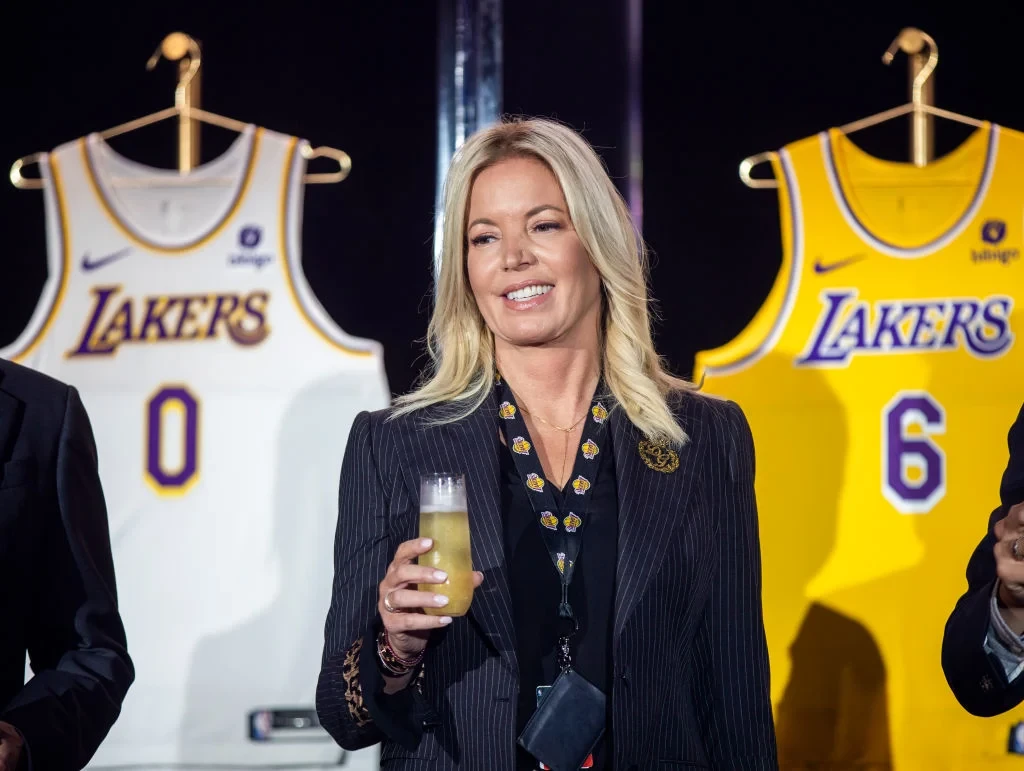
The Buss family’s 47-year hold on the Los Angeles Lakers is now being fought over in a courtroom. Five of the late Jerry Buss’s six children have voted to sell the family’s remaining 17.82% stake in the team — a share worth roughly $2.2 billion — as part of the record $12.5 billion takeover led by Josh Kushner and Bob Iger. The sixth sibling, Jeanie Buss, has asked a judge to stop them.
The dispute moved forward again this month. On 7 October, the five siblings — Jimmy, Johnny, Janie, Joey and Jesse Buss — filed a formal 36-page opposition to Jeanie’s petition. On 16 October, Joey and Janie followed with a further 29-page filing, reviewed by ESPN, opposing her attempt to remove them as co-trustees of the family trust. A hearing is scheduled for 8 December.

The Key Numbers
| 1979 | Jerry Buss buys the Lakers, the LA Kings and the Forum for $67.5 million |
| 2025 | Family sells majority control to Mark Walter at a $10 billion valuation |
| 2026 | Walter agrees to sell to a Kushner–Iger group at a $12.5 billion valuation |
| Stake in dispute | The family trust’s remaining 17.82% — about $2.2 billion |
| The vote | 5–1 in favour of selling; Jeanie Buss the only sibling against |
| Next step | Court hearing, 8 December 2026 |
How the Family Got Here
Jerry Buss bought the Lakers in 1979 and turned them into the NBA’s glamour franchise, winning ten championships during his ownership. When he died in February 2013, control of the team passed to a family trust benefiting his six children, with Jeanie Buss — who had run the business side for years — as controlling owner.
The arrangement has been contested almost from the start. In 2017, her brothers Jim and Johnny tried to remove Jeanie from control. The fight ended in a Los Angeles Superior Court settlement that kept Jeanie as controlling owner, with the trustees — Jeanie, Janie and Joey Buss — required to take reasonable steps to keep her in that role for life.
Two Sales in Two Years
In 2025 the family agreed to sell majority control of the Lakers to Mark Walter, the Dodgers owner and Guggenheim chief executive, at a $10 billion valuation — then the largest price ever attached to an American sports team. The deal closed in October 2025. The Buss trust kept 17.82% of the team, just above the NBA’s 15% minimum a controlling owner (governor) must hold, and Jeanie’s side agreement with Walter kept her as the Lakers’ governor and a director for five years. The trust also secured two exit rights: a “put” allowing the family to sell its remaining stake at the $10 billion valuation, and a “tag-along” allowing it to sell at whatever price a future buyer paid.
Less than a year later, Walter agreed to sell his majority stake on again — this time to an ownership group led by venture capitalist Josh Kushner and former Disney chief executive Bob Iger, at a $12.5 billion valuation. The NBA’s board of governors is expected to vote on the new owners in November 2026. Kushner and Iger initially indicated they would honour the arrangement keeping Jeanie as governor.
The 5–1 Vote and Jeanie’s Petition
The higher price changed the family’s maths. Under the tag-along right, the trust’s 17.82% would be worth about $2.2 billion in the Kushner–Iger deal — significantly more than under the put right at the old valuation. Five siblings voted to exercise the tag-along and sell. Jeanie voted no: selling the stake would end the family’s ownership entirely and, by dropping her below the NBA’s 15% threshold, end her governorship with it.
In August 2026, Jeanie responded with a 97-page petition in Los Angeles Superior Court. Through her attorney Adam Streisand, she asked the court to remove Joey and Janie as co-trustees, to void the 5–1 vote and to hold her siblings in contempt. Her case rests on the 2017 court order: she argues the trustees are legally obliged to keep her in place as controlling owner, and that a sale designed to remove her breaches that duty. Her petition also alleges that an emergency meeting was called to dissolve and replace the trust shortly before the Kushner–Iger deal became public.
The Siblings’ Case
The five siblings’ filings, reported by ESPN and NBC Sports, make three main arguments. First, the trust’s own text allows it to be terminated by a two-thirds majority of the beneficiaries — and five of six is more than two-thirds. Second, the 2017 order required the trustees to support Jeanie as controlling owner, but it did not remove the beneficiaries’ separate right to end the trust; once the trust is terminated, they argue, the order no longer applies. Third, the 15% figure Jeanie relies on comes from NBA rules, not from the trust or the 2017 order, and the tag-along price benefits every beneficiary — including Jeanie herself — equally.
In their statement, the five siblings called Jeanie’s petition “legally and factually baseless” and said their focus was “facilitating the proposed transaction” while “ensuring that all beneficiaries, including Jeanie, are treated equally”. Their filings also contend that Jeanie is putting her personal agreement to remain Lakers governor ahead of her fiduciary duty to the trust — an argument on her siblings’ part, not a court finding.
What Happens Next
The 8 December hearing will decide whether the sale of the trust’s stake can proceed. If it does, the Buss name will leave the Lakers’ ownership for the first time since 1979, and whoever takes over inherits a team rebuilt around stars such as Luka Dončić — the kind of box-office era Jerry Buss built the franchise on. If Jeanie wins, the family keeps its 17.82% under the new Kushner–Iger ownership, with the feud presumably paused rather than settled.
Either way, the saga has already outlasted most Lakers playing careers. Two-time champion guard Jordan Farmar and journeyman forward Michael Beasley came and went from the roster in a fraction of the time the Buss siblings have spent arguing over who gets to own the team.
Sources and notes: Court filings and sibling statements as reported by ESPN (Dave McMenamin and Shams Charania), NBC Sports and the New York Post, October 2026. Sale valuations and the trust’s put and tag-along rights are as described in those filings. All parties’ claims about each other’s motives are reported as allegations in an ongoing court case, not findings.
